

Articles » Introductory

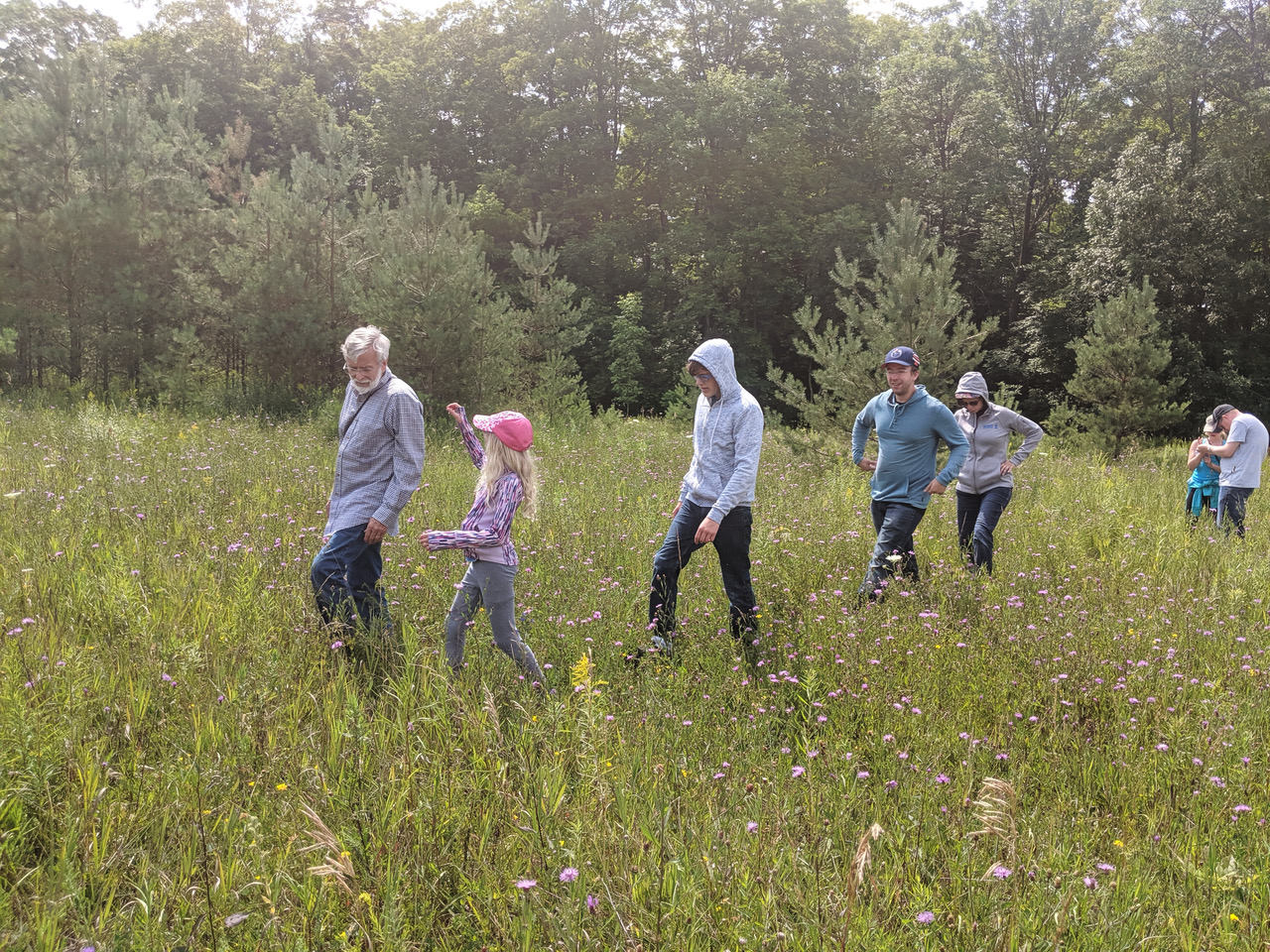

Highly divisive issues are rocking our society today and as Christians, we need insights into where these ideas are coming from, and what they mean for us and our children. There are few issues of greater interest to modern society than the environment. Christians therefore cannot allow themselves to remain ignorant on this topic.
With travel opportunities and wonderful photography from every continent, we cannot fail to be aware of the beauty and diversity in nature. Naturally Christians, like many others, appreciate and value our beautiful surroundings. It is no surprise then, that we hear a lot about the environment. But is the popular message a good one? Journalists, politicians and scientists are promoting big changes to our society in the name of environmental preservation. For example, two individuals from a Canadian think tank dedicated to promoting “climate and social justice”, wrote in a recent opinion piece: “The Green New Deal is capturing people’s imaginations and reframing the climate debate that builds on a ground swell of support for a major social and economic shift.” (Maude Barlow and Dylan Penner. July 12, 2019 Edmonton Journal). Read the rest of this entry »
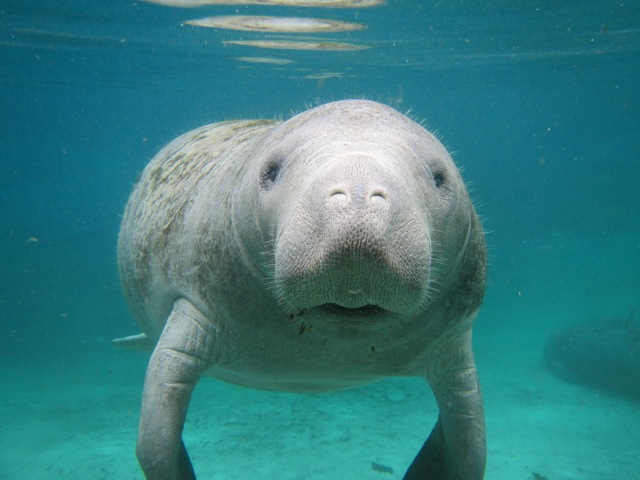
Manatees (family Trichechidae, genus Trichechus), often called sea cows, are large, fully aquatic, mostly herbivorous marine mammals. Three living species exist, the Amazonian, West Indian, and the West African manatee. These are huge animals weighing from 400 to 550 kilograms (880 to 1,210 lb), and 2.8 to 3.0 metres (9.2 to 9.8 ft) long. The females tend to be both larger and heavier.
In many ways manatees are unique compared to all other life forms, a fact that poses major problems for evolutionists. It is almost like a designer selected their traits from a wide variety of existing life forms, from reptiles to fish to mammals. For example, manatees feed almost entirely on aquatic plants and that is “unique among living marine mammals” (Berta, 2012. Return to the Sea: The Life and Evolutionary Times of Marine Mammals. University of California Press. Berkeley p. 127). Read the rest of this entry »


One might suppose, judging by this title, that the beaches in Canada’s maritime provinces are not happy places to visit. Actually they are beautiful. Nevertheless, the story of these landscapes provides remarkable food for thought. Read the rest of this entry »
In Nova Scotia, as elsewhere in the Maritimes, we discover that fossils are an exciting part of the landscape. Not the least of our discoveries are the dinosaurs of Parrsboro. Dinosaurs?? We thought western Canada had exclusive claim to such Canadian artifacts. Not quite. West of Truro, along the north shore of the Minas Basin, we find the touristy town of Parrsboro. The scenery is beautiful, with blueberry crops growing on local hummocky hills. Furthermore the beaches along this stretch of coast are famous for fossils, dinosaur fossils to be specific. Read the rest of this entry »
Dr. Paul Nelson has long been involved in the creation/evolution controversy, in fact he grew up in that milieu. His grandfather, Byron C. Nelson (1893-1972) for example, was a theologian and author, influential as a mid-century critic of Darwinian evolution. His grandson Paul, already as a university student, began to write articles for the Bible-Science Newsletter (an early, well-known creationist publication). Read the rest of this entry »

This spring, as is their custom, Creation Science Association of Alberta sponsored a book and information booth at Alberta Home Educators’ conference in Red Deer. There are always many details to consider when planning for such a booth. The present inventory of resources must be assessed and books and DVDs ordered to top up the stock. Are there new titles which could be considered? These must be ordered as well. Among new publications this year were new curriculum texts, one available from AiG and one from CMI.
Read the rest of this entry »Every September, hundreds of thousands of Ontario butterflies converge on Point Pelee, a long peninsula which projects south into one of the Great Lakes. Then away they flutter, across the water and far beyond. Thus begins the amazing mass migration of an insect which unerringly navigates 4000 kilometers to a site where these individuals have never been. The Monarch butterfly, it turns out, is an astounding phenomenon. Read the rest of this entry »
Vance Nelson’s beautiful new coffee table style book on fossils, Untold Secrets of Planet Earth: Flood Fossils, discusses aspects of the topic that will certainly be new to many readers. In addition the author adopts a chatty style which is readily understood by all. Complete with personal reminiscences and historical details concerning each topic, the author builds his discussion of each topic around spectacular illustrations. Read the rest of this entry »
The mayor of New York City was at the news conference on May 19, 2009. The event was accompanied too by the showing of a special documentary film on TV, publication of a book on the topic and the unveiling of an interactive website. What could the occasion be? One of the individuals involved, Jorn Hurun of Norway, declared: “Any pop band is doing the same thing. Any athlete is doing the same thing. We have to start thinking the same way in science.” Read the rest of this entry »
Truly there are few things as thrilling as beautiful music. Was it not Shakespeare who wrote “If music be the food of love, play on!” Indeed music not only fosters romance, but it can also make us laugh, or cry, or move with the rhythm, or all of the above at once. There are few things which play on our emotions the way music does. Music however is not a gift unique to people. There are other created creatures with wonderful musical talents. Consider the songbirds for example. Read the rest of this entry »
Mudskippers are amphibious fishlike creatures that use their short muscular pectoral and pelvic fins to “walk” on mud in a series of skipping like steps, thus their name. These unique about 30 cm long creatures, typically live in intertidal habitats where the water level changes with each tide change (Hafer, 2016, p. 66). Most other intertidal fish survive tide changes by taking refuge under wet seaweed or in tide pools. Mudskippers are different. They exhibit many unique adaptations to their muddy environment that are rarely, or never, found in other intertidal fishes (Marsh, 2015). Read the rest of this entry »
The gecko, famous in some circles in car insurance commercials, is a very unique but average sized lizard. It is well known among biologists for its chirping vocalizations and its sophisticated adhesive toe pads that allow it to climb with ease up smooth vertical surfaces. Actually, the gecko’s ability to run vertically up and down at will has astonished almost everyone who has ever seen them, from Aristotle in the 4th century BC to today. Read the rest of this entry »

Sometimes it seems so challenging to keep up to date with new titles which present the creation in an interesting fashion. This was not always the case. Thirty years ago, there were few such books. Read the rest of this entry »
Illustra Media has produced many excellent DVDs, but the last one Flight: the Genius of Birds is one of their most awesome! It is certainly one that will appeal to entire families. While the previously released Metamorphosis (dealing with butterflies) provides amazing scenes and discussion, Flight not only provides wonderful photography, but also discussion which is easily understood by all. Moreover, even if one could not understand a word of the commentary, the scenes of birds in flight and the graphics still convey a powerful message. Read the rest of this entry »

A place where families can play and learn!
This summer during our annual family camping trip on a gloomy definitely-not-beach-weather kind of day, we discovered the DINOS (Discovery Institute of Nature, Origins and Science) Centre. When someone suggested going to a new facility with a unique combination of indoor mini-golf, laser tag, and a café, as well as a Bible History Museum and an outdoor driving range, everybody agreed! Read the rest of this entry »
FEATURED BOOKS AND DVDS

Paperback / $10.00 / 159 Pages / Full colour
A place where families can play and learn!
This summer during our annual family camping trip on a gloomy definitely-not-beach-weather kind of day, we discovered the DINOS (Discovery Institute of Nature, Origins and Science) Centre. When someone suggested going to a new facility with a unique combination of indoor mini-golf, laser tag, and a café, as well as a Bible History Museum and an outdoor driving range, everybody agreed! Read the rest of this entry »
Order Online
Paperback / $6.00 / 55 Pages
A place where families can play and learn!
This summer during our annual family camping trip on a gloomy definitely-not-beach-weather kind of day, we discovered the DINOS (Discovery Institute of Nature, Origins and Science) Centre. When someone suggested going to a new facility with a unique combination of indoor mini-golf, laser tag, and a café, as well as a Bible History Museum and an outdoor driving range, everybody agreed! Read the rest of this entry »
Order Online
Paperback / $6.00 / 96 Pages / full colour
A place where families can play and learn!
This summer during our annual family camping trip on a gloomy definitely-not-beach-weather kind of day, we discovered the DINOS (Discovery Institute of Nature, Origins and Science) Centre. When someone suggested going to a new facility with a unique combination of indoor mini-golf, laser tag, and a café, as well as a Bible History Museum and an outdoor driving range, everybody agreed! Read the rest of this entry »
Order Online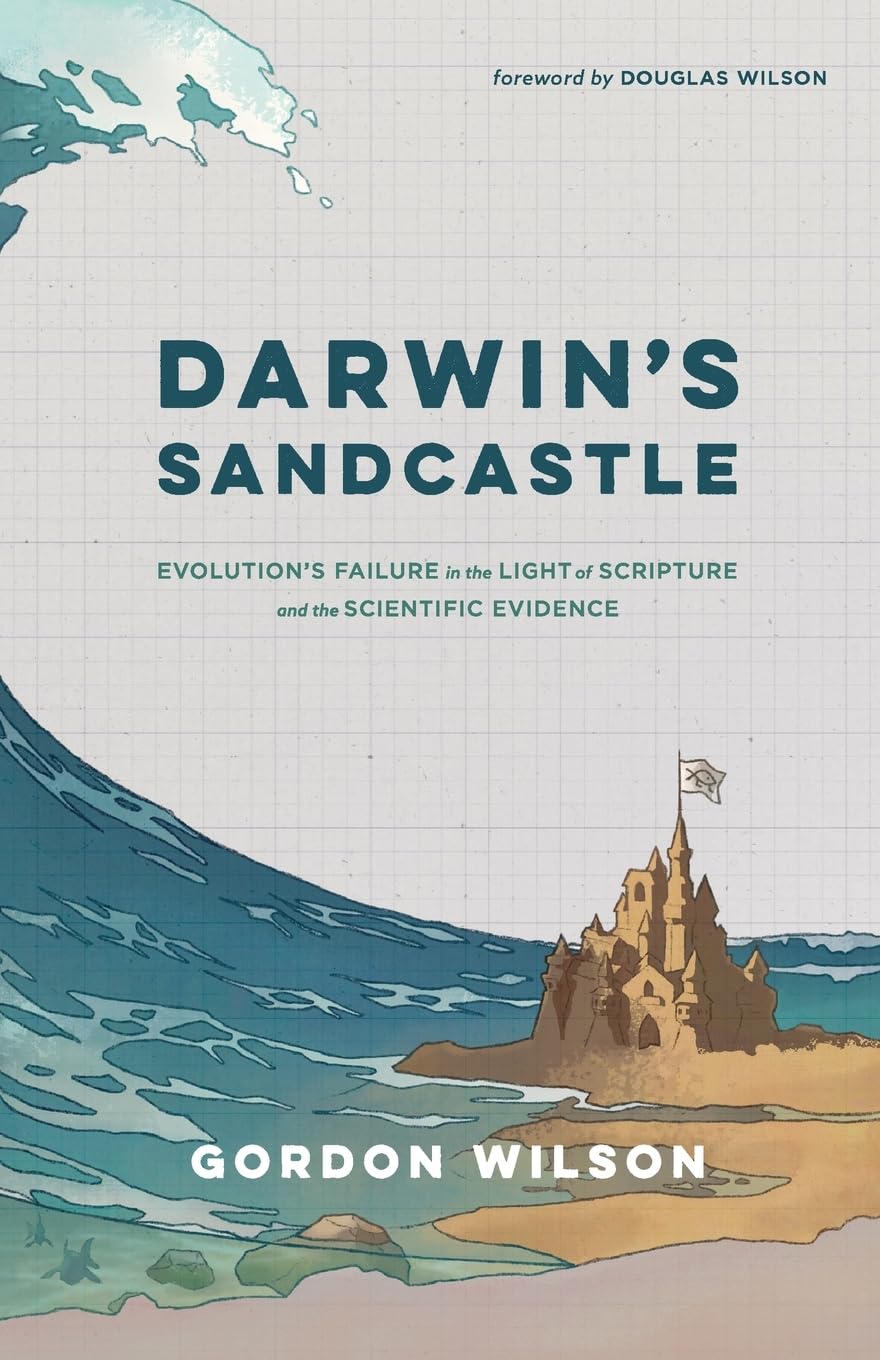
Paperback / $22.00 / 256 Pages
A place where families can play and learn!
This summer during our annual family camping trip on a gloomy definitely-not-beach-weather kind of day, we discovered the DINOS (Discovery Institute of Nature, Origins and Science) Centre. When someone suggested going to a new facility with a unique combination of indoor mini-golf, laser tag, and a café, as well as a Bible History Museum and an outdoor driving range, everybody agreed! Read the rest of this entry »
Order Online