

Articles


Over the last decade, everything has become digital. We don’t capture images on film anymore, but in digital files. We don’t send letters, we send email messages. We don’t buy books, we download documents to an e-reader. Every organization has a website. Information is at our fingertips, but the whole system is extremely fragile.
The problems with our digital storage technologies are twofold. The data don’t last once they have been laid down and must be transferred to keep them fresh, while the technology for storage and reading keeps changing. An amusing example of this is NASA, which in the early 2000s, found that it was unable to access data from the space program of the 1960s and 1970s. So there they were, scouring internet auction sites to find second hand eight-inch floppy drives which could read their priceless data. Similar events of loss or near loss happen all the time. In 2009 when Yahoo! closed their GeoCities server, a huge amount of data was lost, perhaps “the most amount of history in the shortest amount of time, certainly on purpose, in living memory.” Nobody seemed to notice, but if these had been paper documents which were lost from a library, the outcry would have been anguished indeed. The take home lesson is that as a digital society, we need better systems to store and read data. In view of this, some scientists have turned their attention not to a new system, but to a tried and true system, much better than modern devices. Enter DNA to the discussion. Read the rest of this entry »

A tail is a distinct, flexible appendage attached to the torso of the rear section of an animal’s body. It is the body part that corresponds roughly to the coccyx in mammals, reptiles, and birds. Tails are primarily a feature of vertebrates, although some invertebrates, including scorpions and springtails, have tails. Even snails and slugs have tail-like appendages sometimes referred to as tails. Read the rest of this entry »
Camels are one of the most amazing animals known to humans. They are the workhorse of the desert and a gift to generations of people. The Bible mentions camels over 60 times, indicating their central importance in Biblical times. The Bible notes two kinds of camels, the two humped Bactrian camel, and the larger one hump dromedary camel, Camelus dromedarius, family Camelidae. Both kinds now live in the hot dry deserts of the Middle East. Read the rest of this entry »
Illustra Media has produced many excellent DVDs, but the last one Flight: the Genius of Birds is one of their most awesome! It is certainly one that will appeal to entire families. While the previously released Metamorphosis (dealing with butterflies) provides amazing scenes and discussion, Flight not only provides wonderful photography, but also discussion which is easily understood by all. Moreover, even if one could not understand a word of the commentary, the scenes of birds in flight and the graphics still convey a powerful message. Read the rest of this entry »
Dr. Paul Nelson is a prominent spokesperson for the creation and intelligent design communities. It was in that capacity that he introduced enthusiastic participants at the 2013 Creation Weekend in Edmonton, to new arguments and exciting information. Read the rest of this entry »
In many ways, the new book The Global Flood: Unlocking Earth’s Geologic History by John Morris, is a repackaging of Steven Austin’s (editor) book Grand Canyon: Monument to Catastrophe. However the new book is written in non-technical language, with many more illustrative maps, diagrams and charts as well as many beautiful photographs. Thus for many people, this new title will prove very useful and popular indeed. Read the rest of this entry »
Sometimes scientific studies seem more frivolous than serious work. That does not happen too often, of course since scientific research is expensive. However there was one study published in 2005 that did seem “cute rather than deep” (in the words of psychologist Steven Pinker of Harvard University.) Actually the study was intended to demonstrate serious evolutionary implications. As such it was chosen as the cover story for the December 22/29 December 2005 issue of Nature. Thus the caption on the cover featured the expression: “Fascinating Rhythm: Dancing’s Role in Sexual Selection.” However on November 27/13 Nature withdrew this article from its published collection. Read the rest of this entry »
Astronomer Halton Arp (1924-2013) represents an excellent example of how mainstream scientists protect their favoured explanations against anyone, no matter how qualified or prestigious, who dares to question the majority position. We see how actual observations made by Arp and colleagues, were/are not allowed to call the Big Bang origins theory into question. Read the rest of this entry »
Most people have a love-hate relationship with rodents. That is, people love to hate them. This is a pity since rodents exhibit various interesting talents. For a start, when we think of rodents, we think of rats. Rats certainly have a bad reputation because they thrive in so many environments where nobody wants them. Nevertheless rats are smart and individually very clean. Most rats live less than a year in the wild. Mama rats however are definitely overachievers. Read the rest of this entry »
In many parts of North American, the most common wild mammals one sees are rodents in the order Rodentia. The largest known modern rodent is the South American semiaquatic capybara, which can grow to be 107 to 134 cm (3.51 to 4.40 ft) long, 50 to 64 cm (20 to 25 in) tall and typically weighs 35 to 66 kg (77 to 150 lb). Rodents are classified in one of the most successful mammalian groups today (Churakov et al. p. 1315). Read the rest of this entry »

October 24 & 25, 2014 in Edmonton
Ever since Dr. Steve Austin earned his Ph.D. in coal geology from Pennsylvania State University, he has shared his expertise with Christians eager to understand how nature expresses what the Bible tells us happened in the past. Indeed, when it comes to geological research, Dr. Austin’s resume goes on and on, all of it exciting! Read the rest of this entry »
Vance Nelson’s beautiful new coffee table style book on fossils, Untold Secrets of Planet Earth: Flood Fossils, discusses aspects of the topic that will certainly be new to many readers. In addition the author adopts a chatty style which is readily understood by all. Complete with personal reminiscences and historical details concerning each topic, the author builds his discussion of each topic around spectacular illustrations. Read the rest of this entry »
Since the early 1990s, the Creation Science Association has published an alternative tour guide to the Royal Tyrrell Museum in Drumheller, Alberta. This world class facility was built in large part to display fossils from western Canada, and particularly Alberta. Also a few fossils from the western United States are on display.
The museum has re-invented its displays many times over the years, probably in an effort to maintain public interest. Certainly there are a lot of interesting new fossil finds now on display. Initially many fossilized marine animals without backbones were on display as well as large land (and marine) reptiles. Now most of the beautiful marine creatures are gone. Also a large simulated scene at the far end of the Great Dinosaur Hall has long since been replaced by a presentation on horned dinosaur diversity and relationships. Read the rest of this entry »
Imagine that you love solving practical problems like how to build something with straws which will support some weight. No doubt your design will be better than those of your friends and/or siblings!
Well here is a challenge that is fun to think about but difficult to solve. Imagine that you are presented with 600 feet (19000 cm) of shoelace. You are also presented with some small sheets of plastic, each cut into an appropriate shape so that they form a hollow icosahedral container when assembled together. Your assignment is to get the shoe lace into the container! Read the rest of this entry »
Among the wonders of the natural world are plants that eat animals, and the best known example is the Venus flytrap Dionaea muscipula. In Charles Darwin’s book on insectivorous plants, he described the plant and its ingenious design in great detail, but did not offer even a clue about its possible evolution (Darwin, 1896, pp. 286-320). He even called the plant “one of the most wonderful plants in the world” (p. 286).
This carnivorous plant is found growing in peaty sandy soil mainly in one small place, the extreme far east coast of North Carolina (Schnell, 2003, p. 85). It catches its prey, mostly ants, beetles, spiders and other crawling arachnids, with a complex, well designed, mitt-shaped trapping mechanism located at the terminal portion of the plant’s leaf (Ellison, 2006; Ellison and Gotelli, 2009). Read the rest of this entry »
FEATURED BOOKS AND DVDS

Paperback / $6.00 / 55 Pages
Among the wonders of the natural world are plants that eat animals, and the best known example is the Venus flytrap Dionaea muscipula. In Charles Darwin’s book on insectivorous plants, he described the plant and its ingenious design in great detail, but did not offer even a clue about its possible evolution (Darwin, 1896, pp. 286-320). He even called the plant “one of the most wonderful plants in the world” (p. 286).
This carnivorous plant is found growing in peaty sandy soil mainly in one small place, the extreme far east coast of North Carolina (Schnell, 2003, p. 85). It catches its prey, mostly ants, beetles, spiders and other crawling arachnids, with a complex, well designed, mitt-shaped trapping mechanism located at the terminal portion of the plant’s leaf (Ellison, 2006; Ellison and Gotelli, 2009). Read the rest of this entry »
Order Online
Paperback / $10.00 / 111 Pages / full colour
Among the wonders of the natural world are plants that eat animals, and the best known example is the Venus flytrap Dionaea muscipula. In Charles Darwin’s book on insectivorous plants, he described the plant and its ingenious design in great detail, but did not offer even a clue about its possible evolution (Darwin, 1896, pp. 286-320). He even called the plant “one of the most wonderful plants in the world” (p. 286).
This carnivorous plant is found growing in peaty sandy soil mainly in one small place, the extreme far east coast of North Carolina (Schnell, 2003, p. 85). It catches its prey, mostly ants, beetles, spiders and other crawling arachnids, with a complex, well designed, mitt-shaped trapping mechanism located at the terminal portion of the plant’s leaf (Ellison, 2006; Ellison and Gotelli, 2009). Read the rest of this entry »
Order Online
Hardcover / $18.00 / 117 Pages / Full colour
Among the wonders of the natural world are plants that eat animals, and the best known example is the Venus flytrap Dionaea muscipula. In Charles Darwin’s book on insectivorous plants, he described the plant and its ingenious design in great detail, but did not offer even a clue about its possible evolution (Darwin, 1896, pp. 286-320). He even called the plant “one of the most wonderful plants in the world” (p. 286).
This carnivorous plant is found growing in peaty sandy soil mainly in one small place, the extreme far east coast of North Carolina (Schnell, 2003, p. 85). It catches its prey, mostly ants, beetles, spiders and other crawling arachnids, with a complex, well designed, mitt-shaped trapping mechanism located at the terminal portion of the plant’s leaf (Ellison, 2006; Ellison and Gotelli, 2009). Read the rest of this entry »
Order Online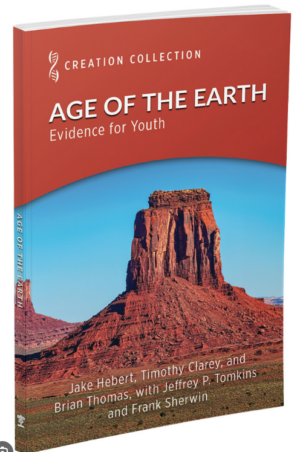
Paperback / $10.00 / 192 Pages / Full colour
Among the wonders of the natural world are plants that eat animals, and the best known example is the Venus flytrap Dionaea muscipula. In Charles Darwin’s book on insectivorous plants, he described the plant and its ingenious design in great detail, but did not offer even a clue about its possible evolution (Darwin, 1896, pp. 286-320). He even called the plant “one of the most wonderful plants in the world” (p. 286).
This carnivorous plant is found growing in peaty sandy soil mainly in one small place, the extreme far east coast of North Carolina (Schnell, 2003, p. 85). It catches its prey, mostly ants, beetles, spiders and other crawling arachnids, with a complex, well designed, mitt-shaped trapping mechanism located at the terminal portion of the plant’s leaf (Ellison, 2006; Ellison and Gotelli, 2009). Read the rest of this entry »
Order Online