

Articles » Introductory

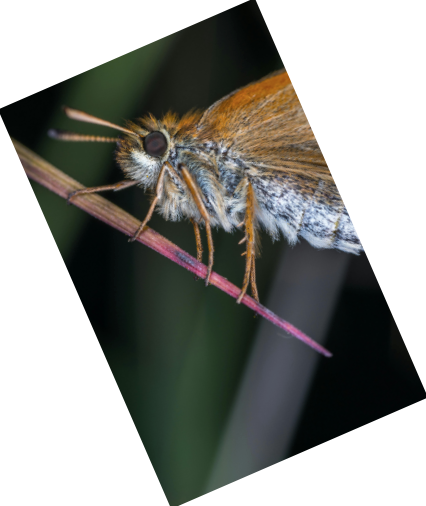

Everyone knows that there are amazing phenomena in the natural world which are totally unexpected. Consider, for example, the male horseshoe crab whose eyes are one million times more sensitive to light at night than during the day. Shakespeare referred to such situations when he had Hamlet declare: “There are more things in heaven and earth, Horatio, then are dreamt of in your philosophy.” (Act 1 Scene 5)
In that context, would you believe that there is a night flying moth that migrates long distances using the night sky for its navigation system? Let’s see what that moth would need to achieve this:
Read the rest of this entry »

The Creation Science Association of Alberta is delighted to announce that geologist Dr. Steven Austin has agreed to come to Edmonton for the November 7/09 weekend. He has agreed to deliver three lectures on the Saturday and also, we expect, one on the Friday evening, in a format much like the hugely successful event with Dr. Kurt Wise, this past fall. Get the latest here. Read the rest of this entry »

Whatever you may think about cats, there is no denying that they are beautifully designed. No, I do not mean their attractive appearances and charming personalities. I mean their design features which allow them to catch mice. The cat, of course, is an expert in the strategy of the hunt. She lies in wait, preferably in a spot where she is not too conspicuous. Then she stalks her prey, slinking along ever so quietly. Finally she winds up for a mighty spring through the air with a precise landing spot… right where the unsuspecting victim hesitates. Then voila! Here she comes to show the victim to you. Naturally you are very impressed with this cat’s achievement. If her strategy were not perfect, there would be no victim since mice are notoriously cautious. Read the rest of this entry »

Sugar gliders look like chipmunks, glide like flying squirrels, and their young (called joeys like kangaroos), can live for several weeks after birth in their mother’s pouch like opossums, and amazingly they belong in the same family as kangaroos. No wonder their origin has stymied evolutionists. The three types of gliders are so different that evolutionists propose that they “evolved at least three times independently in closely related glider species, including sugar gliders. But the question lingers as to how it evolved.” [i]
Read the rest of this entry »Imagine a society where there are no managers, just workers. Imagine further that all these workers know exactly what to do and they do it, as vigorously as possible. Imagine too that these workers are farmers which do not make mistakes. Read the rest of this entry »
Have you walked in a pasture lately, closely examining some fresh cow dung? A delightful little fungus grows there. It is so interesting you will wish to give it more than a fleeting glance. Read the rest of this entry »
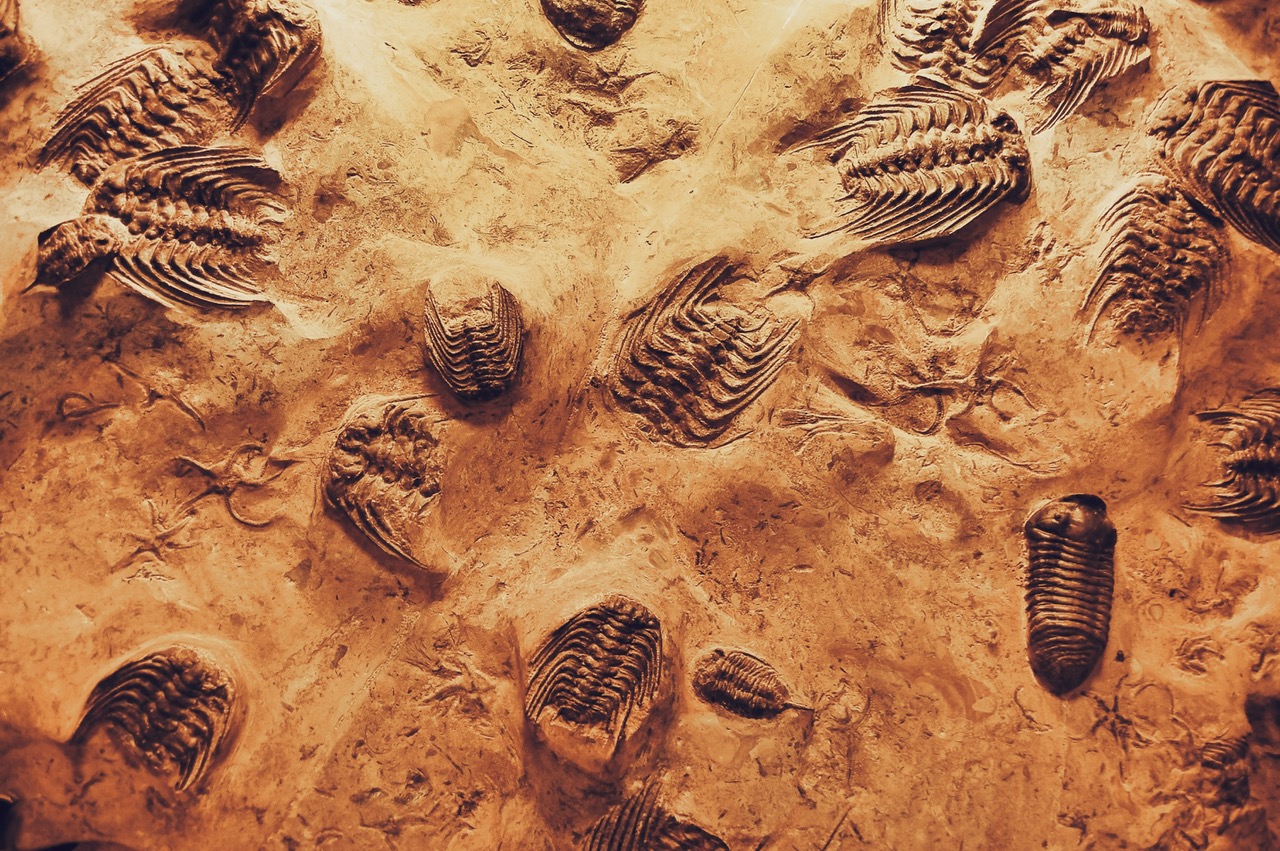
Creation Weekend 2021’s on-line conference with paleontologist Dr. Marcus Ross was so dynamic and interesting that it seemed as if we had heard him in person. I found myself thinking about his return trip to Virginia. But, of course, he never left Virginia. Nevertheless, with the wonders of technology, Dr. Ross was able to present two excellent and very different topics. Since his field of expertise is fossils, his whole first presentation dealt with fossils, specifically some scary marine reptiles called mosasaurs. The second talk dealt with the objectives of creationists in their pursuit of science.
In the Royal Tyrrell Museum’s spooky Bearpaw Sea exhibit, if you look up, you will see the skeletons of massive marine reptiles including mosasaurs. Dr. Ross actually came as a student to study Alberta mosasaurs at the Tyrrell Museum. Read the rest of this entry »

Marcus Ross has loved paleontology, and especially dinosaurs, since he was a kid growing up in Rhode Island. His twin passions of Christianity and science have provided some amazing opportunities along the way!
Marcus began his formal studies in geology at the Pennsylvania State University, where he earned a B.S. in Earth Science. It was there that he also began his early work in creation science, writing articles and leading a student creation club on campus. Following graduation, he continued his studies with a M.S. in Vertebrate Paleontology from the South Dakota School of Mines and Technology and later a Ph.D. in Environmental Science (Geoscience) from the University of Rhode Island. His dissertation research focused on the fossil record of mosasaurs, a group of large marine-dwelling lizards known from upper Cretaceous rocks around the world. Read the rest of this entry »
Tarsiers are chipmunk sized nocturnal primates known for their enormous night adapted eyes and koala-like body appearance. Their face, which resembles that of an owl, is the epitome of innocence. Tarsiers are covered with very soft, beautiful, velvety fur, which is generally buff, beige, or ochre in color. The head and body together range from 10 to 15 cm in length, followed by a 20 to 25 cm long slender tail. Read the rest of this entry »
Camels are one of the most amazing animals known to humans. They are the workhorse of the desert and a gift to generations of people. The Bible mentions camels over 60 times, indicating their central importance in Biblical times. The Bible notes two kinds of camels, the two humped Bactrian camel, and the larger one hump dromedary camel, Camelus dromedarius, family Camelidae. Both kinds now live in the hot dry deserts of the Middle East. Read the rest of this entry »
The newest title in the highly successful “Wonders of Creation Series” is The Archaeology Book by David Down. Just published in February 2010, this book includes a new multi-age format. Each chapter provides introductory material suitable for grades 5-6, elaboration on the topic which is suitable for grades 7-8, and further details which raise questions concerning controversial issues such as dating techniques. This latter section is provided for grades 9-11 or other interested readers. Read the rest of this entry »
The archer fish (Toxotidae jaculatrix, from ejaculator fish) –– named due to its expert archery skills–– is one of the most amazing types of fish known to humans (Smith, 1936). When first researched by scientists in the 1920s, researchers “could hardly believe their eyes” at its shooting ability (Pinney, 1977, p. 3). The existence of the fish was actually first reported by explorers in 1764, but scholars could not accept the reports of the existence of this amazing fish (Lüling, 1963, p. 100). Read the rest of this entry »
Have you heard the sad story of the dinosaurs that succumbed to a watery catastrophe? Most young people in our province have heard the story of the Centrosaurus herd in Dinosaur Provincial Park. No doubt it would take quite some force to sweep huge, four-footed horned dinosaurs off their feet. The Centrosaurus dinosaurs of Alberta were only moderately large compared to some other horned designs such as Triceratops. Centrosaurus, for their part, were about 5 m (16 ft) long and perhaps 2.5 m (8 ft) tall. But they were certainly chunky and heavy. Read the rest of this entry »
Have you ever imagined yourself as a best selling author? Detective stories sell well. Let’s give it a try. My story is set in an imposing country home in England. The wealthy owner happens to wander into his wife’s dressing room. She is away on an expedition to the beach. The gentleman notices his wife’s diamond necklace carelessly flung onto the table amidst expensive perfume bottles. Horrified, he swoops down upon the jewelry, only to discover that this is a cheap imitation of the real necklace. Promptly he calls the local inspector who sends out four detectives. The detectives snoop around and each presents his theory on the case. Detective Smith declares that the butler stole the necklace and sold it in London. Detective Jones strongly suggests that his evidence implicates the maid. Detective Cooper accuses the daughter’s boyfriend of helping himself to the jewels. Detective Trent indicates that the evidence points to the son of the family who has wasted huge sums of money on fast cars. The gentleman is now thoroughly confused. When his wife returns home, he shares all these distressing details with her. It is then that his wife informs him that actually she lent the real necklace to her sister, Lady Hampton, who is scheduled to attend a royal court event that very evening. Read the rest of this entry »

As a perfect companion was created for man, namely woman, so too was a perfect companion created for both men and women. That companion was the dog. A study of dogs’ design, temperament, variety, and personality shows they were created specifically to be companions, helpmates, and servants for humans. No other animal is even close that meets these many requirements.
That God made the perfect companion for both men and women, namely the dog, humans agree. In the United States, 77 million dogs live; 1.6 per household. From 2018 to 2020, the Canadian dog population grew from 7.6 million to 7.7 million. In the entire world, the number of dogs is close to a billion! Dogs are so loved that their passing evokes more emotional responses than any other animal, often more than even the death of a close relative (Bova, 2022). The fact is “for many modern dogs, social bonding is vital to their individual well-being” as it is for ours (Morey,1994, p. 346). Dogs were genetically programmed to have unconditional love for their human master. They will fiercely protect their master and at the same time also show great affection for him or her. Dogs are loyal, trainable and able to work very hard from sun up to sun down.
Read the rest of this entry »FEATURED BOOKS AND DVDS

Paperback / $10.00 / 159 Pages / Full colour
As a perfect companion was created for man, namely woman, so too was a perfect companion created for both men and women. That companion was the dog. A study of dogs’ design, temperament, variety, and personality shows they were created specifically to be companions, helpmates, and servants for humans. No other animal is even close that meets these many requirements.
That God made the perfect companion for both men and women, namely the dog, humans agree. In the United States, 77 million dogs live; 1.6 per household. From 2018 to 2020, the Canadian dog population grew from 7.6 million to 7.7 million. In the entire world, the number of dogs is close to a billion! Dogs are so loved that their passing evokes more emotional responses than any other animal, often more than even the death of a close relative (Bova, 2022). The fact is “for many modern dogs, social bonding is vital to their individual well-being” as it is for ours (Morey,1994, p. 346). Dogs were genetically programmed to have unconditional love for their human master. They will fiercely protect their master and at the same time also show great affection for him or her. Dogs are loyal, trainable and able to work very hard from sun up to sun down.
Read the rest of this entry » Order Online
Paperback / $6.00 / 55 Pages
As a perfect companion was created for man, namely woman, so too was a perfect companion created for both men and women. That companion was the dog. A study of dogs’ design, temperament, variety, and personality shows they were created specifically to be companions, helpmates, and servants for humans. No other animal is even close that meets these many requirements.
That God made the perfect companion for both men and women, namely the dog, humans agree. In the United States, 77 million dogs live; 1.6 per household. From 2018 to 2020, the Canadian dog population grew from 7.6 million to 7.7 million. In the entire world, the number of dogs is close to a billion! Dogs are so loved that their passing evokes more emotional responses than any other animal, often more than even the death of a close relative (Bova, 2022). The fact is “for many modern dogs, social bonding is vital to their individual well-being” as it is for ours (Morey,1994, p. 346). Dogs were genetically programmed to have unconditional love for their human master. They will fiercely protect their master and at the same time also show great affection for him or her. Dogs are loyal, trainable and able to work very hard from sun up to sun down.
Read the rest of this entry » Order Online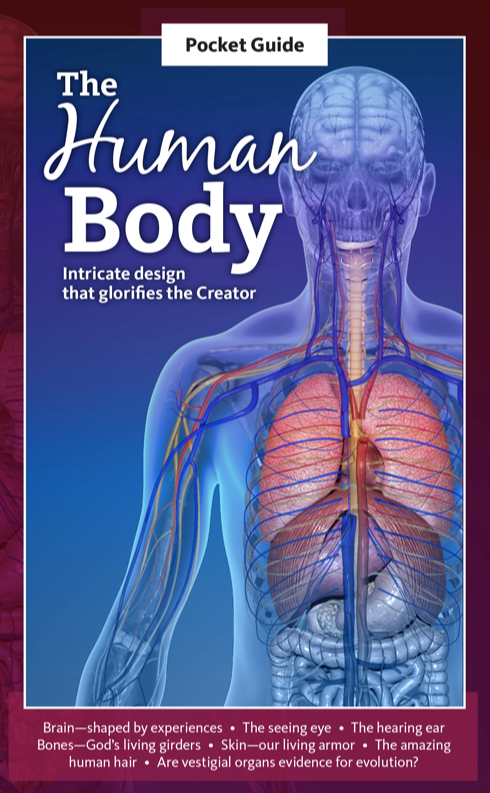
Paperback / $6.00 / 96 Pages / full colour
As a perfect companion was created for man, namely woman, so too was a perfect companion created for both men and women. That companion was the dog. A study of dogs’ design, temperament, variety, and personality shows they were created specifically to be companions, helpmates, and servants for humans. No other animal is even close that meets these many requirements.
That God made the perfect companion for both men and women, namely the dog, humans agree. In the United States, 77 million dogs live; 1.6 per household. From 2018 to 2020, the Canadian dog population grew from 7.6 million to 7.7 million. In the entire world, the number of dogs is close to a billion! Dogs are so loved that their passing evokes more emotional responses than any other animal, often more than even the death of a close relative (Bova, 2022). The fact is “for many modern dogs, social bonding is vital to their individual well-being” as it is for ours (Morey,1994, p. 346). Dogs were genetically programmed to have unconditional love for their human master. They will fiercely protect their master and at the same time also show great affection for him or her. Dogs are loyal, trainable and able to work very hard from sun up to sun down.
Read the rest of this entry » Order Online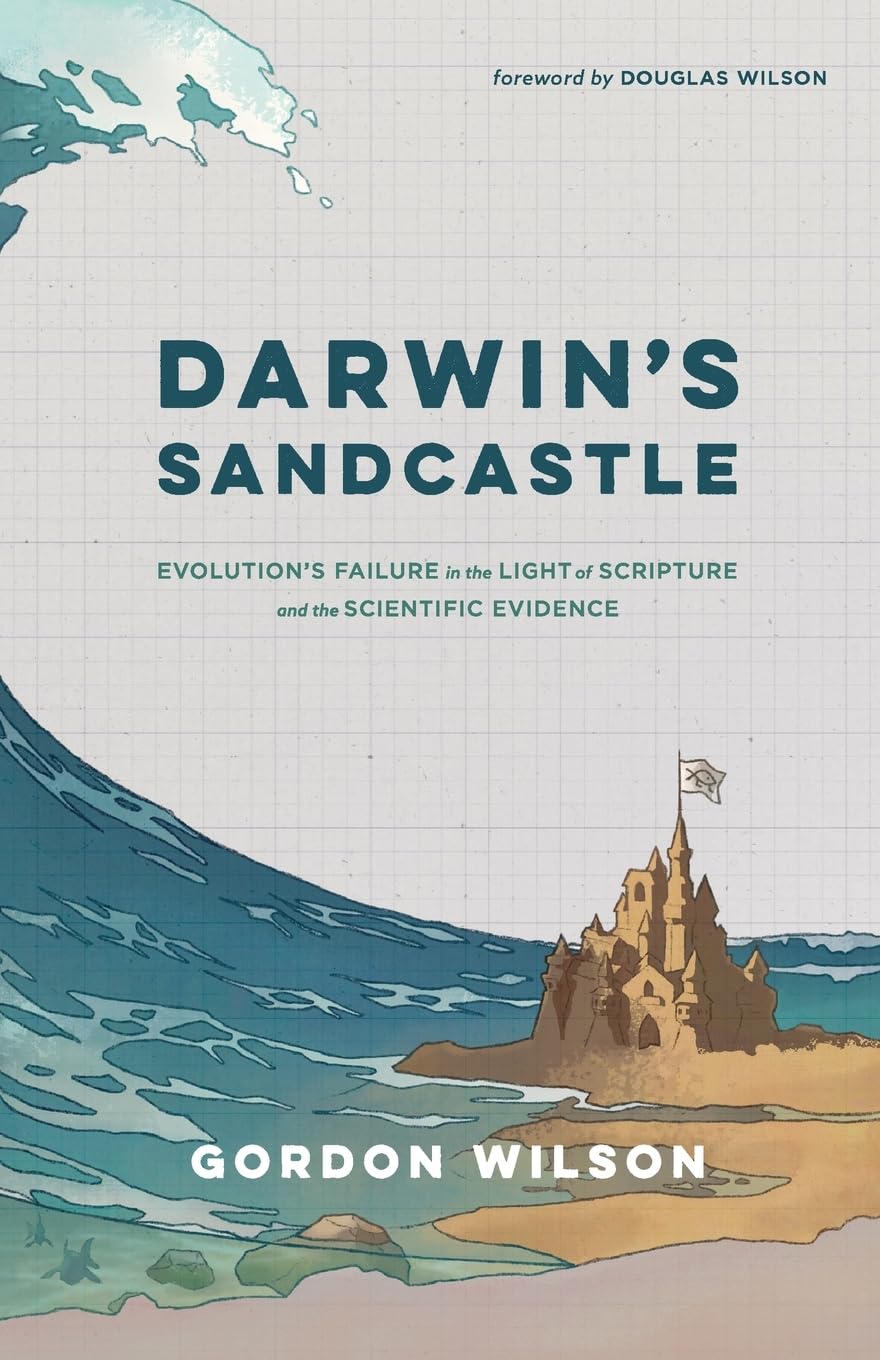
Paperback / $22.00 / 256 Pages
As a perfect companion was created for man, namely woman, so too was a perfect companion created for both men and women. That companion was the dog. A study of dogs’ design, temperament, variety, and personality shows they were created specifically to be companions, helpmates, and servants for humans. No other animal is even close that meets these many requirements.
That God made the perfect companion for both men and women, namely the dog, humans agree. In the United States, 77 million dogs live; 1.6 per household. From 2018 to 2020, the Canadian dog population grew from 7.6 million to 7.7 million. In the entire world, the number of dogs is close to a billion! Dogs are so loved that their passing evokes more emotional responses than any other animal, often more than even the death of a close relative (Bova, 2022). The fact is “for many modern dogs, social bonding is vital to their individual well-being” as it is for ours (Morey,1994, p. 346). Dogs were genetically programmed to have unconditional love for their human master. They will fiercely protect their master and at the same time also show great affection for him or her. Dogs are loyal, trainable and able to work very hard from sun up to sun down.
Read the rest of this entry » Order Online