

Articles


Most people, over the years, have heard about big name atheistic scientists. The most prominent example today is evolutionary biologist Sir Richard Dawkins, who holds the Chair for Public Understanding of Science at Oxford University. Because of his prominent position in academia, he commands lots of attention in his campaign against the “malignant influence of organized religion in society.” It is easy enough to dismiss Richard Dawkins as extremist. Certainly his views are extreme, but the astonishing thing is that they are becoming mainstream in powerful scientific circles. Read the rest of this entry »
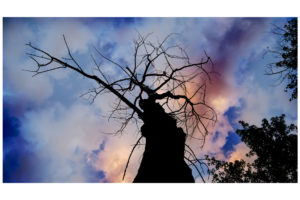
There is no doubt that we are drawn to organization that involves hierarchy. Carl Linnaeus (1707-1778) famously devised a scheme for plant classification according to their reproductive characteristics. He established the idea of grouping organisms into a hierarchy of progressively shared traits. In his Systema naturae (1735) Linnaeus decreed that this logical organization of living things should involve increasingly larger categories. Thus, all similar individuals would be members of a species, similar species could be lumped into a genus. Similar genera were clumped into a family, similar families into an order, similar orders into a class, similar classes into a phylum or division. These groups were supposed to be exclusive. An organism was supposed to be a member of only one group. In Linnaeus’ view, this logical arrangement of organisms reflected God’s character and wisdom.
But all that changed with Darwin. Read the rest of this entry »

Creation Science Association of Albert is delighted to present David Coppedge as the featured speaker for our Creation Weekend 2020. Due to the COVID 19 restrictions, Creation Weekend will be a one evening online event this year. David Coppedge was exceptionally well received with his presentations in Edmonton in 2012. Now in 2020, his return promises another tour de force with a presentation entitled Creation is Awe Inspiring! This event will take place on Friday evening, October 23, 2020 at 7:30 pm. To participate in this session, register at www.create.ab.ca/register. Once you register you will receive a confirmation email, and closer to the event you will receive an email with further details. Read the rest of this entry »
The genius of the English language, many people say, is that it freely borrows from other languages. For example, the term “déjà vu” is French and it means “already seen.” We might more readily say “been there, done that!” Another equivalent expression is “nothing new under the sun.” Indeed some things are just so-o-o-o predictable. Among current events, none seems more aptly connected to the term déjà vu than the resistance of established scientists to criticism, any criticism, of their views. Read the rest of this entry »

John Whitcomb and Henry Morris’ 1961 classic The Genesis Flood was, of course, a wonderful work. Countless people, among them many scientists, have been positively influenced by its message. In the ensuing half century however, a lot of new information and many new arguments against “the flood” have appeared. The time has long since come for an update of the 1961 work. Read the rest of this entry »
We humans are proud of our accomplishments in science, technology, the arts, and music. And, we have a right to be proud: the technological wonders of the last century have radically changed our world and benefited us enormously. While basking in our accomplishments, though, it behooves us to acknowledge the fact that we have used the natural world as a model for many of our achievements. Many scientists spend a lifetime studying and learning from the wisdom expressed everywhere in creation. In the fields of “engineering, chemistry, ballistics, aerodynamics – in fact in almost every area of human endeavor – nature has been there first” and the natural world is “infinitely more economical of resources and generally superior in performance” than our best efforts (Felix Paturi. 1976. Nature, Mother of Invention. Harper & Row p. 1). Read the rest of this entry »
It was in April 1953 that Frances Crick and James Watson published their proposed description of the DNA molecule. As they anticipated, biology was forever changed. Now biologists had a molecule which they could study, which stored hereditary information. The 1960s saw the emergence of the ‘standard model,’ which held that DNA codes for proteins which determine the characteristics of each creature. However on the occasion of the 60th anniversary, one commentator in the journal Nature declared: “We do not know what most of our DNA does, nor how, or to what extent it governs traits.” (496 #7446 p. 419). Read the rest of this entry »
Diatoms are a major group of plants which float in open water, and they are one of the most successful types of microscopic algae known. The estimated over 100,000 known species are found in the oceans, in freshwater, in soils and even on damp surfaces. Most diatoms are unicellular, although some can form colonies in the shape of long filaments or ribbons. As eukaryotes or cells with a nucleus, they have highly complex cells, comparable to other eukaryotes such as mammals and even humans (Philippe, et al., 1994, Journal of Evolutionary Biology 7: 247). Read the rest of this entry »

Two “teams” of plants compete for popularity
One evening after dinner at our Opa and Grandmum’s house, Grandmum told us that we were going to do an experiment called Monocot “Meanies” vs. Dicot “Dreamers”. We each took two styrofoam bowls and put holes in the bottom, and then put in some soil. In one bowl, we planted two soaked bean seeds and two dry bean seeds. In the other bowl, we planted two soaked corn seeds and two dry corn seeds. Grandmum said, “Some plants are Monocot Meanies and others are Dicot Dreamers.” She didn’t tell us which was which, but that we would know when they came up. Read the rest of this entry »
In 2021 the AHEA (the Alberta Home Educators Association) held a Digital Conference in place of their regular conference. Each year CSAA (the Creation Science Association of Alberta) has a booth at this conference. This year since it is a digital conference, we have a digital booth.
Welcome! Take a look at the resources that we offer.
It’s fun to go to a museum to view the mounted dinosaur skeletons. In the Royal Tyrrell Museum in Drumheller, Alberta, the poses suggest tension. There are running dinosaurs, fighting dinosaurs, carnivorous dinosaurs about to kill herbivore victims, and others caught in the act of raiding dinosaur nests. The displays are actually stories without words. At a glance they communicate current scientific interpretations about dinosaur lifestyles. But these are not the really dramatic displays. It is the dinosaur skeletons still entombed in rock, which should rivet our interest. These artifacts cry out with information. Read the rest of this entry »
It’s not hard to imagine the scene. A lush forest crowds the shores of a glittering lake. Chicken-sized birds perch on tree branches or fly ponderously over the lake. Smaller birds also perch or flit joyously hither and thither through the sky. A frisky bipedal (runs on two feet) dinosaur pursues its own agenda in the adjacent woods. One consumes a small sharp-toothed little mammal, perhaps a type of rodent. Insects buzz lazily over the lake while fish and various tiny crustaceans lurk in the watery depths. It all seems so placid. What could mar this moment? Read the rest of this entry »
The big surprise in April 1953 was not that the structure, and by implication the function, of DNA had been discovered, but rather who had done it. With established scientists like American Linus Pauling of Caltech in Pasadena, and British scientists Maurice Wilkins and Rosalind Franklin at King’s College, University of London, carrying out such research, it was expected that the problem would soon be solved. These scientists all had research funds, experience and appropriate equipment. Read the rest of this entry »
An avid fan of spy stories, I have read many which involve an apparently harmless document (like a friendly letter). But the document actually conveys dangerous information if one is provided with the appropriate convention for decoding it. Read the rest of this entry »
History is full of sad stories. Nobody needs to tell us that. Nevertheless many tragic events have been obscured by the mists of time. It sometimes seems that we scarcely know or care any more about the crusades, European wars or treaties during the Middle Ages or events before or after that time. Eighty years ago however, the assassination of the Romanovs, the Russian czar and his family took place in the Siberian town of Yekaterinburg. The events were so shrouded in mystery, and the victims so interesting (particularly the four beautiful daughters), that public interest in the story has never faded. Now, thanks to some remarkable espionage carried out in Russia during the final years of the Communist regime, and to some recently developed skills in forensic science, the final chapter on the Romanov saga will be written during the summer of 1998. If all goes according to plan, the Romanovs will be buried in the family sepulchre in St. Peter and St. Paul Cathedral in St. Petersburg. The funeral service with appropriate imperial grandeur is scheduled for July 17 — 80 years to the day after their untimely deaths. Read the rest of this entry »
FEATURED BOOKS AND DVDS
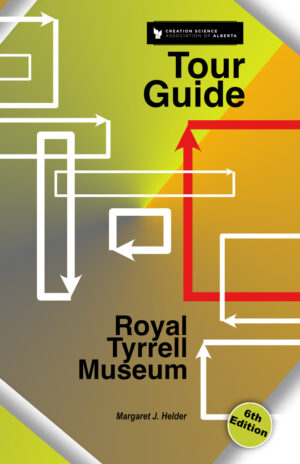
Paperback / $6.00 / 55 Pages
History is full of sad stories. Nobody needs to tell us that. Nevertheless many tragic events have been obscured by the mists of time. It sometimes seems that we scarcely know or care any more about the crusades, European wars or treaties during the Middle Ages or events before or after that time. Eighty years ago however, the assassination of the Romanovs, the Russian czar and his family took place in the Siberian town of Yekaterinburg. The events were so shrouded in mystery, and the victims so interesting (particularly the four beautiful daughters), that public interest in the story has never faded. Now, thanks to some remarkable espionage carried out in Russia during the final years of the Communist regime, and to some recently developed skills in forensic science, the final chapter on the Romanov saga will be written during the summer of 1998. If all goes according to plan, the Romanovs will be buried in the family sepulchre in St. Peter and St. Paul Cathedral in St. Petersburg. The funeral service with appropriate imperial grandeur is scheduled for July 17 — 80 years to the day after their untimely deaths. Read the rest of this entry »
Order Online
Paperback / $10.00 / 111 Pages / full colour
History is full of sad stories. Nobody needs to tell us that. Nevertheless many tragic events have been obscured by the mists of time. It sometimes seems that we scarcely know or care any more about the crusades, European wars or treaties during the Middle Ages or events before or after that time. Eighty years ago however, the assassination of the Romanovs, the Russian czar and his family took place in the Siberian town of Yekaterinburg. The events were so shrouded in mystery, and the victims so interesting (particularly the four beautiful daughters), that public interest in the story has never faded. Now, thanks to some remarkable espionage carried out in Russia during the final years of the Communist regime, and to some recently developed skills in forensic science, the final chapter on the Romanov saga will be written during the summer of 1998. If all goes according to plan, the Romanovs will be buried in the family sepulchre in St. Peter and St. Paul Cathedral in St. Petersburg. The funeral service with appropriate imperial grandeur is scheduled for July 17 — 80 years to the day after their untimely deaths. Read the rest of this entry »
Order Online
Hardcover / $18.00 / 117 Pages / Full colour
History is full of sad stories. Nobody needs to tell us that. Nevertheless many tragic events have been obscured by the mists of time. It sometimes seems that we scarcely know or care any more about the crusades, European wars or treaties during the Middle Ages or events before or after that time. Eighty years ago however, the assassination of the Romanovs, the Russian czar and his family took place in the Siberian town of Yekaterinburg. The events were so shrouded in mystery, and the victims so interesting (particularly the four beautiful daughters), that public interest in the story has never faded. Now, thanks to some remarkable espionage carried out in Russia during the final years of the Communist regime, and to some recently developed skills in forensic science, the final chapter on the Romanov saga will be written during the summer of 1998. If all goes according to plan, the Romanovs will be buried in the family sepulchre in St. Peter and St. Paul Cathedral in St. Petersburg. The funeral service with appropriate imperial grandeur is scheduled for July 17 — 80 years to the day after their untimely deaths. Read the rest of this entry »
Order Online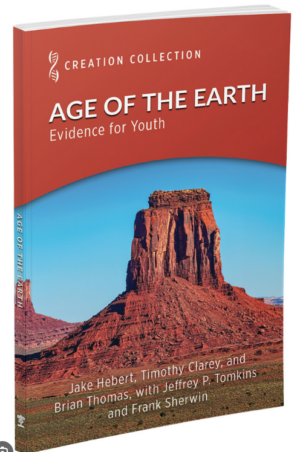
Paperback / $10.00 / 192 Pages / Full colour
History is full of sad stories. Nobody needs to tell us that. Nevertheless many tragic events have been obscured by the mists of time. It sometimes seems that we scarcely know or care any more about the crusades, European wars or treaties during the Middle Ages or events before or after that time. Eighty years ago however, the assassination of the Romanovs, the Russian czar and his family took place in the Siberian town of Yekaterinburg. The events were so shrouded in mystery, and the victims so interesting (particularly the four beautiful daughters), that public interest in the story has never faded. Now, thanks to some remarkable espionage carried out in Russia during the final years of the Communist regime, and to some recently developed skills in forensic science, the final chapter on the Romanov saga will be written during the summer of 1998. If all goes according to plan, the Romanovs will be buried in the family sepulchre in St. Peter and St. Paul Cathedral in St. Petersburg. The funeral service with appropriate imperial grandeur is scheduled for July 17 — 80 years to the day after their untimely deaths. Read the rest of this entry »
Order Online