

Articles


Evolutionists have long had a difficult time trying to account for the development of cells with nuclei. The first step, of course, is to agree on a suitable ancestor. The popular choice is bacteria (prokaryotes) which typically have only a single circular chromosome lying free in the cell. Unfortunately there are numerous structural and metabolic differences between the assumed ancestors and presumed descendants. Various theories have been proposed to explain how this new cell type might have developed, but none has proved extremely satisfactory. Thus the old theories tend to get recycled. An explanation is accepted for a while and later falls into disfavour as another old theory is retrieved from mothballs. The problem is that none of these theories fits the observed facts very well at all. Read the rest of this entry »


It’s a scary place out there. Dangerous rays and strange bodies make deep space a good place to avoid. The Hubble Space Telescope (functioning since late 1993), and other observatory satellites like the Compton Gamma Ray Observatory or CGRO (launched April 5, 1991), and Rossi X-Ray Timing Explorer or XTE (launched December 30, 1995) and Beppo-SAX (launched April 20, 1996), have provided us with an information overload when it comes to the wonders of space. If each type of body in space, such as stars and galaxies, functioned in predictable ways, then astronomers might have a pretty good grasp on what is going on out there. Recent observations made with these fancy new observatories however, have revealed a plethora of unexpected and unexplained phenomena. Vast numbers of objects which should act in similar ways, all seem to be doing their own thing. Read the rest of this entry »
With sparkling eyes, the baby on the cover of TIME magazine’s 1997 Special Issue “The Age of Discovery”, is ready to reach out for some fascinating object. The theme is a “celebration of mankind’s exploration of the unknown.” However the issue seems most noteworthy for its atheistic and evolutionary bias. For example, one British author, in describing his boyhood enthusiasm for collecting insects, at the same time confides to us: “The life of those Wiltshire woods and rivers and ponds became, as the comfort of God’s presence drained away, so very much more complex than their romantic and theological past suggested. But at 14, this secular revelation was wildly exciting, a liberation from faith.” (p. 41) For author Redmond O’Hanlon, the joys of observing nature were closely connected to his new found enthusiasm for Darwin, which he began to read at that time. Read the rest of this entry »
According to astronomer/author Timothy Ferris in his new book The Whole Shebang: A State of the Universe(s) Report, cosmologist Andrei Linde considers speculation on ultimate origins an excitingly “dangerous” subject. (1997 published by Simon and Schuster see p. 260) Apparently Dr. Linde sometimes wakes up wracked by doubt. Maybe all the speculations in cosmology are simply myths, with no foundation in reality at all. Author Ferris quotes Linde as remarking “Maybe actually the solution is quite aside from what we’re thinking about. It is a very dangerous feeling, this feeling that you’re not totally secure in what you’re doing.” It is one thing to have tentative views, but why should this scientist consider his to be dangerous? What or whom does he fear? Certainly fellow cosmologists have no similar scruples. A review of Dr. Ferris’ book in Astronomy magazine July 1997 p. 108 claims “His work is a tour de force, a spiral galaxy of thoughts recounted in eloquent and vibrant prose.” We are advised to “Relish its prose, ponder its implications.” Well then let’s do it. Let’s see what the implications of cosmology are for us today. Read the rest of this entry »
History is full of sad stories. Nobody needs to tell us that. Nevertheless many tragic events have been obscured by the mists of time. It sometimes seems that we scarcely know or care any more about the crusades, European wars or treaties during the Middle Ages or events before or after that time. Eighty years ago however, the assassination of the Romanovs, the Russian czar and his family took place in the Siberian town of Yekaterinburg. The events were so shrouded in mystery, and the victims so interesting (particularly the four beautiful daughters), that public interest in the story has never faded. Now, thanks to some remarkable espionage carried out in Russia during the final years of the Communist regime, and to some recently developed skills in forensic science, the final chapter on the Romanov saga will be written during the summer of 1998. If all goes according to plan, the Romanovs will be buried in the family sepulchre in St. Peter and St. Paul Cathedral in St. Petersburg. The funeral service with appropriate imperial grandeur is scheduled for July 17 — 80 years to the day after their untimely deaths. Read the rest of this entry »
We all like to communicate, don’t we – at the very least to tell others what to do. Indeed a slang expression has been coined about this “Communication is the name of the game!” People, of course, are able to communicate in words. However there are other sorts of communication which do not involve words, but which nevertheless involve information. Some scientists, especially in their study of biology, have become very interested in information and its source. Dr. A. E. Wilder-Smith, for example, discussed the genesis of biological information in his 1981 book The Natural Sciences Know Nothing of Evolution. Moreover this fall two new books on this subject (by Dr. William A. Dembski) are scheduled to be released. Dr. Dembski is an associate editor of Origins and Design (www.arn.org) and the titles of these new books are The Design Inference (Cambridge) and Mere Creation: Reclaiming the Book of Nature (InterVarsity). Dr. Dembski’s interest in information theory is in its implications for origins theory. This also was Dr. Wilder-Smith’s concern. In addition there is another book recently translated from German, which provides fascinating insights on this topic. The title of Dr. Werner Gitt’s book is In the Beginning was Information. Read the rest of this entry »
Have you ever seen a plant growing inside a cage? We saw such a sight at the Royal Botanic Gardens in Sydney, Australia. It makes you stop and think doesn’t it? Is the cage there to protect the tree or to protect the people? Is this some sort of carnivorous threat or what? The little evergreen tree inside the cage is actually a very non-threatening 50 cm tall. The cage is there to prevent anyone from running off with the rarest known tree species on earth. The existence of this highly unusual tree, known as the Wollemi Pine, was just discovered in late 1994. Scientists are still dancing with delight. Read the rest of this entry »
Have you ever read The Enormous Crocodile by Roald Dahl? It is such a fun story! Even grown ups laugh about this nasty scheming reptile who keeps devising new and ingenious ways to catch children for his supper. He describes his schemes as “secret plans and clever tricks.” Various jungle animals however foil each sneaky plan and the nasty croc eventually gets launched by an elephant into outer space. Read the rest of this entry »
The study of science really was a lot less complicated a generation or so ago. What we knew about the planets in our solar system, for example, was short and sweet. The planets basically had location, size and mass, rings or no rings, moons and names. That wasn’t too hard to learn. Since the advent of the space age however we have discovered a wealth of exciting new information. Every planet is different not only in appearance from all the other planets, but also in important physical characteristics. Three planets (Venus, Uranus and Pluto) spin in a backwards (retrograde) direction as do a few moons. In addition the axis of rotation for Uranus is tipped so steeply that it is basically spinning sideways. Moreover four gaseous planets, Jupiter, Saturn, Uranus and Neptune, all exhibit magnetic fields just as Earth does. The orientation of the field however with these giants is exactly opposite to that on earth. A compass on any of the four Jovian planets would point southward. Evidently the solar system is becoming more complicated with the launch of each additional probe. Read the rest of this entry »
A special section in the December 11, 1998 issue of the journal Science was devoted to a celebration of the roundworm Caenorabditis elegans. Although a lengthy name has been conferred on this creature, the organism itself is actually at most about 1 mm long. Of the 20,000 or so known species of roundworm or nematode, most are parasites. This species, however, (generally called by the more catchy title of C. elegans), lives free in the soil. Hardly visible to the naked eye, an individual worm nevertheless appears very large when viewed through an ordinary microscope. Except for cells destined to become eggs or sperm, this animal consists of only 959 cells. The whole creature is quite transparent so that, through the microscope, one can easily view the various cells and organs. Development of an individual is fast too, requiring only three days in a life span of two or three weeks. Such an organism seemed ideal for laboratory studies. Thus in 1963 Cambridge biologist Sydney Brenner began a research program which continues to the present. And what fascinating results have been obtained! Read the rest of this entry »
In his famous 1959 article, Dr. Bernard Kettlewell described his research on the peppered moth as the “consummation and confirmation” (p. 53) of Darwin’s theories. (B. Kettlewell. 1959. Darwin’s Missing Evidence. Scientific American. March pp. 4 8-53) Since then, the peppered moth has become standard fare in biology and genetics texts. Educators really like this example because it is “extremely visual” and thus easily understood and remembered. While all scientists, whether creation model support ers or evolution model supporters, agree that shifts in the proportions of various characteristics do take place in nature, only the evolutionists draw more extensive conclusions from the data. For example, Nelson Canada’s 1993 high school text Biolog y (authored by teachers from Alberta and Newfoundland), suggests that students explain the statement “Evolution and adaptation usually occur by means of small changes” in connection with the case of the peppered moth. (p. 110) Read the rest of this entry »
Everyone wants to go outdoors in the spring to enjoy the sunshine and the warm breezes. But what is there to do besides sit, or play ball or ride bicycles? Of course there is always garbage to pick up. After that maybe some of the dead leaves and other plant debris can be removed to tidy up the garden a bit. But wait! Under many of those dead leaves we discover adult lady bugs waiting for summer and their favourite food, aphids. There are no aphids to eat just yet as new leaves have not emerged. Let’s allow the lady bugs their peace and quiet a while longer. Soon after the fresh green leaves appear, aphids will be there on some of them and the lady bugs will surely find their way to them. Read the rest of this entry »
As a rule, scientists seek answers. They want to answer the “why” questions. Why, for example, are plants green? Why is blood red? These are very simple queries compared to the biggies like why does quantum physics work. Nevertheless, believe it or not , we are as far from answering why chlorophyll is green, and blood cells are red, as we are from explaining quantum mechanics. Two commentators in fact recently termed the reason blood is red a “visual pun of molecular wit.” (Morrison and Morrison. 1998. Scientific American. March p. 106) The explanation for colour in chlorophyll is similarly obscure. The situation becomes even more interesting when we discover that chlorophyll and the heme component of hemoglobin are chemically extremely similar . Read the rest of this entry »
The new generation of creation scientists are young, smart and sophisticated. Along with geneticists, taxonomists, and palaeontologists, experts in DNA sequencing analysis and phylogenetic analysis (the search for relationship patterns) are asking new questions and revisiting old issues. No longer do they concentrate on fighting evolutionary theories. They don’t need to. Rather, they are forging new creation-based theories. With this positive approach, they are certain to attract yet further support from Christians in educational and professional circles. It was to learn more about some new initiatives that I attended a conference in Lynchburg, Virginia on August 5-7, 1999. Read the rest of this entry »
Indeed it was a “tragedy,” opined an editorial in the New York Times (August 13, 1999). Within this context, naturally enough, the editorialist continued “deep sadness is the most sensible response.” The reader might have been pardoned for suspecting the opinion piece was actually written tongue in cheek. The event which called forth this public mourning was none other than a decision by the State of Kansas’ Board of Education. That action of the Board, according to the NY Times, “makes it more likely that many schools will spend less time on evolution …” Oh really? One might have understood if the newspaper had called the action regrettable or ill-advised, but “tragic?” What was going on here? Read the rest of this entry »
FEATURED BOOKS AND DVDS

Paperback / $6.00 / 55 Pages
Indeed it was a “tragedy,” opined an editorial in the New York Times (August 13, 1999). Within this context, naturally enough, the editorialist continued “deep sadness is the most sensible response.” The reader might have been pardoned for suspecting the opinion piece was actually written tongue in cheek. The event which called forth this public mourning was none other than a decision by the State of Kansas’ Board of Education. That action of the Board, according to the NY Times, “makes it more likely that many schools will spend less time on evolution …” Oh really? One might have understood if the newspaper had called the action regrettable or ill-advised, but “tragic?” What was going on here? Read the rest of this entry »
Order Online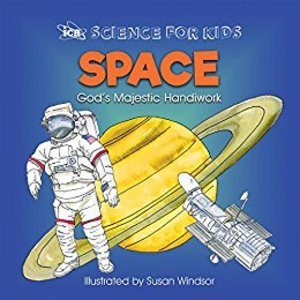
Paperback / $10.00 / 111 Pages / full colour
Indeed it was a “tragedy,” opined an editorial in the New York Times (August 13, 1999). Within this context, naturally enough, the editorialist continued “deep sadness is the most sensible response.” The reader might have been pardoned for suspecting the opinion piece was actually written tongue in cheek. The event which called forth this public mourning was none other than a decision by the State of Kansas’ Board of Education. That action of the Board, according to the NY Times, “makes it more likely that many schools will spend less time on evolution …” Oh really? One might have understood if the newspaper had called the action regrettable or ill-advised, but “tragic?” What was going on here? Read the rest of this entry »
Order Online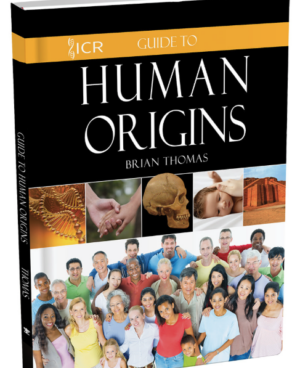
Hardcover / $18.00 / 117 Pages / Full colour
Indeed it was a “tragedy,” opined an editorial in the New York Times (August 13, 1999). Within this context, naturally enough, the editorialist continued “deep sadness is the most sensible response.” The reader might have been pardoned for suspecting the opinion piece was actually written tongue in cheek. The event which called forth this public mourning was none other than a decision by the State of Kansas’ Board of Education. That action of the Board, according to the NY Times, “makes it more likely that many schools will spend less time on evolution …” Oh really? One might have understood if the newspaper had called the action regrettable or ill-advised, but “tragic?” What was going on here? Read the rest of this entry »
Order Online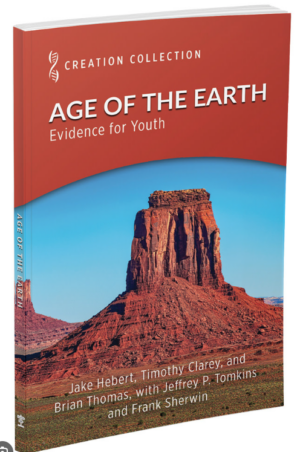
Paperback / $10.00 / 192 Pages / Full colour
Indeed it was a “tragedy,” opined an editorial in the New York Times (August 13, 1999). Within this context, naturally enough, the editorialist continued “deep sadness is the most sensible response.” The reader might have been pardoned for suspecting the opinion piece was actually written tongue in cheek. The event which called forth this public mourning was none other than a decision by the State of Kansas’ Board of Education. That action of the Board, according to the NY Times, “makes it more likely that many schools will spend less time on evolution …” Oh really? One might have understood if the newspaper had called the action regrettable or ill-advised, but “tragic?” What was going on here? Read the rest of this entry »
Order Online