

Articles » Intermediate




Do you ever take a moment to gaze at the night sky? During late August and early September of 2003, who could miss the sharply focused bright red spot in the sky? Other celestial bodies may have seemed faint and far away, obscured perhaps by light pollution, but that bright body claimed our whole attention anyway. It was Mars, the red planet, which burnt into our memories. The interesting thing is that this scene was just as remarkable and unique as it appeared. Astronomers tell us that Mars has not been this close to Earth in 60,000 years. They base such conclusions on computer models of planetary motion. However, in a young universe, it may be that Mars has never approached us this closely before. We live in special times. Read the rest of this entry »
Anybody studying biology today is aware that proteins form the molecular machines that keep the cells of our bodies healthy. But how many students are told that these proteins are actually beautiful? Read the rest of this entry »

Book Review – Inspiration from Creation: How engineers are copying God’s designs
Some years ago, I remember meeting a lady who was very excited at the realization that God is an artist! Similarly, I am very excited about a new book that portrays God as an amazing engineer. The lead author is engineer of exceptional experience and honours, yet he admits that mankind’s skills in engineering practical devices are woefully lacking compared to what we see in nature. Read the rest of this entry »
Order Online“Beyond the Bare Bones” is the theme of CSAA’s Creation Weekend October 15 and 16, 2010 with palaeontologist Dr. Marcus Ross. All the events will take place at Mill Woods Assembly, 66 Street and 23 Avenue in Edmonton. Read the rest of this entry »
Science is not everybody’s cup of tea. Most people are busy – and their major interest may be work or family or church related. So why should you or anybody else care about physics or any other science related issue? The fact of the matter is that scientific theories have huge effects on public attitudes. It is always a good idea to keep an eye on current developments. Certainly there are few theories as famous today as the Big Bang. Even some Christian apologists make a special point of supporting long ages and Big Bang cosmology. They may be less inclined to do that in the future. Read the rest of this entry »

I remember hearing a biologist from Bristol in England. He was talking about his studies on diatoms (algae with glass walls). He described how he set out to study the activities of these cells on the nearby seashore. To collect the diatoms, he said, he used English toilet paper which was scratchy and impervious to water. The English students laughed uproariously at this. The Canadians, sitting straight-faced, did not realize this was a joke! At any rate what he found was that the algae emerged from below the sand surface during low tide in the day, but they then moved back under the sand before the tides returned at a different time every day. This is the kind of timekeeping ability in organisms that biologists were beginning to study. There were studies on people living alone in dark caves, studies on algae that glow in the dark, and fruit flies that emerge from the pupa at a certain time of day. How do they keep track of time? Read the rest of this entry »
(It helps to be informed)
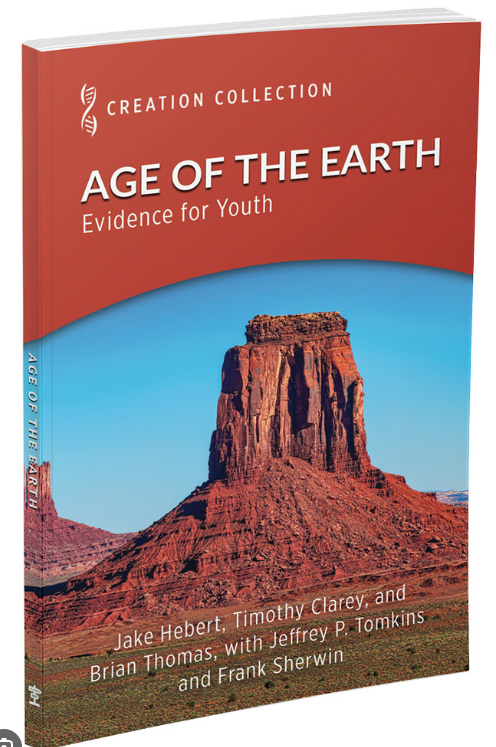
Book Review by Mark Sandercock
In this collaborative effort, scientists from the Institute for Creation Research (Dallas, Texas) “examine evidence from four aspects of our world that refute evolutionary suppositions and match the Bible’s timeline.” Each chapter is intentionally very short, averaging only five or six pages in length, and is accompanied by a detailed list of references that give the interested reader the opportunity to dive deeper into a particular topic. It is important to note here that the sub-title of this book, “Evidence for Youth”, is not an indication that this book is aimed at adolescent readers. This book provides evidence for a Young Earth and some of the discussions, although brief, can get fairly technical.
Read the rest of this entry » Order Online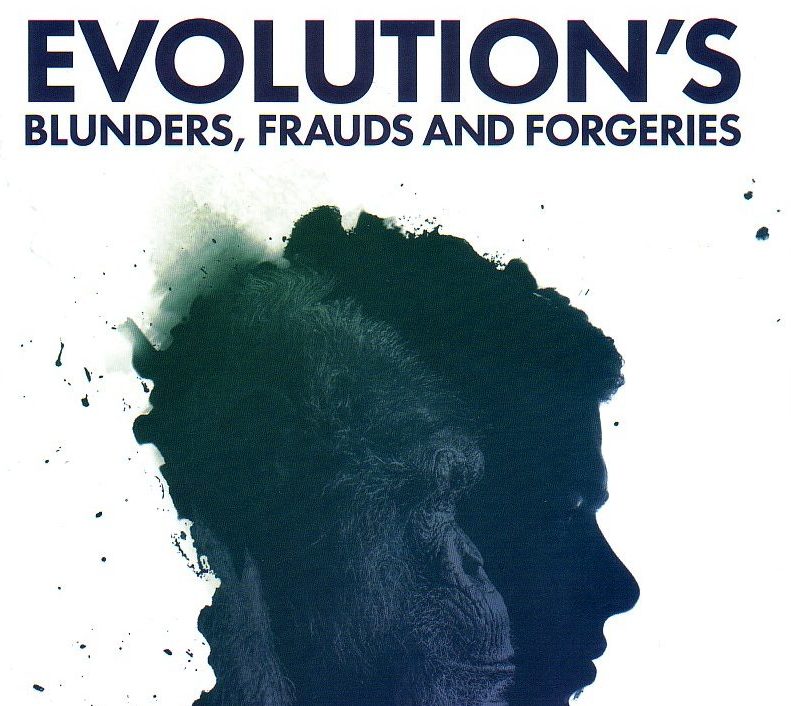
A sign of the maturity of the creation science field is that books on a broader spectrum of topics have begun to appear. Excellent as titles are on such issues as dinosaurs and radiometric dating, it is nice to see some discussion of new issues. So it is then, that Dr. Jerry Bergman’s new book entitled Evolution’s Blunders, Frauds and Forgeries is certain to attract attention. Besides, the information contained therein is certainly fascinating.
Many of us have heard of the Piltdown Man fraud and the unmasking of that fraud which rocked the scientific world in 1953. However the story of how the events unfolded before that is very interesting. Since the deception was so obvious, it is a wonder that the scientific world allowed themselves to be deceived for more than 40 years. Similarly the 1922 ‘discovery’ of Nebraska Man which turned out to be an extinct pig, is also well known. However this book by Jerry Bergman also discusses many other astonishing examples of error or downright fraud. Read the rest of this entry »
Order Online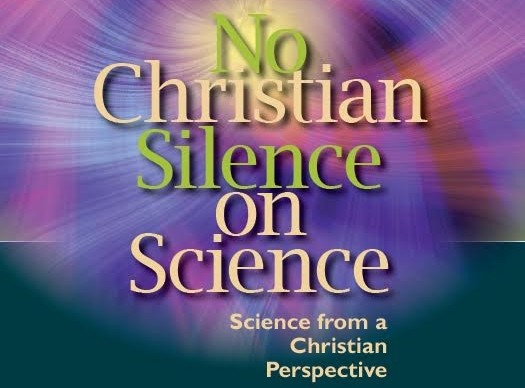
SCIENCE FROM A CHRISTIAN PERSPECTIVE
by Margaret Helder
Reviewed by: Jonathan Dykstra (Editor, Reformed Perspective)
From the title onward, No Christian Silence on Science is a clarion call to Bible-believing, six-day creation upholding Christians to stand up and be counted. It’s much more than that too. The author, Margaret Helder, has written for the Creation Science Dialogue and Reformed Perspective (the magazine I edit) for years, and if you’ve read her there, then you know Dr. Helder approaches God and His creation with awe, and teaches us how to tackle evolution without fear. This book is very much an outgrowth of that work. This, then, is intended to equip us, so we will be able to give a ready defense of our faith, and fortify us, so we will continue to trust in God, even when we face the attacks that will come in this predominantly Darwinist and secular field. Read the rest of this entry »
Order Online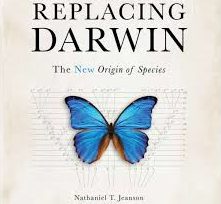
Landmark Work: What’s Wrong with ‘Survival of the Fittest’
An exciting new book was published in the fall of 2017. The author, Nathaniel Jeanson, is a specialist in molecular biology and bioinformatics with a Ph.D. in cell and developmental biology from Harvard University. With such fancy credentials, one might expect his new book to be very difficult and full of technical mumbo-jumbo! Well, Dr. Jeanson does present some very interesting information, but he does undertake to make the discussion accessible to interested readers. Excellent illustrations (some in colour) really help. Nevertheless for reading this book a good background in high school biology at least would be a big help. Read the rest of this entry »
Order Online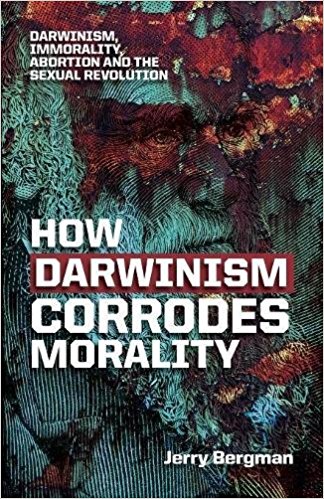
/ Pages
Jerry Bergman (2017) Joshua Press pp. 312
The best books are those that carry a compelling message and are interesting to read. Dr. Jerry Bergman’s new book How Darwinism Corrodes Morality is such a document. It carries the reader along from story to story. His discussion demonstrates how, in the early twentieth century, certain individuals who were consumed with a passion for Darwinism, managed to transform the values and customs of society from morals based on Judeo-Christian thought to a rejection of standards of any sort. Read the rest of this entry »
This is a very welcome new book. Our catalogues provide beautifully illustrated books on fossils for young students of the junior high variety, but little for interested adults that is not highly technical. Here we find a nicely illustrated book with discussion at an adult, but not overwhelmingly technical level. On each topic, the authors firstly present the evolutionary argument and then they show how this conclusion does not actually represent the fossil description, location in the rocks and comparison with other fossils. Read the rest of this entry »
Among living creatures, it does not take a specialist to realize that jellyfish are not dainty delights of the deep. Although they may be beautiful in appearance, jellyfish are successful predators. Read the rest of this entry »
In science, the word “serendipity” refers to an unexpected, but happy discovery. Typically what is meant, is a discovery which was not sought but which leads to significant advances in knowledge or technology. Penicillin, for example was a serendipitous discovery by Sir Alexander Fleming in 1928. What he was trying to do, was grow cultures of common bacteria (germs). But what was that pesky mold doing growing in the culture? When Sir Alexander realized that the mold seemed to discourage the growth of the bacteria…. well the rest is history. However, I am not sure that the unlooked for discovery of gigantic sand waves in the Juan de Fuca Strait near Victoria, BC would qualify as serendipitous or not. While they seem to be the biggest and best sand waves known, scientists are apparently not curious enough to study the phenomenon further. Read the rest of this entry »
If you have followed the adventures of scientists who collect fossils for a living, you may have noticed that travel to distant lands is often part of their profession. One such account by Derek Ager, published posthumously in 1993 (The New Catastrophism.Cambridge University Press) contains insights garnered from his travels and experiences during the course of a long career in palaeontology. Read the rest of this entry »
FEATURED BOOKS AND DVDS

Paperback / $6.00 / 55 Pages
If you have followed the adventures of scientists who collect fossils for a living, you may have noticed that travel to distant lands is often part of their profession. One such account by Derek Ager, published posthumously in 1993 (The New Catastrophism.Cambridge University Press) contains insights garnered from his travels and experiences during the course of a long career in palaeontology. Read the rest of this entry »
Order Online

Paperback / $10.00 / 111 Pages / full colour
If you have followed the adventures of scientists who collect fossils for a living, you may have noticed that travel to distant lands is often part of their profession. One such account by Derek Ager, published posthumously in 1993 (The New Catastrophism.Cambridge University Press) contains insights garnered from his travels and experiences during the course of a long career in palaeontology. Read the rest of this entry »
Order Online
Hardcover / $18.00 / 117 Pages / Full colour
If you have followed the adventures of scientists who collect fossils for a living, you may have noticed that travel to distant lands is often part of their profession. One such account by Derek Ager, published posthumously in 1993 (The New Catastrophism.Cambridge University Press) contains insights garnered from his travels and experiences during the course of a long career in palaeontology. Read the rest of this entry »
Order OnlinePaperback / $10.00 / 192 Pages / Full colour
If you have followed the adventures of scientists who collect fossils for a living, you may have noticed that travel to distant lands is often part of their profession. One such account by Derek Ager, published posthumously in 1993 (The New Catastrophism.Cambridge University Press) contains insights garnered from his travels and experiences during the course of a long career in palaeontology. Read the rest of this entry »
Order Online