

Articles


There are a lot of books on Darwin in existence, and these tend to idolize him. This book is quite different. It is undoubtedly a major contribution to the history of science. Even if you already know a lot about Darwin, you will learn something new. Read the rest of this entry »

Dinosaur books are everywhere. There is no doubt about that. And you might well suppose that there is nothing new under the sun when it comes to discussions about dinosaurs. However Albertan Vance Nelson of Creation Truth Ministries has achieved the seemingly impossible. His argument about dinosaurs is new and fascinating. And the book is magnificent with beautiful illustrations from sites around the world. Also there are wonderful dinosaur reconstructions based on the latest scientific information. Read the rest of this entry »
Perhaps one of the most famous books in the western world is Darwin’s Origin of Species, published in 1859. Most people with an interest in science, will remember that 2009, the one hundred fiftieth anniversary of the publication of this book, was marked by celebrations which were frequent and fervent. It seems fair to ask therefore precisely why this book merits such attention. Read the rest of this entry »

Have you ever noticed that everybody seems to place a high value on problem solving? I can well imagine one’s mother saying “This room is way too messy! How are you going to manage your clothes, toys, electronic gadgets (or whatever) so that this does not happen again?” She clearly expects you to come up with a plan and to follow it! Possibly you may come up with some way to organize your treasures in order to keep mum happy. Read the rest of this entry »
Diatoms are a major group of plants which float in open water, and they are one of the most successful types of microscopic algae known. The estimated over 100,000 known species are found in the oceans, in freshwater, in soils and even on damp surfaces. Most diatoms are unicellular, although some can form colonies in the shape of long filaments or ribbons. As eukaryotes or cells with a nucleus, they have highly complex cells, comparable to other eukaryotes such as mammals and even humans (Philippe, et al., 1994, Journal of Evolutionary Biology 7: 247). Read the rest of this entry »
CSAA’s featured speaker for Creation Weekend 2011 was well known creation apologist Dr. Jerry Bergman. Large numbers of people came to hear one or more of his lectures and all declared themselves delighted with his genial, non-confrontational manner and his interesting material. In that Dr. Bergman’s area of expertise is biology, chemistry and medical anatomy, the issues he discussed were quite different from the geological topics which we have considered in recent years. This material demonstrated anew that the issue of creation is broad and encompasses all aspects of nature. Read the rest of this entry »
If bats were prettier to look at, we might appreciate their amazing talents more. The fact is that bats exhibit some astonishing design features which our engineers and technologists really envy. Traditionally scientists have grouped bats according to their food preferences. There are the fruit bats with good eyesight, the insect consuming, echolocating bats and the vampire or blood consuming bats. Further research has revealed how amazingly these animals are designed for their life styles. Such studies have also revealed that the old fashioned ways of categorizing the creatures according to lifestyle and physical appearance do not really work. This has had some serious implications for ideas concerning whether Darwinian evolution could ever work or not. Read the rest of this entry »
Have you ever wondered how this transformation takes place? The caterpillar makes his cocoon (or chrysalis) and out pops the butterfly – pretty simple, right? Simple – until you realize that nearly every single organ in the caterpillar body is destroyed and then remade into a beautiful butterfly. Eat leaves? Now change your diet to drinking nectar. Those tiny suction-cupped feet? Forget those – now you can fly with wings that make the whole world envious of your beauty. Read the rest of this entry »
Eggs are complex structures designed to allow the embryo to develop outside of the mother’s body. An animal egg (Latin, ovum) provides a protective shell in which an embryo can develop. In most birds, reptiles, insects, mollusks, fish, and monotremes (mammals that lay eggs instead of giving birth to live young), the egg contains an ovum or, if fertilized, a zygote. A zygote results from fertilization of an ovum, and develops into an embryo. Read the rest of this entry »
Woodpeckers (family Picidae) are found almost everywhere on the continents except extreme polar regions. Most species live in forests or woodland habitats, and many of the about 30 genera and 214 known species are now threatened due to loss of habitat or habitat fragmentation. The smallest woodpecker is the Bar-breasted Piculet (seven grams and eight cm tall) and the largest is the Imperial Woodpecker (average over 600g (1.3 lb) and 58 cm (23 inches) tall. Some species exhibit differences in appearance of the sexes such as body size, weight and bill length. In such cases, the males are larger. Read the rest of this entry »
Sometimes it seems as if information is the most important commodity in our technological age. Information, of course, can be put to good or bad uses. We would all agree, no doubt, that computer viruses are a bad use of information. In that situation, a small piece of computer code (information), once it is inside your computer, can take over the whole operating system, with disastrous results for your interests. Of course such problems are nothing new. The term “virus” comes from natural phenomena that do the very same thing to living cells. Invading information occurs to even the smallest cells, bacteria. In fact, some of the bacteria that most threaten our health, are themselves the victims of invasive information from outside unrelated sources. Consider the case of the infamous Escherischia coli 0157:H7, cause of potentially fatal hamburger disease and in some isolated situations, contaminated water. Read the rest of this entry »
It went on and on. I kept pulling the panels out and there were more. This book is cool because it has real time lines. It goes from the creation in 4004 B.C. to 2001 when the iPod was invented (I’m not talking about the iPod Touch I mean the original iPod)! That is a lot of fast change!
The book tells us about the early people. We follow Bible history, world events, inventions/technology and civilizations/empires. We see what happened all at the same time. Stonehenge in England was built just after the flood. Most history books don’t tell us that. And it is funny to talk about, but sort of cool, that the yoyo was invented in 500 B.C. Read the rest of this entry »
October 26 and 27, 2012
David Coppedge is one man standing up against NASA, the American governments’ space exploration agency. Now that takes courage! Why would anyone undertake such a difficult task? Basically it is a fight for freedom of religion and for freedom to discuss intelligent design during social settings in the workplace. Read the rest of this entry »
It is interesting how dinosaur artifacts continue to amaze us. For example, in 1961, petroleum geologist R. L. Liscomb discovered a large bone bed on the banks of the Colville River in Alaska, not far from the Arctic Ocean. Since the bones were not perminieralized (fossilized), he assumed they were recent bison bones. He deposited some in a museum and for twenty years nobody gave the bones another thought. Then somebody noticed that these were Edmontosaurus bones (duckbill dinosaur). In 1985 palaeontologist William A. Clemens reported abundant dinosaur bones at the Liscomb site and in 1987 associate Kyle L. Davies described the condition of the dinosaur bones: “The quality of preservation is remarkable. The bones are stained a dark red brown but otherwise display little permineralization, crushing or distortion.” (J. Paleontology 61 #1 p. 198). Could such bones really be millions of years old as many scientists now supposed?
The experiment with fruit flies was basically uncomplicated. Any university student could have carried it out providing they could identify and count the various mutant forms. But there was more to the issue than mere counts of fruit fly offspring. The study was supposed to, and had long been considered that it in fact did, support a key idea of Charles Darwin. More than sixty years had passed since the fruit fly work was published. Subsequent to publication in the new journal Heredity in 1948, few people paid much attention to the study until it was quoted favourably in 1972 and 1994 as supporting Darwin’s idea of sexual selection. Those references conferred celebrity status on the work and many citations followed. But then in 2012 a study was published which questioned not only the 1948 work, but also a major component of Darwin’s theory of evolution. However the reasons and issues surrounding the new study are not what we might hope or expect. It is important to remember that scientists draw conclusions in keeping with their world view and there is more diversity in world views in science than one might imagine.
FEATURED BOOKS AND DVDS

Paperback / $6.00 / 55 Pages
The experiment with fruit flies was basically uncomplicated. Any university student could have carried it out providing they could identify and count the various mutant forms. But there was more to the issue than mere counts of fruit fly offspring. The study was supposed to, and had long been considered that it in fact did, support a key idea of Charles Darwin. More than sixty years had passed since the fruit fly work was published. Subsequent to publication in the new journal Heredity in 1948, few people paid much attention to the study until it was quoted favourably in 1972 and 1994 as supporting Darwin’s idea of sexual selection. Those references conferred celebrity status on the work and many citations followed. But then in 2012 a study was published which questioned not only the 1948 work, but also a major component of Darwin’s theory of evolution. However the reasons and issues surrounding the new study are not what we might hope or expect. It is important to remember that scientists draw conclusions in keeping with their world view and there is more diversity in world views in science than one might imagine.
Order Online
Paperback / $10.00 / 111 Pages / full colour
The experiment with fruit flies was basically uncomplicated. Any university student could have carried it out providing they could identify and count the various mutant forms. But there was more to the issue than mere counts of fruit fly offspring. The study was supposed to, and had long been considered that it in fact did, support a key idea of Charles Darwin. More than sixty years had passed since the fruit fly work was published. Subsequent to publication in the new journal Heredity in 1948, few people paid much attention to the study until it was quoted favourably in 1972 and 1994 as supporting Darwin’s idea of sexual selection. Those references conferred celebrity status on the work and many citations followed. But then in 2012 a study was published which questioned not only the 1948 work, but also a major component of Darwin’s theory of evolution. However the reasons and issues surrounding the new study are not what we might hope or expect. It is important to remember that scientists draw conclusions in keeping with their world view and there is more diversity in world views in science than one might imagine.
Order Online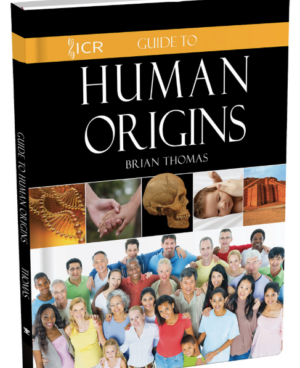
Hardcover / $18.00 / 117 Pages / Full colour
The experiment with fruit flies was basically uncomplicated. Any university student could have carried it out providing they could identify and count the various mutant forms. But there was more to the issue than mere counts of fruit fly offspring. The study was supposed to, and had long been considered that it in fact did, support a key idea of Charles Darwin. More than sixty years had passed since the fruit fly work was published. Subsequent to publication in the new journal Heredity in 1948, few people paid much attention to the study until it was quoted favourably in 1972 and 1994 as supporting Darwin’s idea of sexual selection. Those references conferred celebrity status on the work and many citations followed. But then in 2012 a study was published which questioned not only the 1948 work, but also a major component of Darwin’s theory of evolution. However the reasons and issues surrounding the new study are not what we might hope or expect. It is important to remember that scientists draw conclusions in keeping with their world view and there is more diversity in world views in science than one might imagine.
Order Online
Paperback / $10.00 / 192 Pages / Full colour
The experiment with fruit flies was basically uncomplicated. Any university student could have carried it out providing they could identify and count the various mutant forms. But there was more to the issue than mere counts of fruit fly offspring. The study was supposed to, and had long been considered that it in fact did, support a key idea of Charles Darwin. More than sixty years had passed since the fruit fly work was published. Subsequent to publication in the new journal Heredity in 1948, few people paid much attention to the study until it was quoted favourably in 1972 and 1994 as supporting Darwin’s idea of sexual selection. Those references conferred celebrity status on the work and many citations followed. But then in 2012 a study was published which questioned not only the 1948 work, but also a major component of Darwin’s theory of evolution. However the reasons and issues surrounding the new study are not what we might hope or expect. It is important to remember that scientists draw conclusions in keeping with their world view and there is more diversity in world views in science than one might imagine.
Order Online