

Articles



Every family, whether into science of not, should obtain a copy of this book for the sake of their children (upper elementary through high school). This deluxe book, The World of Animals, is a wonderful reference book which describes anatomy and ecological significance of the main groups of animals. Read the rest of this entry »
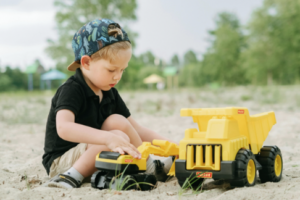
Small boys love stories about large earth moving equipment. They love to look at the pictures, identify the types of machine and hear the stories again and again. Other children love to identify dinosaur pictures or birds. Even long after the children have grown up, they value these books as important mementos.
Read the rest of this entry »
Among living creatures, it does not take a specialist to realize that jellyfish are not dainty delights of the deep. Although they may be beautiful in appearance, jellyfish are successful predators. Read the rest of this entry »

Back in the days when television was new to North American society, there was a show called Perry Mason. This featured a lawyer who specialized in courtroom drama. In predictable fashion, Mr. Mason set out to defend an accused person, but the facts of the case looked very discouraging for the defendant. However, thanks to great sleuthing by Perry Mason’s two assistants, some important new details were discovered. In the courtroom, as the show drew toward a close, Mr. Mason triumphantly asked a witness, “Isn’t it true that ….?” And some new facts were revealed which changed the whole story. Everyone was all smiles when the defendant was exonerated. The point is that partial information can lead to wrong conclusions.
Read the rest of this entry »Despite the fine quality of their fur coats, they look a little dumpy. Their teeth also are a little too prominent to be pleasing – but their whiskers are cute. Certainly they are prominent Canadians. On formal occasions they go by the name Castor canadensis, but to their friends they are simply beavers. The plan of action for any beaver couple is to raise their young and to enjoy long healthy lives. This is not a surprising nor an unusual agenda. Nevertheless of all the wildlife creatures that make their home in most parts of North America, the beaver is fast becoming extremely unpopular. The fact is that beavers are the only animals in the world which can change the landscape to suit their own needs and desires. The trouble is that the beavers’ alterations often do not fit the plans of people living in the same area. Then again in other parts of the country, wildlife officials regard beavers as economical wetlands managers. Read the rest of this entry »

Most Canadians are rightly proud of the beaver, their iconic national emblem. Indeed, the beaver is a remarkable animal with exceptional talents! Its lifestyle is made possible not only through the wonderful design of its body, but also through in-built skills. The fact is that beavers are the only animals anywhere which can change the landscape to suit their own needs and desires.
Read the rest of this entry »In science, the word “serendipity” refers to an unexpected, but happy discovery. Typically what is meant, is a discovery which was not sought but which leads to significant advances in knowledge or technology. Penicillin, for example was a serendipitous discovery by Sir Alexander Fleming in 1928. What he was trying to do, was grow cultures of common bacteria (germs). But what was that pesky mold doing growing in the culture? When Sir Alexander realized that the mold seemed to discourage the growth of the bacteria…. well the rest is history. However, I am not sure that the unlooked for discovery of gigantic sand waves in the Juan de Fuca Strait near Victoria, BC would qualify as serendipitous or not. While they seem to be the biggest and best sand waves known, scientists are apparently not curious enough to study the phenomenon further. Read the rest of this entry »
Carol Tupper is an Albertan, an artist, and an author. Born and raised in southern Alberta, she loves the prairies and has also fallen in love with our forests and the Canadian Rockies. Since early childhood, Carol has enjoyed art and English. Both are gifts that she is using for the benefit of many. The town of Three Hills sports a mural done by Carol. She wrote her first book in grade nine for her nephew. Read the rest of this entry »
If you have followed the adventures of scientists who collect fossils for a living, you may have noticed that travel to distant lands is often part of their profession. One such account by Derek Ager, published posthumously in 1993 (The New Catastrophism.Cambridge University Press) contains insights garnered from his travels and experiences during the course of a long career in palaeontology. Read the rest of this entry »
The long awaited Illustra Media DVD on the Cambrian fossil record has finally been released. It was worth waiting for! The results are sensational. As far as visual effects go, this one exceeds the quality of Unlocking the Mystery of Life, and The Privileged Planet which Illustra Media also produced, and which set a new high standard for videos about nature. Read the rest of this entry »

It seems a long time ago, yet not a long time ago at all. In the early 1970s Alberta was poised to see a mass immigration of Canadians from other parts of the country, and later people from other parts of the world. The promise of a new prosperity lured many to the province. But ideas were changing too and the schools in the province were about to see a new emphasis on increasingly blatant humanistic and pro-evolution content, especially in science and social studies.
Read the rest of this entry »The 2017 award of the Nobel Prize in physiology and medicine to three Americans, Michael Rosbash, Jeffrey Hall and Michael Young, has served to stimulate our interest in a phenomenon that is actually well-known. We all know why people get hungry about the same time of day, or wake up about the same time, or suffer from jet-lag. It is because of biological clocks. So what was so special about the work of these three scientists? The story actually goes back to 1729! Read the rest of this entry »
Recently the people of Edmonton have flocked to a new attraction in our part of the world, an ice castle. This edifice features glassy walls that are up to 3 metres thick. There are arching chambers, tunnels, a fountain with liquid water, and slides that the adventurous can ride down on their bottoms. The whole structure weighs about 27,200 tonnes and covers 1 acre. By the time spring comes, about 38 million litres of water will have been used to build and maintain this winter wonder.
Can you imagine a trip to England without a visit to the white cliffs along the south east coast? We couldn’t, so we went. There we stood at the foot of an awe inspiring cliff of sparkling white chalk. Coarse looking, but flat bedding planes divided the towering wall above into endless horizontal layers or strata. It seemed strange however that the shore was covered with hard, rounded pebbles as well as some shiny black fragments with sharp edges rather than white chalk. Closer inspection indicated that the shiny black chunks and the grayish rounded pebbles were of the same material — only the pebbles were rounded and worn by wave action. Now where did these pebbles of hard material come from? When you come to think of it — where did the chalk above come from too? Read the rest of this entry »
Have you ever discovered something new, like a new recipe, a new and better way to carry out a task, or a new object in the sky? Whether you have invented a device which will make you rich, or whether you have identified a new phenomenon in nature, the joy of discovery is a reward in itself. When it comes to identifying new organisms, many people have turned their attention to the rain forest. New plants and new animals, often insects, are routinely described from that part of the world. Deep sea divers have also encountered some very strange creatures from the ocean depths. The sea between Denmark and Sweden, however has been fished for many centuries. We would not expect to find any new creatures in those cold waters, would we? Read the rest of this entry »
FEATURED BOOKS AND DVDS

Paperback / $6.00 / 55 Pages
Have you ever discovered something new, like a new recipe, a new and better way to carry out a task, or a new object in the sky? Whether you have invented a device which will make you rich, or whether you have identified a new phenomenon in nature, the joy of discovery is a reward in itself. When it comes to identifying new organisms, many people have turned their attention to the rain forest. New plants and new animals, often insects, are routinely described from that part of the world. Deep sea divers have also encountered some very strange creatures from the ocean depths. The sea between Denmark and Sweden, however has been fished for many centuries. We would not expect to find any new creatures in those cold waters, would we? Read the rest of this entry »
Order Online
Paperback / $10.00 / 111 Pages / full colour
Have you ever discovered something new, like a new recipe, a new and better way to carry out a task, or a new object in the sky? Whether you have invented a device which will make you rich, or whether you have identified a new phenomenon in nature, the joy of discovery is a reward in itself. When it comes to identifying new organisms, many people have turned their attention to the rain forest. New plants and new animals, often insects, are routinely described from that part of the world. Deep sea divers have also encountered some very strange creatures from the ocean depths. The sea between Denmark and Sweden, however has been fished for many centuries. We would not expect to find any new creatures in those cold waters, would we? Read the rest of this entry »
Order Online
Hardcover / $18.00 / 117 Pages / Full colour
Have you ever discovered something new, like a new recipe, a new and better way to carry out a task, or a new object in the sky? Whether you have invented a device which will make you rich, or whether you have identified a new phenomenon in nature, the joy of discovery is a reward in itself. When it comes to identifying new organisms, many people have turned their attention to the rain forest. New plants and new animals, often insects, are routinely described from that part of the world. Deep sea divers have also encountered some very strange creatures from the ocean depths. The sea between Denmark and Sweden, however has been fished for many centuries. We would not expect to find any new creatures in those cold waters, would we? Read the rest of this entry »
Order Online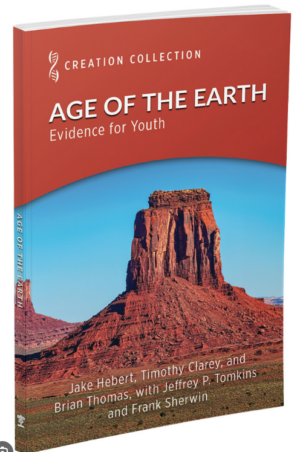
Paperback / $10.00 / 192 Pages / Full colour
Have you ever discovered something new, like a new recipe, a new and better way to carry out a task, or a new object in the sky? Whether you have invented a device which will make you rich, or whether you have identified a new phenomenon in nature, the joy of discovery is a reward in itself. When it comes to identifying new organisms, many people have turned their attention to the rain forest. New plants and new animals, often insects, are routinely described from that part of the world. Deep sea divers have also encountered some very strange creatures from the ocean depths. The sea between Denmark and Sweden, however has been fished for many centuries. We would not expect to find any new creatures in those cold waters, would we? Read the rest of this entry »
Order Online