

Articles


Patricia Engler has written a most helpful and inspiring book to help post-secondary students, and in fact everybody, deal with a constant barrage of secular messages, especially in science. Her objective, and hopefully the objective of all of us, is to “know, defend and live out the truth of God’s Word.” Her book is aimed specifically at the post-secondary student, but it is suitable for every Christian. She also discovered, as a result of a six-month trip around the world to consult Christian students in many diverse countries, that while Christians in these cultures face a variety of challenges, the solutions are largely the same. So, what are these solutions? Patricia has penned this book to share those solutions with us.
Read the rest of this entry »
Aardvarks (Aard-Vark, Dutch for “earth-pig”), are one-of-a-kind animals, one of the strangest mammals you will ever encounter. They have a body like a large rat, a long snout like an ant eater, a pig nose, long ears like a rabbit, pink skin with coarse hair like a pig (but in contrast to pigs, aardvarks have very thick skin and lack a fat layer), short legs, feet like a pig and a long thin tail that resembles a kangaroo’s tail (Hutchins, 2004, p. 155). Their barrel-shaped body weighs between 100 and 180 pounds (50 to 83 kg). The greatly elongated head-snout is set on a short thick neck. The tail is thick at the base and gradually tapers. So strange was it that, when described to European naturalists, many doubted its reality (Catchpoole, 2014, p. 28). Read the rest of this entry »

One of the most delightful aspects of travel is the prospect of new adventures. And so it was, on a blustery and chilly day in late September, that we found ourselves driving along the southeast coast of Nova Scotia. We were heading to Hawk Beach on Cape Sable Island, the most southerly tip of Nova Scotia. Such beaches are never easy to find, and we had to ask twice before we found it. After driving down very obscure roads, we found the beach after we had scrambled up quite a high embankment. Read the rest of this entry »

I joined the Creation Research Society in 2023 because God put a desire in my heart to do research and publish technical papers. My undergraduate science degree has no major, and I’ve received some criticism for that, but the program I enrolled in allowed me to try a bit of everything and get a well-rounded base of scientific knowledge. Then God gave me a job where I have the freedom to do the things I love. I needed some intellectual stimulation, though, so I told God, “I need some science I can sink my teeth into.” In September 2024, He answered by handing me a paleoanthropology assignment and connecting me to a co-author, Carol Adams. We decided to attend the 2025 CRS Conference at the end of July, and Carol suggested that we submit an abstract and present our work.
Read the rest of this entry »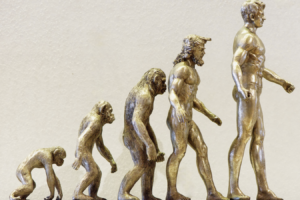
I collaborated with Carol Adams, a member of the Creation Research Society (CRS), to write a technical paleoanthropology paper, and we presented our research at the CRS Conference in July 2025. Our specific topic was Australopithecus afarensis (Lucy).
Read the rest of this entry »
The recent death of Dr. John Morris of ICR brings to mind the occasion when he collaborated with Rev. Edward Crawford of Edmonton to travel to Mount Ararat.
On a stormy night at the end of February, 1976 Edward Crawford and more than three thousand other Edmontonians crowded into Jubilee Auditorium to hear John Morris, Field Director of the Institute for Creation Research in San Diego. Morris’ update on the status of expeditions to Mount Ararat included a number of slides. Mr. Crawford however saw something that others missed. He saw an inscription on a boulder on Mount Ararat. He recognized some of the characters as ancient proto-Sumerian. What was the story behind these writings? He wondered how messages came to be in such an inhospitable part of the world.
Read the rest of this entry »
Since the 1960s, biologists have understood that the shape of a protein is essential to its function. The molecular machines which are so important to the functioning of the living cell, are made up of precisely shaped proteins. And the shape is genetically controlled by the sequence of nucleotides in the DNA of the cell. What has concerned some scientists recently however is that there are proteins with similar shapes but the controlling nucleotide sequences are very different. Could a DNA sequence change but the protein shape remain the same? This is the evolutionary explanation that some scientists are promoting.
Read the rest of this entry »
Every season of the year provides its share of interest for young adventurers, or the young at heart. In winter, for example, have you considered how beautiful the silhouettes of the trees are against the snowy background? The deciduous (without leaves) trees look particularly artistic because we can see the branching pattern. Every tree has a characteristic canopy shape as a result of the way that the branches grow. This shape enables the tree in summer to display its leaves to best advantage so that the maximum possible sunshine is intercepted and the minimum number of leaves remains in the shade. Read the rest of this entry »
Some people like a good challenge and some don’t. Some people like the challenge of climbing Mount Everest, while others would prefer to stay home. Such people might point out that there are some challenges which are best ignored. There could well be challenges which are just too difficult or time consuming to undertake. For example, in August a team from Cambridge University reported that it took them twenty two years to produce a synthetic version of azadirachtin, a product which India’s neem tree (Azadirachta indica) effortlessly produces in large quantities. Read the rest of this entry »

The Bible tells us that Moses was instructed in all the wisdom of the Egyptians. He used this training when he was called upon, later in life, to lead the Children of Israel through the desert and to write an account of their history. Obviously, Moses did not adopt the pagan philosophy in which his training in Egypt was couched. He evaluated what he heard.
In similar fashion, young Christians are encouraged to pursue modern learning, according to the talents with which they have been given. Like Moses too, they are expected to evaluate the modern explanations. In the light of the complexity of many modern disciplines however, it is obvious that students need help. They need trusted advisors to help them sort through the onslaught of information.
To this end, Creation Science Association’s Margaret Helder has developed a novel tool to assist students embarking on new courses in biology. Since much of the material taught in these courses is based on studies conducted since the year 2000, there are many new terms and concepts involved.All of them are defined in terms of evolutionary assumptions. The definitions available, on-line, all come from an evolutionary agenda. But the data themselves actually support creation! Read the rest of this entry »

When we reflect on wonderful works of creation, our thoughts often turn to beautiful creatures like hummingbirds and butterflies. Most people do not think firstly about such issues as the electromagnetic spectrum of energy including x-rays, visible light and radiowaves. One great scientist who saw the beauty of creation in such phenomena was James Clerk Maxwell (1831-1879). He was a physicist, the first professor of experimental physics at the Cavendish Laboratory at Cambridge University. Over the main entrance to the building, this physicist directed that Psalm 111:2 be carved in Latin: Magna opera Domini, exquisita in omnes voluntates ejus.” The English translation is “Great are the works of the Lord, studied by all who delight in them.” (ESV) When he studied these physical phenomena, Maxwell saw that they had been wonderfully designed and created by God. According to the Cambridge Dictionary of Scientists (2002) Maxwell’s summary of electromagnetism in the form of field equations is “an achievement equalled only by that of Newton and Einstein in mechanicsl” (p. 246)
Read the rest of this entry »The brand new book Gifted Mind has it all: inspiring message, an exciting story with diverse characters, conflict resolution and a happy ending. This is a book that the reader will be reluctant to put down. Best of all, however, this is a true account of how God worked in the life of the amazing inventor of the magnetic resonance imaging machine (MRI). This machine has only been available since the 1980s, yet it has impacted for good the lives of millions of people.
As a society, it is obvious that we are very impressed with the sophistication of our modern technology. It is also evident that the theoretical basis for this technology is fancy mathematics. Not surprisingly then, although not everybody can do advanced math, we consider our society to be advanced both in terms of knowledge base and physical know how. Read the rest of this entry »
Animals display many remarkable behaviours. To better appreciate their talents, how often have we wished that these creatures could communicate with us? We would love to know where they go during migrations, for example. In recent years however, animal ecologists have developed techniques to allow us to track some of these creatures. As a result, these animals communicate with us simply by doing what comes naturally, during the course of which our little espionage devices report where the animals have gone. Read the rest of this entry »
A tail is a distinct, flexible appendage attached to the torso of the rear section of an animal’s body. It is the body part that corresponds roughly to the coccyx in mammals, reptiles, and birds. Tails are primarily a feature of vertebrates, although some invertebrates, including scorpions and springtails, have tails. Even snails and slugs have tail-like appendages sometimes referred to as tails. Read the rest of this entry »
FEATURED BOOKS AND DVDS
Paperback / $6.00 / 55 Pages
A tail is a distinct, flexible appendage attached to the torso of the rear section of an animal’s body. It is the body part that corresponds roughly to the coccyx in mammals, reptiles, and birds. Tails are primarily a feature of vertebrates, although some invertebrates, including scorpions and springtails, have tails. Even snails and slugs have tail-like appendages sometimes referred to as tails. Read the rest of this entry »
Order Online
Paperback / $10.00 / 111 Pages / full colour
A tail is a distinct, flexible appendage attached to the torso of the rear section of an animal’s body. It is the body part that corresponds roughly to the coccyx in mammals, reptiles, and birds. Tails are primarily a feature of vertebrates, although some invertebrates, including scorpions and springtails, have tails. Even snails and slugs have tail-like appendages sometimes referred to as tails. Read the rest of this entry »
Order Online
Hardcover / $18.00 / 117 Pages / Full colour
A tail is a distinct, flexible appendage attached to the torso of the rear section of an animal’s body. It is the body part that corresponds roughly to the coccyx in mammals, reptiles, and birds. Tails are primarily a feature of vertebrates, although some invertebrates, including scorpions and springtails, have tails. Even snails and slugs have tail-like appendages sometimes referred to as tails. Read the rest of this entry »
Order Online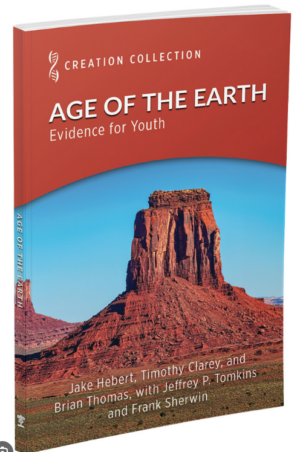
Paperback / $10.00 / 192 Pages / Full colour
A tail is a distinct, flexible appendage attached to the torso of the rear section of an animal’s body. It is the body part that corresponds roughly to the coccyx in mammals, reptiles, and birds. Tails are primarily a feature of vertebrates, although some invertebrates, including scorpions and springtails, have tails. Even snails and slugs have tail-like appendages sometimes referred to as tails. Read the rest of this entry »
Order Online