


Everyone knows that there are amazing phenomena in the natural world which are totally unexpected. Consider, for example, the male horseshoe crab whose eyes are one million times more sensitive to light at night than during the day. Shakespeare referred to such situations when he had Hamlet declare: “There are more things in heaven and earth, Horatio, then are dreamt of in your philosophy.” (Act 1 Scene 5)
In that context, would you believe that there is a night flying moth that migrates long distances using the night sky for its navigation system? Let’s see what that moth would need to achieve this:
1) adequate eyesight to see and identify objects in the night sky, 2) brain cells able to identify and respond to a correct pattern of stars, 3) a biological clock to follow the motion of the stars across the sky (15 degrees of motion per hour) every night, 4) a compass to enable the brain to plot a straight course while the angle to the target stars continues to increase, and 5) an inborn ability (algorithms) to manipulate into a specific migration route, the observed mathematical values that also change as the days pass.
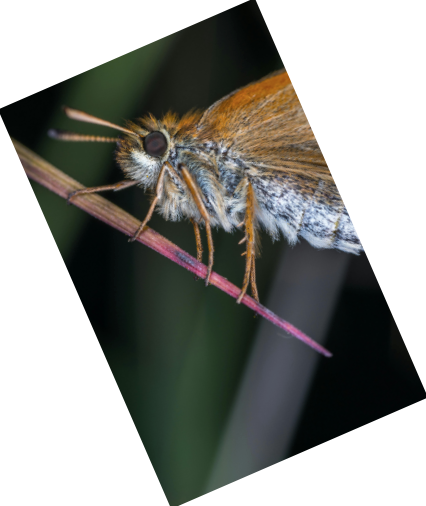
Apparently the impossible is possible. The Bogong moth of southeast Australia fills all these criteria. This little brown moth about 2.5 cm long (1 inch) (Agrotis infusa) is simultaneously considered a crop pest and endangered. It lives in the dryland plains of New South Wales within a radius of about 1000 km from the Atlas Mountains on the southeast coast of Australia, south of Sydney.
In the fall (April), female moths lay their eggs in this large area of New South Wales. The caterpillars soon hatch and happily munch on broadleaf crop plants in pastures and regular fields, and in woodlands and forests. The caterpillars, with their broad tastes, grow to about 5 cm long (2 inches) and then form pupae in the soil. After a few weeks as pupae, adults emerge. This is around August or September. But the climate is becoming very hot and dry, which the moths do not like. They start to migrate at night, billions of them converge on the same mountains near the coast south of Sydney. Their route can take one month to cover 1000 km. At their destination they sit out the hot summer months in lovely cool caves at high altitudes.
In the caves, these insects huddle together, as many as 16,000 insects per square metre!! After about four months, the moths wake up and migrate back to their breeding grounds. This time the brain reacts in opposite fashion to the night sky in order to bring the moths home to their fall breeding grounds. After mating, the adults die. These moths make only one round trip. How they navigate so precisely a route that they have never seen, is absolutely amazing.
Scientists trapped some migrating moths and took them to a laboratory for study. They tethered each moth to a thread, allowing it to fly freely in any direction. They used a fancy machine to block effects of earth’s magnetic field and on a screen above the moth, they projected a simulation of the night sky. When the sky was portrayed as a normal arrangement of stars, the moths flew southeast. If the scientists flipped the star pattern 180 degrees, the moths flew in the opposite direction. Any other pattern resulted in confused moths.
The scientists asked themselves what object (s) the moths might follow in the southern night sky. Apparently the Milky Way is particularly bright in the south as is a nearby object, the Carina nebula. These objects do migrate across the sky as night progresses, so if this is what the moths are tracking, they need a way to tell the passage of time (clock) and a compass. The scientists planted tiny electrodes in the moth brain, and then showed specific star patterns to the moth eyes. Some nerve cells reacted particularly strongly to certain sky patterns. The results were strongest for the bar shaped Milky Way and for the bright areas around the Carina nebula. The data indicate that information from the starry sky is encoded in the moth brains!
It is evident to the scientists that the Bogong moth is able to adjust its route depending upon geographical location, season and time of night. Where the software (know how or algorithms) come from to enable the moths to adjust to these changing situations, “remains unclear.” [Nature p. 999] The technical article in this issue of Nature2 points out that Bogong moths navigate long distances over many nights towards a distant destination they have never previously visited and they therefore require a global compass to distinguish and hold their specific inherited geographical migratory heading. Indeed, “how stellar, magnetic and any other hitherto unknown sensory cues en route are behaviourally and neurally integrated into the brain for robust navigation……… remain enticing topics for future research.” [p. 1000] In other words scientists have no idea how the moths came to exhibit these talents.
A commentary on this article reflects that the skills discussed are “ingenious mechanisms that arise by natural selection [evolution] to shape the navigational strategies leading diverse animals to their goal.” [p. 916] Translate these remarks to mean they have no idea how these skills could develop through evolutionary processes, but they are sure it must have happened that way.
Christians have long realized that the amazingly intricate systems which allow the Monarch butterfly to track the sun by means of a biological clock and an amazing compass, must have been conferred upon them by God, the Creator. Clearly super intelligence and a Designer are needed to bring this about. In similar fashion, the Bogong moth is even more amazing in that stars are much fainter and more difficult to follow as a tool for navigation compared to the sun. We may not understand how these creatures work, but we can still praise God that they exist!
- Kenneth J. Lohmann. 2025. Migratory moths navigate using the stars. Nature vol 643 July 24, 2025 pp. 915-916.
- David Dreyer et al. 2025. Bobong moths use a stellar compass for long-distance navigation at night. Nature July 24, pp. 994-1000.
- Like most navigating creatures, moths have a second system to find their way too, in this case it is via Earth’s magnetic field.
- See headstart.create.ab.ca/term/circadian-rhythms/
Margaret Helder
January 2026
Subscribe to Dialogue
FEATURED BOOKS AND DVDS

Paperback / $10.00 / 159 Pages / Full colour
Everyone knows that there are amazing phenomena in the natural world which are totally unexpected. Consider, for example, the male horseshoe crab whose eyes are one million times more sensitive to light at night than during the day. Shakespeare referred to such situations when he had Hamlet declare: “There are more things in heaven and earth, Horatio, then are dreamt of in your philosophy.” (Act 1 Scene 5)
In that context, would you believe that there is a night flying moth that migrates long distances using the night sky for its navigation system? Let’s see what that moth would need to achieve this:
1) adequate eyesight to see and identify objects in the night sky, 2) brain cells able to identify and respond to a correct pattern of stars, 3) a biological clock to follow the motion of the stars across the sky (15 degrees of motion per hour) every night, 4) a compass to enable the brain to plot a straight course while the angle to the target stars continues to increase, and 5) an inborn ability (algorithms) to manipulate into a specific migration route, the observed mathematical values that also change as the days pass.
Apparently the impossible is possible. The Bogong moth of southeast Australia fills all these criteria. This little brown moth about 2.5 cm long (1 inch) (Agrotis infusa) is simultaneously considered a crop pest and endangered. It lives in the dryland plains of New South Wales within a radius of about 1000 km from the Atlas Mountains on the southeast coast of Australia, south of Sydney.
In the fall (April), female moths lay their eggs in this large area of New South Wales. The caterpillars soon hatch and happily munch on broadleaf crop plants in pastures and regular fields, and in woodlands and forests. The caterpillars, with their broad tastes, grow to about 5 cm long (2 inches) and then form pupae in the soil. After a few weeks as pupae, adults emerge. This is around August or September. But the climate is becoming very hot and dry, which the moths do not like. They start to migrate at night, billions of them converge on the same mountains near the coast south of Sydney. Their route can take one month to cover 1000 km. At their destination they sit out the hot summer months in lovely cool caves at high altitudes.
In the caves, these insects huddle together, as many as 16,000 insects per square metre!! After about four months, the moths wake up and migrate back to their breeding grounds. This time the brain reacts in opposite fashion to the night sky in order to bring the moths home to their fall breeding grounds. After mating, the adults die. These moths make only one round trip. How they navigate so precisely a route that they have never seen, is absolutely amazing.
Scientists trapped some migrating moths and took them to a laboratory for study. They tethered each moth to a thread, allowing it to fly freely in any direction. They used a fancy machine to block effects of earth’s magnetic field and on a screen above the moth, they projected a simulation of the night sky. When the sky was portrayed as a normal arrangement of stars, the moths flew southeast. If the scientists flipped the star pattern 180 degrees, the moths flew in the opposite direction. Any other pattern resulted in confused moths.
The scientists asked themselves what object (s) the moths might follow in the southern night sky. Apparently the Milky Way is particularly bright in the south as is a nearby object, the Carina nebula. These objects do migrate across the sky as night progresses, so if this is what the moths are tracking, they need a way to tell the passage of time (clock) and a compass. The scientists planted tiny electrodes in the moth brain, and then showed specific star patterns to the moth eyes. Some nerve cells reacted particularly strongly to certain sky patterns. The results were strongest for the bar shaped Milky Way and for the bright areas around the Carina nebula. The data indicate that information from the starry sky is encoded in the moth brains!
It is evident to the scientists that the Bogong moth is able to adjust its route depending upon geographical location, season and time of night. Where the software (know how or algorithms) come from to enable the moths to adjust to these changing situations, “remains unclear.” [Nature p. 999] The technical article in this issue of Nature2 points out that Bogong moths navigate long distances over many nights towards a distant destination they have never previously visited and they therefore require a global compass to distinguish and hold their specific inherited geographical migratory heading. Indeed, “how stellar, magnetic and any other hitherto unknown sensory cues en route are behaviourally and neurally integrated into the brain for robust navigation……… remain enticing topics for future research.” [p. 1000] In other words scientists have no idea how the moths came to exhibit these talents.
A commentary on this article reflects that the skills discussed are “ingenious mechanisms that arise by natural selection [evolution] to shape the navigational strategies leading diverse animals to their goal.” [p. 916] Translate these remarks to mean they have no idea how these skills could develop through evolutionary processes, but they are sure it must have happened that way.
Christians have long realized that the amazingly intricate systems which allow the Monarch butterfly to track the sun by means of a biological clock and an amazing compass, must have been conferred upon them by God, the Creator. Clearly super intelligence and a Designer are needed to bring this about. In similar fashion, the Bogong moth is even more amazing in that stars are much fainter and more difficult to follow as a tool for navigation compared to the sun. We may not understand how these creatures work, but we can still praise God that they exist!
- Kenneth J. Lohmann. 2025. Migratory moths navigate using the stars. Nature vol 643 July 24, 2025 pp. 915-916.
- David Dreyer et al. 2025. Bobong moths use a stellar compass for long-distance navigation at night. Nature July 24, pp. 994-1000.
- Like most navigating creatures, moths have a second system to find their way too, in this case it is via Earth’s magnetic field.
- See headstart.create.ab.ca/term/circadian-rhythms/

Paperback / $6.00 / 55 Pages
Everyone knows that there are amazing phenomena in the natural world which are totally unexpected. Consider, for example, the male horseshoe crab whose eyes are one million times more sensitive to light at night than during the day. Shakespeare referred to such situations when he had Hamlet declare: “There are more things in heaven and earth, Horatio, then are dreamt of in your philosophy.” (Act 1 Scene 5)
In that context, would you believe that there is a night flying moth that migrates long distances using the night sky for its navigation system? Let’s see what that moth would need to achieve this:
1) adequate eyesight to see and identify objects in the night sky, 2) brain cells able to identify and respond to a correct pattern of stars, 3) a biological clock to follow the motion of the stars across the sky (15 degrees of motion per hour) every night, 4) a compass to enable the brain to plot a straight course while the angle to the target stars continues to increase, and 5) an inborn ability (algorithms) to manipulate into a specific migration route, the observed mathematical values that also change as the days pass.
Apparently the impossible is possible. The Bogong moth of southeast Australia fills all these criteria. This little brown moth about 2.5 cm long (1 inch) (Agrotis infusa) is simultaneously considered a crop pest and endangered. It lives in the dryland plains of New South Wales within a radius of about 1000 km from the Atlas Mountains on the southeast coast of Australia, south of Sydney.
In the fall (April), female moths lay their eggs in this large area of New South Wales. The caterpillars soon hatch and happily munch on broadleaf crop plants in pastures and regular fields, and in woodlands and forests. The caterpillars, with their broad tastes, grow to about 5 cm long (2 inches) and then form pupae in the soil. After a few weeks as pupae, adults emerge. This is around August or September. But the climate is becoming very hot and dry, which the moths do not like. They start to migrate at night, billions of them converge on the same mountains near the coast south of Sydney. Their route can take one month to cover 1000 km. At their destination they sit out the hot summer months in lovely cool caves at high altitudes.
In the caves, these insects huddle together, as many as 16,000 insects per square metre!! After about four months, the moths wake up and migrate back to their breeding grounds. This time the brain reacts in opposite fashion to the night sky in order to bring the moths home to their fall breeding grounds. After mating, the adults die. These moths make only one round trip. How they navigate so precisely a route that they have never seen, is absolutely amazing.
Scientists trapped some migrating moths and took them to a laboratory for study. They tethered each moth to a thread, allowing it to fly freely in any direction. They used a fancy machine to block effects of earth’s magnetic field and on a screen above the moth, they projected a simulation of the night sky. When the sky was portrayed as a normal arrangement of stars, the moths flew southeast. If the scientists flipped the star pattern 180 degrees, the moths flew in the opposite direction. Any other pattern resulted in confused moths.
The scientists asked themselves what object (s) the moths might follow in the southern night sky. Apparently the Milky Way is particularly bright in the south as is a nearby object, the Carina nebula. These objects do migrate across the sky as night progresses, so if this is what the moths are tracking, they need a way to tell the passage of time (clock) and a compass. The scientists planted tiny electrodes in the moth brain, and then showed specific star patterns to the moth eyes. Some nerve cells reacted particularly strongly to certain sky patterns. The results were strongest for the bar shaped Milky Way and for the bright areas around the Carina nebula. The data indicate that information from the starry sky is encoded in the moth brains!
It is evident to the scientists that the Bogong moth is able to adjust its route depending upon geographical location, season and time of night. Where the software (know how or algorithms) come from to enable the moths to adjust to these changing situations, “remains unclear.” [Nature p. 999] The technical article in this issue of Nature2 points out that Bogong moths navigate long distances over many nights towards a distant destination they have never previously visited and they therefore require a global compass to distinguish and hold their specific inherited geographical migratory heading. Indeed, “how stellar, magnetic and any other hitherto unknown sensory cues en route are behaviourally and neurally integrated into the brain for robust navigation……… remain enticing topics for future research.” [p. 1000] In other words scientists have no idea how the moths came to exhibit these talents.
A commentary on this article reflects that the skills discussed are “ingenious mechanisms that arise by natural selection [evolution] to shape the navigational strategies leading diverse animals to their goal.” [p. 916] Translate these remarks to mean they have no idea how these skills could develop through evolutionary processes, but they are sure it must have happened that way.
Christians have long realized that the amazingly intricate systems which allow the Monarch butterfly to track the sun by means of a biological clock and an amazing compass, must have been conferred upon them by God, the Creator. Clearly super intelligence and a Designer are needed to bring this about. In similar fashion, the Bogong moth is even more amazing in that stars are much fainter and more difficult to follow as a tool for navigation compared to the sun. We may not understand how these creatures work, but we can still praise God that they exist!
- Kenneth J. Lohmann. 2025. Migratory moths navigate using the stars. Nature vol 643 July 24, 2025 pp. 915-916.
- David Dreyer et al. 2025. Bobong moths use a stellar compass for long-distance navigation at night. Nature July 24, pp. 994-1000.
- Like most navigating creatures, moths have a second system to find their way too, in this case it is via Earth’s magnetic field.
- See headstart.create.ab.ca/term/circadian-rhythms/
Paperback / $6.00 / 96 Pages / full colour
Everyone knows that there are amazing phenomena in the natural world which are totally unexpected. Consider, for example, the male horseshoe crab whose eyes are one million times more sensitive to light at night than during the day. Shakespeare referred to such situations when he had Hamlet declare: “There are more things in heaven and earth, Horatio, then are dreamt of in your philosophy.” (Act 1 Scene 5)
In that context, would you believe that there is a night flying moth that migrates long distances using the night sky for its navigation system? Let’s see what that moth would need to achieve this:
1) adequate eyesight to see and identify objects in the night sky, 2) brain cells able to identify and respond to a correct pattern of stars, 3) a biological clock to follow the motion of the stars across the sky (15 degrees of motion per hour) every night, 4) a compass to enable the brain to plot a straight course while the angle to the target stars continues to increase, and 5) an inborn ability (algorithms) to manipulate into a specific migration route, the observed mathematical values that also change as the days pass.
Apparently the impossible is possible. The Bogong moth of southeast Australia fills all these criteria. This little brown moth about 2.5 cm long (1 inch) (Agrotis infusa) is simultaneously considered a crop pest and endangered. It lives in the dryland plains of New South Wales within a radius of about 1000 km from the Atlas Mountains on the southeast coast of Australia, south of Sydney.
In the fall (April), female moths lay their eggs in this large area of New South Wales. The caterpillars soon hatch and happily munch on broadleaf crop plants in pastures and regular fields, and in woodlands and forests. The caterpillars, with their broad tastes, grow to about 5 cm long (2 inches) and then form pupae in the soil. After a few weeks as pupae, adults emerge. This is around August or September. But the climate is becoming very hot and dry, which the moths do not like. They start to migrate at night, billions of them converge on the same mountains near the coast south of Sydney. Their route can take one month to cover 1000 km. At their destination they sit out the hot summer months in lovely cool caves at high altitudes.
In the caves, these insects huddle together, as many as 16,000 insects per square metre!! After about four months, the moths wake up and migrate back to their breeding grounds. This time the brain reacts in opposite fashion to the night sky in order to bring the moths home to their fall breeding grounds. After mating, the adults die. These moths make only one round trip. How they navigate so precisely a route that they have never seen, is absolutely amazing.
Scientists trapped some migrating moths and took them to a laboratory for study. They tethered each moth to a thread, allowing it to fly freely in any direction. They used a fancy machine to block effects of earth’s magnetic field and on a screen above the moth, they projected a simulation of the night sky. When the sky was portrayed as a normal arrangement of stars, the moths flew southeast. If the scientists flipped the star pattern 180 degrees, the moths flew in the opposite direction. Any other pattern resulted in confused moths.
The scientists asked themselves what object (s) the moths might follow in the southern night sky. Apparently the Milky Way is particularly bright in the south as is a nearby object, the Carina nebula. These objects do migrate across the sky as night progresses, so if this is what the moths are tracking, they need a way to tell the passage of time (clock) and a compass. The scientists planted tiny electrodes in the moth brain, and then showed specific star patterns to the moth eyes. Some nerve cells reacted particularly strongly to certain sky patterns. The results were strongest for the bar shaped Milky Way and for the bright areas around the Carina nebula. The data indicate that information from the starry sky is encoded in the moth brains!
It is evident to the scientists that the Bogong moth is able to adjust its route depending upon geographical location, season and time of night. Where the software (know how or algorithms) come from to enable the moths to adjust to these changing situations, “remains unclear.” [Nature p. 999] The technical article in this issue of Nature2 points out that Bogong moths navigate long distances over many nights towards a distant destination they have never previously visited and they therefore require a global compass to distinguish and hold their specific inherited geographical migratory heading. Indeed, “how stellar, magnetic and any other hitherto unknown sensory cues en route are behaviourally and neurally integrated into the brain for robust navigation……… remain enticing topics for future research.” [p. 1000] In other words scientists have no idea how the moths came to exhibit these talents.
A commentary on this article reflects that the skills discussed are “ingenious mechanisms that arise by natural selection [evolution] to shape the navigational strategies leading diverse animals to their goal.” [p. 916] Translate these remarks to mean they have no idea how these skills could develop through evolutionary processes, but they are sure it must have happened that way.
Christians have long realized that the amazingly intricate systems which allow the Monarch butterfly to track the sun by means of a biological clock and an amazing compass, must have been conferred upon them by God, the Creator. Clearly super intelligence and a Designer are needed to bring this about. In similar fashion, the Bogong moth is even more amazing in that stars are much fainter and more difficult to follow as a tool for navigation compared to the sun. We may not understand how these creatures work, but we can still praise God that they exist!
- Kenneth J. Lohmann. 2025. Migratory moths navigate using the stars. Nature vol 643 July 24, 2025 pp. 915-916.
- David Dreyer et al. 2025. Bobong moths use a stellar compass for long-distance navigation at night. Nature July 24, pp. 994-1000.
- Like most navigating creatures, moths have a second system to find their way too, in this case it is via Earth’s magnetic field.
- See headstart.create.ab.ca/term/circadian-rhythms/
Paperback / $22.00 / 256 Pages
Everyone knows that there are amazing phenomena in the natural world which are totally unexpected. Consider, for example, the male horseshoe crab whose eyes are one million times more sensitive to light at night than during the day. Shakespeare referred to such situations when he had Hamlet declare: “There are more things in heaven and earth, Horatio, then are dreamt of in your philosophy.” (Act 1 Scene 5)
In that context, would you believe that there is a night flying moth that migrates long distances using the night sky for its navigation system? Let’s see what that moth would need to achieve this:
1) adequate eyesight to see and identify objects in the night sky, 2) brain cells able to identify and respond to a correct pattern of stars, 3) a biological clock to follow the motion of the stars across the sky (15 degrees of motion per hour) every night, 4) a compass to enable the brain to plot a straight course while the angle to the target stars continues to increase, and 5) an inborn ability (algorithms) to manipulate into a specific migration route, the observed mathematical values that also change as the days pass.
Apparently the impossible is possible. The Bogong moth of southeast Australia fills all these criteria. This little brown moth about 2.5 cm long (1 inch) (Agrotis infusa) is simultaneously considered a crop pest and endangered. It lives in the dryland plains of New South Wales within a radius of about 1000 km from the Atlas Mountains on the southeast coast of Australia, south of Sydney.
In the fall (April), female moths lay their eggs in this large area of New South Wales. The caterpillars soon hatch and happily munch on broadleaf crop plants in pastures and regular fields, and in woodlands and forests. The caterpillars, with their broad tastes, grow to about 5 cm long (2 inches) and then form pupae in the soil. After a few weeks as pupae, adults emerge. This is around August or September. But the climate is becoming very hot and dry, which the moths do not like. They start to migrate at night, billions of them converge on the same mountains near the coast south of Sydney. Their route can take one month to cover 1000 km. At their destination they sit out the hot summer months in lovely cool caves at high altitudes.
In the caves, these insects huddle together, as many as 16,000 insects per square metre!! After about four months, the moths wake up and migrate back to their breeding grounds. This time the brain reacts in opposite fashion to the night sky in order to bring the moths home to their fall breeding grounds. After mating, the adults die. These moths make only one round trip. How they navigate so precisely a route that they have never seen, is absolutely amazing.
Scientists trapped some migrating moths and took them to a laboratory for study. They tethered each moth to a thread, allowing it to fly freely in any direction. They used a fancy machine to block effects of earth’s magnetic field and on a screen above the moth, they projected a simulation of the night sky. When the sky was portrayed as a normal arrangement of stars, the moths flew southeast. If the scientists flipped the star pattern 180 degrees, the moths flew in the opposite direction. Any other pattern resulted in confused moths.
The scientists asked themselves what object (s) the moths might follow in the southern night sky. Apparently the Milky Way is particularly bright in the south as is a nearby object, the Carina nebula. These objects do migrate across the sky as night progresses, so if this is what the moths are tracking, they need a way to tell the passage of time (clock) and a compass. The scientists planted tiny electrodes in the moth brain, and then showed specific star patterns to the moth eyes. Some nerve cells reacted particularly strongly to certain sky patterns. The results were strongest for the bar shaped Milky Way and for the bright areas around the Carina nebula. The data indicate that information from the starry sky is encoded in the moth brains!
It is evident to the scientists that the Bogong moth is able to adjust its route depending upon geographical location, season and time of night. Where the software (know how or algorithms) come from to enable the moths to adjust to these changing situations, “remains unclear.” [Nature p. 999] The technical article in this issue of Nature2 points out that Bogong moths navigate long distances over many nights towards a distant destination they have never previously visited and they therefore require a global compass to distinguish and hold their specific inherited geographical migratory heading. Indeed, “how stellar, magnetic and any other hitherto unknown sensory cues en route are behaviourally and neurally integrated into the brain for robust navigation……… remain enticing topics for future research.” [p. 1000] In other words scientists have no idea how the moths came to exhibit these talents.
A commentary on this article reflects that the skills discussed are “ingenious mechanisms that arise by natural selection [evolution] to shape the navigational strategies leading diverse animals to their goal.” [p. 916] Translate these remarks to mean they have no idea how these skills could develop through evolutionary processes, but they are sure it must have happened that way.
Christians have long realized that the amazingly intricate systems which allow the Monarch butterfly to track the sun by means of a biological clock and an amazing compass, must have been conferred upon them by God, the Creator. Clearly super intelligence and a Designer are needed to bring this about. In similar fashion, the Bogong moth is even more amazing in that stars are much fainter and more difficult to follow as a tool for navigation compared to the sun. We may not understand how these creatures work, but we can still praise God that they exist!
- Kenneth J. Lohmann. 2025. Migratory moths navigate using the stars. Nature vol 643 July 24, 2025 pp. 915-916.
- David Dreyer et al. 2025. Bobong moths use a stellar compass for long-distance navigation at night. Nature July 24, pp. 994-1000.
- Like most navigating creatures, moths have a second system to find their way too, in this case it is via Earth’s magnetic field.
- See headstart.create.ab.ca/term/circadian-rhythms/