


(It helps to be informed)
Book Review by Mark Sandercock
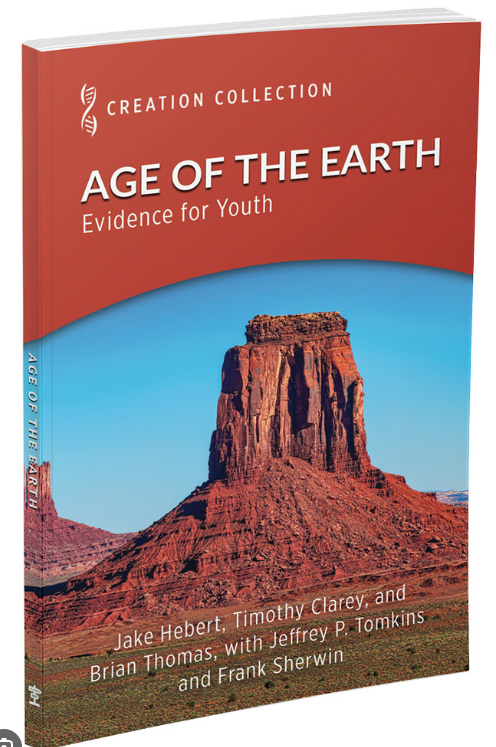
In this collaborative effort, scientists from the Institute for Creation Research (Dallas, Texas) “examine evidence from four aspects of our world that refute evolutionary suppositions and match the Bible’s timeline.” Each chapter is intentionally very short, averaging only five or six pages in length, and is accompanied by a detailed list of references that give the interested reader the opportunity to dive deeper into a particular topic. It is important to note here that the sub-title of this book, “Evidence for Youth”, is not an indication that this book is aimed at adolescent readers. This book provides evidence for a Young Earth and some of the discussions, although brief, can get fairly technical.
The book opens with a brief introduction to some biological data that provides clear evidence for a young earth. Examples include the presence of soft tissues and biomolecules in fossils, the revival of viable micro-organisms—such as yeasts—extracted from fossils encased in amber, living fossils, and the degradation of the human genome (the opposite of Evolution!). There is also an excellent presentation of six facts that clearly demonstrate that no fossil can be more than 1 million years old (Chapter 8).
Chapters 10–13, which provide evidence from arctic ice and ice cores, discusses, among other things, the fact that Greenland was recently entirely free from ice, that each layer in an ice core does not correspond to a single year, and notes that a squadron of World War II planes abandoned in Greenland in 1942 were found buried under 260 feet of ice in just 50 years!
The next section, evidence from the oceans and plate tectonics (Chapters 14–18), delves into plate tectonics and the fact that subducted slabs of crust are still cold and have not yet been melted by the hot mantle is clear evidence of very recent movement of the Earth’s continental plates consistent with Creation models of Noah’s flood, as is the evidence for a young seafloor based on the rapid deposition of sediments.
Next up, evidence from Earth’s atmosphere and magnetosphere is presented in Chapters 19–22. This evidence includes the fact that, based on an Evolutionary model, a young Sun would be too weak to warm a young Earth and so the Earth would have frozen solid and remained so to this day. Another piece of evidence that challenges Evolutionary thinking comes from supposed 2.7 billion year-old rain drop impressions preserved in hardened volcanic ash which proves—contrary to Evolutionary theory—that the Earth’s atmosphere has remained unchanged since it first formed.
The final section (Chapter 23–29) looks at the geological layers and rock formation. Numerous pieces of evidence for a young earth are presented, including the fact that current erosion rates are too rapid, there is a lack of erosion between rock layers, and that mudstones must have been rapidly deposited—all of which are consistent with a recent, global flood.
Overall, this book will provide the interested reader with a short synopsis of some key pieces of evidence that clearly show the Earth was recently created and that a global flood occurred only a few thousand years ago.
Age of the Earth: Evidence for Youth
Paper / full colour / 192 pages / Jake Hebert, Timothy Clarey, Brian Thomas et al.
Mark Sandercock
August 2026
Subscribe to Dialogue
FEATURED BOOKS AND DVDS


Paperback / $6.00 / 55 Pages
(It helps to be informed)
Book Review by Mark Sandercock
In this collaborative effort, scientists from the Institute for Creation Research (Dallas, Texas) “examine evidence from four aspects of our world that refute evolutionary suppositions and match the Bible’s timeline.” Each chapter is intentionally very short, averaging only five or six pages in length, and is accompanied by a detailed list of references that give the interested reader the opportunity to dive deeper into a particular topic. It is important to note here that the sub-title of this book, “Evidence for Youth”, is not an indication that this book is aimed at adolescent readers. This book provides evidence for a Young Earth and some of the discussions, although brief, can get fairly technical.
The book opens with a brief introduction to some biological data that provides clear evidence for a young earth. Examples include the presence of soft tissues and biomolecules in fossils, the revival of viable micro-organisms—such as yeasts—extracted from fossils encased in amber, living fossils, and the degradation of the human genome (the opposite of Evolution!). There is also an excellent presentation of six facts that clearly demonstrate that no fossil can be more than 1 million years old (Chapter 8).
Chapters 10–13, which provide evidence from arctic ice and ice cores, discusses, among other things, the fact that Greenland was recently entirely free from ice, that each layer in an ice core does not correspond to a single year, and notes that a squadron of World War II planes abandoned in Greenland in 1942 were found buried under 260 feet of ice in just 50 years!
The next section, evidence from the oceans and plate tectonics (Chapters 14–18), delves into plate tectonics and the fact that subducted slabs of crust are still cold and have not yet been melted by the hot mantle is clear evidence of very recent movement of the Earth’s continental plates consistent with Creation models of Noah’s flood, as is the evidence for a young seafloor based on the rapid deposition of sediments.
Next up, evidence from Earth’s atmosphere and magnetosphere is presented in Chapters 19–22. This evidence includes the fact that, based on an Evolutionary model, a young Sun would be too weak to warm a young Earth and so the Earth would have frozen solid and remained so to this day. Another piece of evidence that challenges Evolutionary thinking comes from supposed 2.7 billion year-old rain drop impressions preserved in hardened volcanic ash which proves—contrary to Evolutionary theory—that the Earth’s atmosphere has remained unchanged since it first formed.
The final section (Chapter 23–29) looks at the geological layers and rock formation. Numerous pieces of evidence for a young earth are presented, including the fact that current erosion rates are too rapid, there is a lack of erosion between rock layers, and that mudstones must have been rapidly deposited—all of which are consistent with a recent, global flood.
Overall, this book will provide the interested reader with a short synopsis of some key pieces of evidence that clearly show the Earth was recently created and that a global flood occurred only a few thousand years ago.
Age of the Earth: Evidence for Youth
Paper / full colour / 192 pages / Jake Hebert, Timothy Clarey, Brian Thomas et al.

Paperback / $10.00 / 111 Pages / full colour
(It helps to be informed)
Book Review by Mark Sandercock
In this collaborative effort, scientists from the Institute for Creation Research (Dallas, Texas) “examine evidence from four aspects of our world that refute evolutionary suppositions and match the Bible’s timeline.” Each chapter is intentionally very short, averaging only five or six pages in length, and is accompanied by a detailed list of references that give the interested reader the opportunity to dive deeper into a particular topic. It is important to note here that the sub-title of this book, “Evidence for Youth”, is not an indication that this book is aimed at adolescent readers. This book provides evidence for a Young Earth and some of the discussions, although brief, can get fairly technical.
The book opens with a brief introduction to some biological data that provides clear evidence for a young earth. Examples include the presence of soft tissues and biomolecules in fossils, the revival of viable micro-organisms—such as yeasts—extracted from fossils encased in amber, living fossils, and the degradation of the human genome (the opposite of Evolution!). There is also an excellent presentation of six facts that clearly demonstrate that no fossil can be more than 1 million years old (Chapter 8).
Chapters 10–13, which provide evidence from arctic ice and ice cores, discusses, among other things, the fact that Greenland was recently entirely free from ice, that each layer in an ice core does not correspond to a single year, and notes that a squadron of World War II planes abandoned in Greenland in 1942 were found buried under 260 feet of ice in just 50 years!
The next section, evidence from the oceans and plate tectonics (Chapters 14–18), delves into plate tectonics and the fact that subducted slabs of crust are still cold and have not yet been melted by the hot mantle is clear evidence of very recent movement of the Earth’s continental plates consistent with Creation models of Noah’s flood, as is the evidence for a young seafloor based on the rapid deposition of sediments.
Next up, evidence from Earth’s atmosphere and magnetosphere is presented in Chapters 19–22. This evidence includes the fact that, based on an Evolutionary model, a young Sun would be too weak to warm a young Earth and so the Earth would have frozen solid and remained so to this day. Another piece of evidence that challenges Evolutionary thinking comes from supposed 2.7 billion year-old rain drop impressions preserved in hardened volcanic ash which proves—contrary to Evolutionary theory—that the Earth’s atmosphere has remained unchanged since it first formed.
The final section (Chapter 23–29) looks at the geological layers and rock formation. Numerous pieces of evidence for a young earth are presented, including the fact that current erosion rates are too rapid, there is a lack of erosion between rock layers, and that mudstones must have been rapidly deposited—all of which are consistent with a recent, global flood.
Overall, this book will provide the interested reader with a short synopsis of some key pieces of evidence that clearly show the Earth was recently created and that a global flood occurred only a few thousand years ago.
Age of the Earth: Evidence for Youth
Paper / full colour / 192 pages / Jake Hebert, Timothy Clarey, Brian Thomas et al.

Hardcover / $18.00 / 117 Pages / Full colour
(It helps to be informed)
Book Review by Mark Sandercock
In this collaborative effort, scientists from the Institute for Creation Research (Dallas, Texas) “examine evidence from four aspects of our world that refute evolutionary suppositions and match the Bible’s timeline.” Each chapter is intentionally very short, averaging only five or six pages in length, and is accompanied by a detailed list of references that give the interested reader the opportunity to dive deeper into a particular topic. It is important to note here that the sub-title of this book, “Evidence for Youth”, is not an indication that this book is aimed at adolescent readers. This book provides evidence for a Young Earth and some of the discussions, although brief, can get fairly technical.
The book opens with a brief introduction to some biological data that provides clear evidence for a young earth. Examples include the presence of soft tissues and biomolecules in fossils, the revival of viable micro-organisms—such as yeasts—extracted from fossils encased in amber, living fossils, and the degradation of the human genome (the opposite of Evolution!). There is also an excellent presentation of six facts that clearly demonstrate that no fossil can be more than 1 million years old (Chapter 8).
Chapters 10–13, which provide evidence from arctic ice and ice cores, discusses, among other things, the fact that Greenland was recently entirely free from ice, that each layer in an ice core does not correspond to a single year, and notes that a squadron of World War II planes abandoned in Greenland in 1942 were found buried under 260 feet of ice in just 50 years!
The next section, evidence from the oceans and plate tectonics (Chapters 14–18), delves into plate tectonics and the fact that subducted slabs of crust are still cold and have not yet been melted by the hot mantle is clear evidence of very recent movement of the Earth’s continental plates consistent with Creation models of Noah’s flood, as is the evidence for a young seafloor based on the rapid deposition of sediments.
Next up, evidence from Earth’s atmosphere and magnetosphere is presented in Chapters 19–22. This evidence includes the fact that, based on an Evolutionary model, a young Sun would be too weak to warm a young Earth and so the Earth would have frozen solid and remained so to this day. Another piece of evidence that challenges Evolutionary thinking comes from supposed 2.7 billion year-old rain drop impressions preserved in hardened volcanic ash which proves—contrary to Evolutionary theory—that the Earth’s atmosphere has remained unchanged since it first formed.
The final section (Chapter 23–29) looks at the geological layers and rock formation. Numerous pieces of evidence for a young earth are presented, including the fact that current erosion rates are too rapid, there is a lack of erosion between rock layers, and that mudstones must have been rapidly deposited—all of which are consistent with a recent, global flood.
Overall, this book will provide the interested reader with a short synopsis of some key pieces of evidence that clearly show the Earth was recently created and that a global flood occurred only a few thousand years ago.
Age of the Earth: Evidence for Youth
Paper / full colour / 192 pages / Jake Hebert, Timothy Clarey, Brian Thomas et al.
Paperback / $10.00 / 192 Pages / Full colour
(It helps to be informed)
Book Review by Mark Sandercock
In this collaborative effort, scientists from the Institute for Creation Research (Dallas, Texas) “examine evidence from four aspects of our world that refute evolutionary suppositions and match the Bible’s timeline.” Each chapter is intentionally very short, averaging only five or six pages in length, and is accompanied by a detailed list of references that give the interested reader the opportunity to dive deeper into a particular topic. It is important to note here that the sub-title of this book, “Evidence for Youth”, is not an indication that this book is aimed at adolescent readers. This book provides evidence for a Young Earth and some of the discussions, although brief, can get fairly technical.
The book opens with a brief introduction to some biological data that provides clear evidence for a young earth. Examples include the presence of soft tissues and biomolecules in fossils, the revival of viable micro-organisms—such as yeasts—extracted from fossils encased in amber, living fossils, and the degradation of the human genome (the opposite of Evolution!). There is also an excellent presentation of six facts that clearly demonstrate that no fossil can be more than 1 million years old (Chapter 8).
Chapters 10–13, which provide evidence from arctic ice and ice cores, discusses, among other things, the fact that Greenland was recently entirely free from ice, that each layer in an ice core does not correspond to a single year, and notes that a squadron of World War II planes abandoned in Greenland in 1942 were found buried under 260 feet of ice in just 50 years!
The next section, evidence from the oceans and plate tectonics (Chapters 14–18), delves into plate tectonics and the fact that subducted slabs of crust are still cold and have not yet been melted by the hot mantle is clear evidence of very recent movement of the Earth’s continental plates consistent with Creation models of Noah’s flood, as is the evidence for a young seafloor based on the rapid deposition of sediments.
Next up, evidence from Earth’s atmosphere and magnetosphere is presented in Chapters 19–22. This evidence includes the fact that, based on an Evolutionary model, a young Sun would be too weak to warm a young Earth and so the Earth would have frozen solid and remained so to this day. Another piece of evidence that challenges Evolutionary thinking comes from supposed 2.7 billion year-old rain drop impressions preserved in hardened volcanic ash which proves—contrary to Evolutionary theory—that the Earth’s atmosphere has remained unchanged since it first formed.
The final section (Chapter 23–29) looks at the geological layers and rock formation. Numerous pieces of evidence for a young earth are presented, including the fact that current erosion rates are too rapid, there is a lack of erosion between rock layers, and that mudstones must have been rapidly deposited—all of which are consistent with a recent, global flood.
Overall, this book will provide the interested reader with a short synopsis of some key pieces of evidence that clearly show the Earth was recently created and that a global flood occurred only a few thousand years ago.
Age of the Earth: Evidence for Youth
Paper / full colour / 192 pages / Jake Hebert, Timothy Clarey, Brian Thomas et al.