

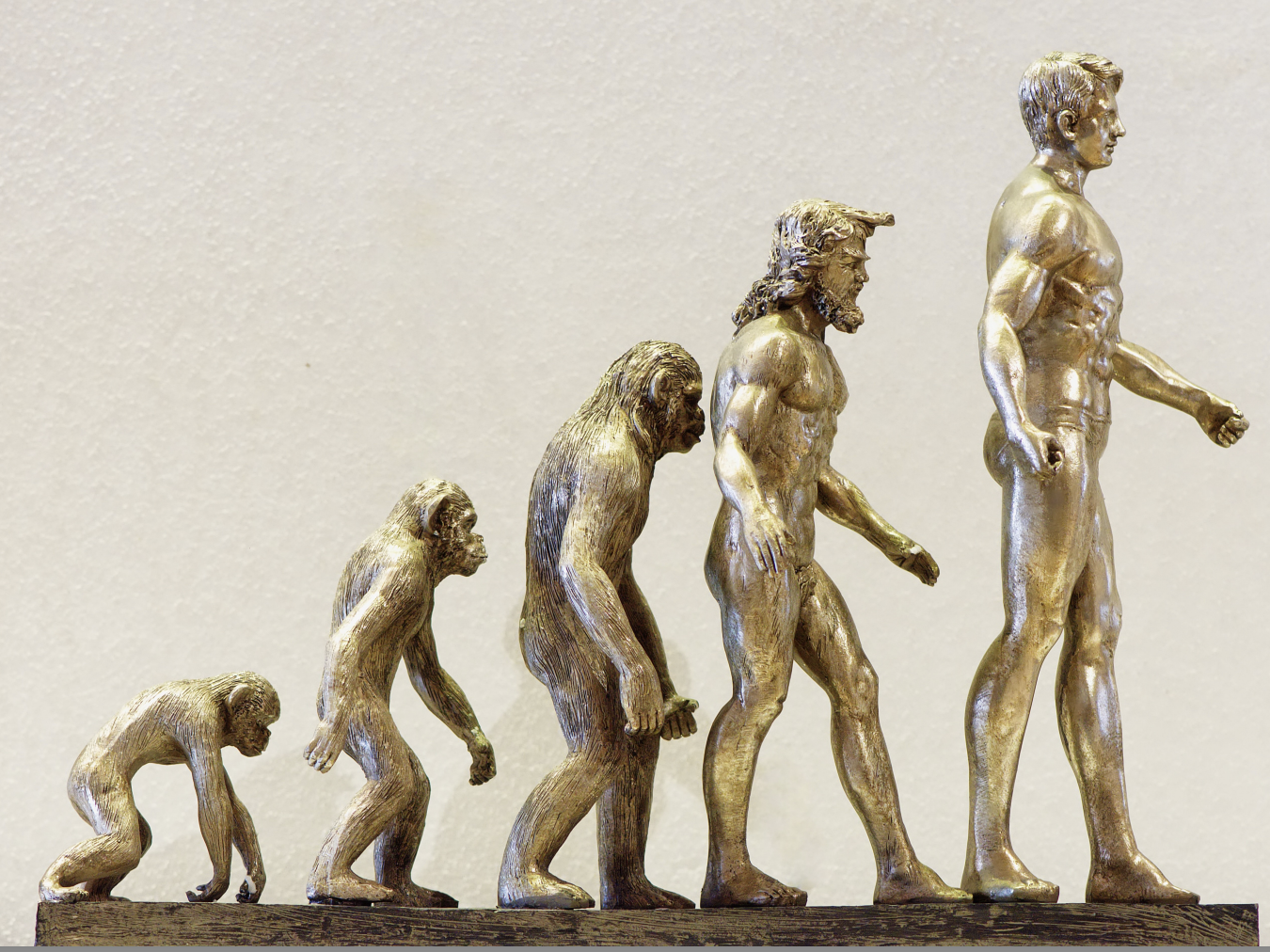

I collaborated with Carol Adams, a member of the Creation Research Society (CRS), to write a technical paleoanthropology paper, and we presented our research at the CRS Conference in July 2025. Our specific topic was Australopithecus afarensis (Lucy).
2024 was the 50th anniversary of the discovery of the AL 288-1 partial skeleton known as Lucy. This was commemorated in the Lucy50 Symposium 2024, where Donald Johanson (credited with discovering Lucy) and many other leading evolutionary researchers reviewed the scientific progress of anthropology and Lucy’s impact on the study of human origins. The recordings are available to watch on the ASU Institute of Human Origins’ YouTube channel: https://youtube.com/playlist?list=PLSD3Gw5UYKwEatG6zSrv3mHdO6AnJ9zqN&si=tm7iDywc6YKABFAI. Zaray Alemseged’s statement, “I’m not after the truth,” during the Q&A session and Johanson’s anti-creationist concluding remarks are revealing. Lucy came up as a topic on CRSnet, the CRS members’ email forum, and Carol and I participated in the discussion. The person who had started the discussion eventually suggested that we should do a write-up on Lucy for the Creation Research Society Quarterly (CRSQ), and we took that idea and ran with it.
Carol had already written a book in which she had a chapter about Lucy (Adams 2025), so she had personally read some of the research already. Most of my knowledge about Lucy was from presentations by Chris Ashcraft on the Northwest Creation Network’s YouTube channel (https://www.youtube.com/@nwcreationnetwork/videos). What he says about Lucy is based on research done by Jack Stern and Randall Susman in the 1980s, so I knew that would be something we would have to look at. However, we decided to start by checking what had already been published in the creationist journals to make sure we avoided repeating what had already been said. There are a lot of blog posts and short reviews of science news articles on creationist websites, but there are very few technical papers specifically about A. afarensis.
My next step was to read one of the creationist blog posts and then search for the research paper it referenced. Often, the creationist sources are commenting on a news article and cite that source, but it is usually not the original paper. I would still read the news article, too, though and see what the mainstream science journalists had to say and then find the paper they cited. This process works well for open-access papers, but it sometimes leads to a paywall. That is when the publisher of the journal requires that you pay for access to the articles, and that can get expensive very quickly. However, I had previously created a free account on https://www.academia.edu/ to look up something on another topic, and I found that I could search for articles by title and access them there.
Another helpful item that came into my hands was an article in Creation Magazine titled “Lucy at 50 has not aged well” (Line, Peter 2024). I read the article and looked at the references to see if any of them might be worth following up. Of particular interest was a quote from a paleoanthropology textbook, Reconstructing Human Origins: A Modern Synthesis (Conroy 2005). I was able to find a copy of the second edition for a reasonable price on Amazon. As soon as I received it, I found the quote and then quickly started digging into the sections that mentioned Lucy and/or A. afarensis.
While I was following my own train of research, Carol was reading some of the older articles she had from when she first wrote her book. Throughout the process, we were summarizing what we read and sending our notes to each other. We quickly started seeing a pattern in the literature, mostly focusing on how the muscles and ligaments might have connected to the bones, especially the pelvis, and whether or not Lucy’s kind was bipedal, so we shifted our focus to learning more about bipedality.
A bonus to having an Academia.edu account was that it would send me emails with suggestions for other articles related to what I had already looked at. When we started focusing on bipedality, it started sending me links to papers we would have otherwise missed. I followed several of those bunny trails as long as the suggested papers were relevant to our research. Many of those bunny trails included papers about biomechanics. Biomechanics is the study of how living things move and how their bodies work, using ideas from physics to understand things like muscles and bones.
This project was a great learning experience for both of us. Carol is a retired hand therapist, so taking the biomechanical route in our research was more in tune with her education and experience than with mine. I am a weather observer for the aviation industry and consider myself more of an Earth scientist. In university, I studied a bit of everything, but the extent of my anatomical knowledge was limited to three nutrition courses and biological psychology. I had to learn a lot from scratch, mostly by googling terms, and I wound up on https://www.physio-pedia.com many times. I enjoyed the challenge!
When registration for the CRS conference opened up in January 2025, I asked Carol if she was planning to attend. I had already decided I was going to be there. Carol thought it would be a great way for us to finally meet in person. Up until this point, we had only communicated by email. Shortly afterward, she suggested that we should submit an abstract and present our research at the conference. Because both of us are sustaining members of the CRS, we needed a voting member to sponsor us. We contacted the person who had suggested we collaborate on this project, and he helped us get in touch with Dr. Brian Thomas at the Institute for Creation Research, who graciously agreed to sponsor us.
Before submitting our abstract, I prepared the PowerPoint for our presentation so Dr. Thomas could see what we would be presenting. During that time, Carol felt it would be helpful to get in contact with Dr. Carl Werner to consult with him. She had previously been in contact with him when she was writing her book and knew he had done a substantial amount of research on Lucy already. He was happy to meet with us on Zoom and provide some guidance.
We were excited when we got the notification that our abstract had been accepted. In the months leading up to the conference, I practiced the presentation almost every day. I was still a bundle of nerves when the time came, but everything went well. The CRS Conference is a sort of testing ground for ideas, so none of the presentations were recorded, but Dr. Werner helped Carol and me to produce a video afterward. You can find it here: https://youtu.be/M_kyqpjx8Ws.
Since the conference, we have double-checked some things and made corrections. We gathered so much information in our research that we will be breaking it into a three-part series for the CRSQ. The next part of my adventure will be the peer-review process. This has truly been a blessed and rewarding experience!
References:
Adams, Carol. 2025. The Question of Origins: A Study of the Scientific Merits of the Creation and Evolution Models. 4th ed. McJavid Publishing.
Conroy, Glenn C. 2005. Reconstructing Human Origins: A Modern Synthesis. 2nd edition. W.W. Norton.
Line, Peter. 2024. Lucy at 50 Has Not Aged Well. Creation Magazine. October.
Andrea Reitan
April 2026
Subscribe to Dialogue
FEATURED BOOKS AND DVDS


Paperback / $6.00 / 55 Pages
I collaborated with Carol Adams, a member of the Creation Research Society (CRS), to write a technical paleoanthropology paper, and we presented our research at the CRS Conference in July 2025. Our specific topic was Australopithecus afarensis (Lucy).
2024 was the 50th anniversary of the discovery of the AL 288-1 partial skeleton known as Lucy. This was commemorated in the Lucy50 Symposium 2024, where Donald Johanson (credited with discovering Lucy) and many other leading evolutionary researchers reviewed the scientific progress of anthropology and Lucy’s impact on the study of human origins. The recordings are available to watch on the ASU Institute of Human Origins’ YouTube channel: https://youtube.com/playlist?list=PLSD3Gw5UYKwEatG6zSrv3mHdO6AnJ9zqN&si=tm7iDywc6YKABFAI. Zaray Alemseged’s statement, “I’m not after the truth,” during the Q&A session and Johanson’s anti-creationist concluding remarks are revealing. Lucy came up as a topic on CRSnet, the CRS members’ email forum, and Carol and I participated in the discussion. The person who had started the discussion eventually suggested that we should do a write-up on Lucy for the Creation Research Society Quarterly (CRSQ), and we took that idea and ran with it.
Carol had already written a book in which she had a chapter about Lucy (Adams 2025), so she had personally read some of the research already. Most of my knowledge about Lucy was from presentations by Chris Ashcraft on the Northwest Creation Network’s YouTube channel (https://www.youtube.com/@nwcreationnetwork/videos). What he says about Lucy is based on research done by Jack Stern and Randall Susman in the 1980s, so I knew that would be something we would have to look at. However, we decided to start by checking what had already been published in the creationist journals to make sure we avoided repeating what had already been said. There are a lot of blog posts and short reviews of science news articles on creationist websites, but there are very few technical papers specifically about A. afarensis.
My next step was to read one of the creationist blog posts and then search for the research paper it referenced. Often, the creationist sources are commenting on a news article and cite that source, but it is usually not the original paper. I would still read the news article, too, though and see what the mainstream science journalists had to say and then find the paper they cited. This process works well for open-access papers, but it sometimes leads to a paywall. That is when the publisher of the journal requires that you pay for access to the articles, and that can get expensive very quickly. However, I had previously created a free account on https://www.academia.edu/ to look up something on another topic, and I found that I could search for articles by title and access them there.
Another helpful item that came into my hands was an article in Creation Magazine titled “Lucy at 50 has not aged well” (Line, Peter 2024). I read the article and looked at the references to see if any of them might be worth following up. Of particular interest was a quote from a paleoanthropology textbook, Reconstructing Human Origins: A Modern Synthesis (Conroy 2005). I was able to find a copy of the second edition for a reasonable price on Amazon. As soon as I received it, I found the quote and then quickly started digging into the sections that mentioned Lucy and/or A. afarensis.
While I was following my own train of research, Carol was reading some of the older articles she had from when she first wrote her book. Throughout the process, we were summarizing what we read and sending our notes to each other. We quickly started seeing a pattern in the literature, mostly focusing on how the muscles and ligaments might have connected to the bones, especially the pelvis, and whether or not Lucy’s kind was bipedal, so we shifted our focus to learning more about bipedality.
A bonus to having an Academia.edu account was that it would send me emails with suggestions for other articles related to what I had already looked at. When we started focusing on bipedality, it started sending me links to papers we would have otherwise missed. I followed several of those bunny trails as long as the suggested papers were relevant to our research. Many of those bunny trails included papers about biomechanics. Biomechanics is the study of how living things move and how their bodies work, using ideas from physics to understand things like muscles and bones.
This project was a great learning experience for both of us. Carol is a retired hand therapist, so taking the biomechanical route in our research was more in tune with her education and experience than with mine. I am a weather observer for the aviation industry and consider myself more of an Earth scientist. In university, I studied a bit of everything, but the extent of my anatomical knowledge was limited to three nutrition courses and biological psychology. I had to learn a lot from scratch, mostly by googling terms, and I wound up on https://www.physio-pedia.com many times. I enjoyed the challenge!
When registration for the CRS conference opened up in January 2025, I asked Carol if she was planning to attend. I had already decided I was going to be there. Carol thought it would be a great way for us to finally meet in person. Up until this point, we had only communicated by email. Shortly afterward, she suggested that we should submit an abstract and present our research at the conference. Because both of us are sustaining members of the CRS, we needed a voting member to sponsor us. We contacted the person who had suggested we collaborate on this project, and he helped us get in touch with Dr. Brian Thomas at the Institute for Creation Research, who graciously agreed to sponsor us.
Before submitting our abstract, I prepared the PowerPoint for our presentation so Dr. Thomas could see what we would be presenting. During that time, Carol felt it would be helpful to get in contact with Dr. Carl Werner to consult with him. She had previously been in contact with him when she was writing her book and knew he had done a substantial amount of research on Lucy already. He was happy to meet with us on Zoom and provide some guidance.
We were excited when we got the notification that our abstract had been accepted. In the months leading up to the conference, I practiced the presentation almost every day. I was still a bundle of nerves when the time came, but everything went well. The CRS Conference is a sort of testing ground for ideas, so none of the presentations were recorded, but Dr. Werner helped Carol and me to produce a video afterward. You can find it here: https://youtu.be/M_kyqpjx8Ws.
Since the conference, we have double-checked some things and made corrections. We gathered so much information in our research that we will be breaking it into a three-part series for the CRSQ. The next part of my adventure will be the peer-review process. This has truly been a blessed and rewarding experience!
References:
Adams, Carol. 2025. The Question of Origins: A Study of the Scientific Merits of the Creation and Evolution Models. 4th ed. McJavid Publishing.
Conroy, Glenn C. 2005. Reconstructing Human Origins: A Modern Synthesis. 2nd edition. W.W. Norton.
Line, Peter. 2024. Lucy at 50 Has Not Aged Well. Creation Magazine. October.
Order Online

Paperback / $10.00 / 111 Pages / full colour
I collaborated with Carol Adams, a member of the Creation Research Society (CRS), to write a technical paleoanthropology paper, and we presented our research at the CRS Conference in July 2025. Our specific topic was Australopithecus afarensis (Lucy).
2024 was the 50th anniversary of the discovery of the AL 288-1 partial skeleton known as Lucy. This was commemorated in the Lucy50 Symposium 2024, where Donald Johanson (credited with discovering Lucy) and many other leading evolutionary researchers reviewed the scientific progress of anthropology and Lucy’s impact on the study of human origins. The recordings are available to watch on the ASU Institute of Human Origins’ YouTube channel: https://youtube.com/playlist?list=PLSD3Gw5UYKwEatG6zSrv3mHdO6AnJ9zqN&si=tm7iDywc6YKABFAI. Zaray Alemseged’s statement, “I’m not after the truth,” during the Q&A session and Johanson’s anti-creationist concluding remarks are revealing. Lucy came up as a topic on CRSnet, the CRS members’ email forum, and Carol and I participated in the discussion. The person who had started the discussion eventually suggested that we should do a write-up on Lucy for the Creation Research Society Quarterly (CRSQ), and we took that idea and ran with it.
Carol had already written a book in which she had a chapter about Lucy (Adams 2025), so she had personally read some of the research already. Most of my knowledge about Lucy was from presentations by Chris Ashcraft on the Northwest Creation Network’s YouTube channel (https://www.youtube.com/@nwcreationnetwork/videos). What he says about Lucy is based on research done by Jack Stern and Randall Susman in the 1980s, so I knew that would be something we would have to look at. However, we decided to start by checking what had already been published in the creationist journals to make sure we avoided repeating what had already been said. There are a lot of blog posts and short reviews of science news articles on creationist websites, but there are very few technical papers specifically about A. afarensis.
My next step was to read one of the creationist blog posts and then search for the research paper it referenced. Often, the creationist sources are commenting on a news article and cite that source, but it is usually not the original paper. I would still read the news article, too, though and see what the mainstream science journalists had to say and then find the paper they cited. This process works well for open-access papers, but it sometimes leads to a paywall. That is when the publisher of the journal requires that you pay for access to the articles, and that can get expensive very quickly. However, I had previously created a free account on https://www.academia.edu/ to look up something on another topic, and I found that I could search for articles by title and access them there.
Another helpful item that came into my hands was an article in Creation Magazine titled “Lucy at 50 has not aged well” (Line, Peter 2024). I read the article and looked at the references to see if any of them might be worth following up. Of particular interest was a quote from a paleoanthropology textbook, Reconstructing Human Origins: A Modern Synthesis (Conroy 2005). I was able to find a copy of the second edition for a reasonable price on Amazon. As soon as I received it, I found the quote and then quickly started digging into the sections that mentioned Lucy and/or A. afarensis.
While I was following my own train of research, Carol was reading some of the older articles she had from when she first wrote her book. Throughout the process, we were summarizing what we read and sending our notes to each other. We quickly started seeing a pattern in the literature, mostly focusing on how the muscles and ligaments might have connected to the bones, especially the pelvis, and whether or not Lucy’s kind was bipedal, so we shifted our focus to learning more about bipedality.
A bonus to having an Academia.edu account was that it would send me emails with suggestions for other articles related to what I had already looked at. When we started focusing on bipedality, it started sending me links to papers we would have otherwise missed. I followed several of those bunny trails as long as the suggested papers were relevant to our research. Many of those bunny trails included papers about biomechanics. Biomechanics is the study of how living things move and how their bodies work, using ideas from physics to understand things like muscles and bones.
This project was a great learning experience for both of us. Carol is a retired hand therapist, so taking the biomechanical route in our research was more in tune with her education and experience than with mine. I am a weather observer for the aviation industry and consider myself more of an Earth scientist. In university, I studied a bit of everything, but the extent of my anatomical knowledge was limited to three nutrition courses and biological psychology. I had to learn a lot from scratch, mostly by googling terms, and I wound up on https://www.physio-pedia.com many times. I enjoyed the challenge!
When registration for the CRS conference opened up in January 2025, I asked Carol if she was planning to attend. I had already decided I was going to be there. Carol thought it would be a great way for us to finally meet in person. Up until this point, we had only communicated by email. Shortly afterward, she suggested that we should submit an abstract and present our research at the conference. Because both of us are sustaining members of the CRS, we needed a voting member to sponsor us. We contacted the person who had suggested we collaborate on this project, and he helped us get in touch with Dr. Brian Thomas at the Institute for Creation Research, who graciously agreed to sponsor us.
Before submitting our abstract, I prepared the PowerPoint for our presentation so Dr. Thomas could see what we would be presenting. During that time, Carol felt it would be helpful to get in contact with Dr. Carl Werner to consult with him. She had previously been in contact with him when she was writing her book and knew he had done a substantial amount of research on Lucy already. He was happy to meet with us on Zoom and provide some guidance.
We were excited when we got the notification that our abstract had been accepted. In the months leading up to the conference, I practiced the presentation almost every day. I was still a bundle of nerves when the time came, but everything went well. The CRS Conference is a sort of testing ground for ideas, so none of the presentations were recorded, but Dr. Werner helped Carol and me to produce a video afterward. You can find it here: https://youtu.be/M_kyqpjx8Ws.
Since the conference, we have double-checked some things and made corrections. We gathered so much information in our research that we will be breaking it into a three-part series for the CRSQ. The next part of my adventure will be the peer-review process. This has truly been a blessed and rewarding experience!
References:
Adams, Carol. 2025. The Question of Origins: A Study of the Scientific Merits of the Creation and Evolution Models. 4th ed. McJavid Publishing.
Conroy, Glenn C. 2005. Reconstructing Human Origins: A Modern Synthesis. 2nd edition. W.W. Norton.
Line, Peter. 2024. Lucy at 50 Has Not Aged Well. Creation Magazine. October.
Order Online
Hardcover / $18.00 / 117 Pages / Full colour
I collaborated with Carol Adams, a member of the Creation Research Society (CRS), to write a technical paleoanthropology paper, and we presented our research at the CRS Conference in July 2025. Our specific topic was Australopithecus afarensis (Lucy).
2024 was the 50th anniversary of the discovery of the AL 288-1 partial skeleton known as Lucy. This was commemorated in the Lucy50 Symposium 2024, where Donald Johanson (credited with discovering Lucy) and many other leading evolutionary researchers reviewed the scientific progress of anthropology and Lucy’s impact on the study of human origins. The recordings are available to watch on the ASU Institute of Human Origins’ YouTube channel: https://youtube.com/playlist?list=PLSD3Gw5UYKwEatG6zSrv3mHdO6AnJ9zqN&si=tm7iDywc6YKABFAI. Zaray Alemseged’s statement, “I’m not after the truth,” during the Q&A session and Johanson’s anti-creationist concluding remarks are revealing. Lucy came up as a topic on CRSnet, the CRS members’ email forum, and Carol and I participated in the discussion. The person who had started the discussion eventually suggested that we should do a write-up on Lucy for the Creation Research Society Quarterly (CRSQ), and we took that idea and ran with it.
Carol had already written a book in which she had a chapter about Lucy (Adams 2025), so she had personally read some of the research already. Most of my knowledge about Lucy was from presentations by Chris Ashcraft on the Northwest Creation Network’s YouTube channel (https://www.youtube.com/@nwcreationnetwork/videos). What he says about Lucy is based on research done by Jack Stern and Randall Susman in the 1980s, so I knew that would be something we would have to look at. However, we decided to start by checking what had already been published in the creationist journals to make sure we avoided repeating what had already been said. There are a lot of blog posts and short reviews of science news articles on creationist websites, but there are very few technical papers specifically about A. afarensis.
My next step was to read one of the creationist blog posts and then search for the research paper it referenced. Often, the creationist sources are commenting on a news article and cite that source, but it is usually not the original paper. I would still read the news article, too, though and see what the mainstream science journalists had to say and then find the paper they cited. This process works well for open-access papers, but it sometimes leads to a paywall. That is when the publisher of the journal requires that you pay for access to the articles, and that can get expensive very quickly. However, I had previously created a free account on https://www.academia.edu/ to look up something on another topic, and I found that I could search for articles by title and access them there.
Another helpful item that came into my hands was an article in Creation Magazine titled “Lucy at 50 has not aged well” (Line, Peter 2024). I read the article and looked at the references to see if any of them might be worth following up. Of particular interest was a quote from a paleoanthropology textbook, Reconstructing Human Origins: A Modern Synthesis (Conroy 2005). I was able to find a copy of the second edition for a reasonable price on Amazon. As soon as I received it, I found the quote and then quickly started digging into the sections that mentioned Lucy and/or A. afarensis.
While I was following my own train of research, Carol was reading some of the older articles she had from when she first wrote her book. Throughout the process, we were summarizing what we read and sending our notes to each other. We quickly started seeing a pattern in the literature, mostly focusing on how the muscles and ligaments might have connected to the bones, especially the pelvis, and whether or not Lucy’s kind was bipedal, so we shifted our focus to learning more about bipedality.
A bonus to having an Academia.edu account was that it would send me emails with suggestions for other articles related to what I had already looked at. When we started focusing on bipedality, it started sending me links to papers we would have otherwise missed. I followed several of those bunny trails as long as the suggested papers were relevant to our research. Many of those bunny trails included papers about biomechanics. Biomechanics is the study of how living things move and how their bodies work, using ideas from physics to understand things like muscles and bones.
This project was a great learning experience for both of us. Carol is a retired hand therapist, so taking the biomechanical route in our research was more in tune with her education and experience than with mine. I am a weather observer for the aviation industry and consider myself more of an Earth scientist. In university, I studied a bit of everything, but the extent of my anatomical knowledge was limited to three nutrition courses and biological psychology. I had to learn a lot from scratch, mostly by googling terms, and I wound up on https://www.physio-pedia.com many times. I enjoyed the challenge!
When registration for the CRS conference opened up in January 2025, I asked Carol if she was planning to attend. I had already decided I was going to be there. Carol thought it would be a great way for us to finally meet in person. Up until this point, we had only communicated by email. Shortly afterward, she suggested that we should submit an abstract and present our research at the conference. Because both of us are sustaining members of the CRS, we needed a voting member to sponsor us. We contacted the person who had suggested we collaborate on this project, and he helped us get in touch with Dr. Brian Thomas at the Institute for Creation Research, who graciously agreed to sponsor us.
Before submitting our abstract, I prepared the PowerPoint for our presentation so Dr. Thomas could see what we would be presenting. During that time, Carol felt it would be helpful to get in contact with Dr. Carl Werner to consult with him. She had previously been in contact with him when she was writing her book and knew he had done a substantial amount of research on Lucy already. He was happy to meet with us on Zoom and provide some guidance.
We were excited when we got the notification that our abstract had been accepted. In the months leading up to the conference, I practiced the presentation almost every day. I was still a bundle of nerves when the time came, but everything went well. The CRS Conference is a sort of testing ground for ideas, so none of the presentations were recorded, but Dr. Werner helped Carol and me to produce a video afterward. You can find it here: https://youtu.be/M_kyqpjx8Ws.
Since the conference, we have double-checked some things and made corrections. We gathered so much information in our research that we will be breaking it into a three-part series for the CRSQ. The next part of my adventure will be the peer-review process. This has truly been a blessed and rewarding experience!
References:
Adams, Carol. 2025. The Question of Origins: A Study of the Scientific Merits of the Creation and Evolution Models. 4th ed. McJavid Publishing.
Conroy, Glenn C. 2005. Reconstructing Human Origins: A Modern Synthesis. 2nd edition. W.W. Norton.
Line, Peter. 2024. Lucy at 50 Has Not Aged Well. Creation Magazine. October.
Order Online
Paperback / $10.00 / 192 Pages / Full colour
I collaborated with Carol Adams, a member of the Creation Research Society (CRS), to write a technical paleoanthropology paper, and we presented our research at the CRS Conference in July 2025. Our specific topic was Australopithecus afarensis (Lucy).
2024 was the 50th anniversary of the discovery of the AL 288-1 partial skeleton known as Lucy. This was commemorated in the Lucy50 Symposium 2024, where Donald Johanson (credited with discovering Lucy) and many other leading evolutionary researchers reviewed the scientific progress of anthropology and Lucy’s impact on the study of human origins. The recordings are available to watch on the ASU Institute of Human Origins’ YouTube channel: https://youtube.com/playlist?list=PLSD3Gw5UYKwEatG6zSrv3mHdO6AnJ9zqN&si=tm7iDywc6YKABFAI. Zaray Alemseged’s statement, “I’m not after the truth,” during the Q&A session and Johanson’s anti-creationist concluding remarks are revealing. Lucy came up as a topic on CRSnet, the CRS members’ email forum, and Carol and I participated in the discussion. The person who had started the discussion eventually suggested that we should do a write-up on Lucy for the Creation Research Society Quarterly (CRSQ), and we took that idea and ran with it.
Carol had already written a book in which she had a chapter about Lucy (Adams 2025), so she had personally read some of the research already. Most of my knowledge about Lucy was from presentations by Chris Ashcraft on the Northwest Creation Network’s YouTube channel (https://www.youtube.com/@nwcreationnetwork/videos). What he says about Lucy is based on research done by Jack Stern and Randall Susman in the 1980s, so I knew that would be something we would have to look at. However, we decided to start by checking what had already been published in the creationist journals to make sure we avoided repeating what had already been said. There are a lot of blog posts and short reviews of science news articles on creationist websites, but there are very few technical papers specifically about A. afarensis.
My next step was to read one of the creationist blog posts and then search for the research paper it referenced. Often, the creationist sources are commenting on a news article and cite that source, but it is usually not the original paper. I would still read the news article, too, though and see what the mainstream science journalists had to say and then find the paper they cited. This process works well for open-access papers, but it sometimes leads to a paywall. That is when the publisher of the journal requires that you pay for access to the articles, and that can get expensive very quickly. However, I had previously created a free account on https://www.academia.edu/ to look up something on another topic, and I found that I could search for articles by title and access them there.
Another helpful item that came into my hands was an article in Creation Magazine titled “Lucy at 50 has not aged well” (Line, Peter 2024). I read the article and looked at the references to see if any of them might be worth following up. Of particular interest was a quote from a paleoanthropology textbook, Reconstructing Human Origins: A Modern Synthesis (Conroy 2005). I was able to find a copy of the second edition for a reasonable price on Amazon. As soon as I received it, I found the quote and then quickly started digging into the sections that mentioned Lucy and/or A. afarensis.
While I was following my own train of research, Carol was reading some of the older articles she had from when she first wrote her book. Throughout the process, we were summarizing what we read and sending our notes to each other. We quickly started seeing a pattern in the literature, mostly focusing on how the muscles and ligaments might have connected to the bones, especially the pelvis, and whether or not Lucy’s kind was bipedal, so we shifted our focus to learning more about bipedality.
A bonus to having an Academia.edu account was that it would send me emails with suggestions for other articles related to what I had already looked at. When we started focusing on bipedality, it started sending me links to papers we would have otherwise missed. I followed several of those bunny trails as long as the suggested papers were relevant to our research. Many of those bunny trails included papers about biomechanics. Biomechanics is the study of how living things move and how their bodies work, using ideas from physics to understand things like muscles and bones.
This project was a great learning experience for both of us. Carol is a retired hand therapist, so taking the biomechanical route in our research was more in tune with her education and experience than with mine. I am a weather observer for the aviation industry and consider myself more of an Earth scientist. In university, I studied a bit of everything, but the extent of my anatomical knowledge was limited to three nutrition courses and biological psychology. I had to learn a lot from scratch, mostly by googling terms, and I wound up on https://www.physio-pedia.com many times. I enjoyed the challenge!
When registration for the CRS conference opened up in January 2025, I asked Carol if she was planning to attend. I had already decided I was going to be there. Carol thought it would be a great way for us to finally meet in person. Up until this point, we had only communicated by email. Shortly afterward, she suggested that we should submit an abstract and present our research at the conference. Because both of us are sustaining members of the CRS, we needed a voting member to sponsor us. We contacted the person who had suggested we collaborate on this project, and he helped us get in touch with Dr. Brian Thomas at the Institute for Creation Research, who graciously agreed to sponsor us.
Before submitting our abstract, I prepared the PowerPoint for our presentation so Dr. Thomas could see what we would be presenting. During that time, Carol felt it would be helpful to get in contact with Dr. Carl Werner to consult with him. She had previously been in contact with him when she was writing her book and knew he had done a substantial amount of research on Lucy already. He was happy to meet with us on Zoom and provide some guidance.
We were excited when we got the notification that our abstract had been accepted. In the months leading up to the conference, I practiced the presentation almost every day. I was still a bundle of nerves when the time came, but everything went well. The CRS Conference is a sort of testing ground for ideas, so none of the presentations were recorded, but Dr. Werner helped Carol and me to produce a video afterward. You can find it here: https://youtu.be/M_kyqpjx8Ws.
Since the conference, we have double-checked some things and made corrections. We gathered so much information in our research that we will be breaking it into a three-part series for the CRSQ. The next part of my adventure will be the peer-review process. This has truly been a blessed and rewarding experience!
References:
Adams, Carol. 2025. The Question of Origins: A Study of the Scientific Merits of the Creation and Evolution Models. 4th ed. McJavid Publishing.
Conroy, Glenn C. 2005. Reconstructing Human Origins: A Modern Synthesis. 2nd edition. W.W. Norton.
Line, Peter. 2024. Lucy at 50 Has Not Aged Well. Creation Magazine. October.
Order Online