

Intermediate


It was in 1909 that Charles Walcott of the Smithsonian Institution, noticed an unusual fossil in Canada’s Rocky Mountains in Yoho National Park. It was the discoloured, extremely thin remains of a soft-bodied marine creature. Now wait a minute, he must have thought! What we normally find as fossils are the hard parts such as shell or bone from once living creatures. Naturally intrigued, Walcott returned to British Columbia for several summers. He found a whole collection of soft bodied creatures previously unknown to science. Read the rest of this entry »

People came from hundreds of kilometres away to hear Dr. Steven Ausin speak at CSAA’s Creation Weekend in Edmonton in October. His first lecture on Friday evening, October 24 was on the global flood model, also known as catastrophic plate tectonics. This model provides an explanation for how the earth came to its present state (as a result of a worldwide flood). The model was first proposed in a paper in 1994. There were six authors, Drs. Steven Austin, John Baumgardner, Hubert Humphreys, Andrew Snelling, Larry Vardiman and Kurt Wise (each representing different relevant technical areas of expertise). Read the rest of this entry »
During the 1960s and 1970s, improved strains of wheat and rice resulted in a doubling of crop yields. Despite predictions of disaster from some environmentalists, the world continued to feed quickly growing human populations. This green revolution, kick-started by the research of American plant scientist Norman Borlaug and Indian rice geneticist M. S. Swaminathan, provided much higher yielding crops. However for optimum growth, these crops require the widespread application of nitrogen fertilizers and other chemicals. As a byproduct of this practice, a significant amount of fertilizer ends up in natural waterways. As a result, scientists now consider the application of such chemicals as “so last century!” (Nature October 30, 2014 p. S52). The hunt is now on for crops that do not require chemical inputs and yet produce high yields. Read the rest of this entry »
Paperback / $15.00 / 272 Pages / full colour
Few discussions at this level are as attractively presented as in this new book. Nine scientists discuss fatal flaws in evolutionary explanations. They make technical material user friendly and interesting! The topics include population genetics, DNA and molecular machines, origin of life, the fossil record, the geological record, radiometric dating, cosmology and lastly ethical issues such as social Darwinism. Recommended for readers who have an interest in up to date information (somewhat technical) on issues concerning origins. Ideal reference for students heading to post secondary studies.
Paperback / $10.00 / 256 Pages
In this fascinating book, the author provides us with new appreciation for the Creation and for the Bible. The author probes what information is, where it comes from and what it accomplishes. Recommended for adults with an interest in science, mathematics and linguistics.
Paperback / $18.00 / 120 Pages
These highly qualified authors demonstrate from the latest scientific literature that similarity in fossil anatomy, and DNA sequences does not prove evolutionary descent of humans from chimps. What is more, mutation rates leading to new information (if they occur at all) are far, far too slow to ever bring about such a transition. Interesting and well documented. Suitable for readers able to handle a somewhat technical discussion.
Paperback / $15.00 / 336 Pages / line drawings
The author considers the arguments of arch-atheist Richard Dawkins and he shows that Biblical creation makes more sense of the issues than does Dawkins’ materialism.
DVD / $18.00 / 96 Minutes
Exceptionally well illustrated, with interesting commentary by 15 well qualified scientists, this DVD is guaranteed to fascinate and inform. Some of the eight topics will be more interesting than others to individual viewers, but this is not surprising when the topics cover everything from biology to geology to physics and astronomy. There is plenty of Christian commentary which highlights the significance of each issue. Younger viewers (for example high school) won’t understand everything, but it will serve as an introduction to the issues. Subtitles in 16 languages can be selected.
Order OnlineArmadillos (Spanish for little armoured one) are New World nocturnal mammals covered by a leathery armour shell overlaid by horn. Of all living animals, “few are as amazing … as the armadillos” (Storrs, 1982). Even Carolus Linnaeus, the father of taxonomy, was puzzled about how to classify this “strange-looking mammal” (Smith and Doughty, 1984, p. 2). They are shy, timid mammals that mammalogist David Lamp calls bizarre (1977, p. 36). They look nothing like any other living animal, appearing much more like a fierce miniature dinosaur. These nearly blind and deaf animals must use their keen sense of smell to locate food. Read the rest of this entry »
Review of Evolution’s Achilles’ Heels (book)
Like Alice of Wonderland fame (in Through the Looking Glass), who found that she had to run extremely fast just to stay in the same place, so also it is hard to maintain an up-to-date understanding in science. The scientific journals constantly churn out new articles with new information and arguments. Keeping up to date is hard work! But it is extremely helpful to have an understanding of current issues in science and their significance. This makes the new book Evolution’s Achilles’ Heels (Robert Carter, Editor) and its companion DVD of the same title, extremely relevant. Read the rest of this entry »
There are some useful and visually attractive programs available on YouTube. For example, Privileged Species (previously reviewed in Dialogue) at 32 minutes, has already recorded 33,300 views. However for better quality display, a DVD is required which CSAA sells for $15.00 each.
Several years ago CSAA distributed free copies of the DVD Programming of Life which runs 44 minutes and is produced by LaBarge Media (with Don Johnson). We distributed this to high school and university students, teachers, and pastors. This program examines mathematical issues concerning the living cell. In this context, information is a critical feature of living cells. The kind of information required (proscriptive) involves instructions. From that discussion we proceed to protein manufacturing which is illustrated with beautiful graphics. We then learn the essential features of a computer and how the cell demonstrates these capacities. Read the rest of this entry »
The ability of fireflies to glow in the dark, delights those who have seen these insects in action. It really seems like a special talent. However a recent issue of National Geographic (March 2015) declared about bioluminescence: “Evolving to make light seems to be relatively easy — it has happened independently in at least 40 different lineages.” (p. 84) Just because we find a special talent in a number of very different creatures, does not mean that the talent was easily developed by chance. National Geographic is not aware that this unusual ability is much more reasonably explained as the choice of God, the creator. There are many examples where we can see the problem for evolution of special talents in very different creatures. And the camera eye is an ideal example. Read the rest of this entry »
Secular scientists usually do not like to mention discoveries or achievements of people who support Biblical creation. Recently however, some creation supporters have come to the attention of many scientists and even the secular media.
Mark Armitage, for example, recently published an article on soft un-fossilized tissue in one of the largest Triceratops horns ever found in Montana. Mr. Armitage had found the dinosaur fossil himself in 2012. Then in February 2013 he, along with biologist Kevin Lee Anderson of Arkansas State University-Beebe, published a technical article on this find in a mainstream European scientific journal Acta Histochemica (115, 603-608, 2013). Entitled “Soft sheets of fibrillary bone from a fossil of the supraorbital horn of the dinosaur Triceratops horridus.” The article established this find as “the first report of sheets of soft tissues from Triceratops horn bearing layers of osteocytes [bone forming cells], and extends the range and type of dinosaur specimens known to contain non-fossilized material in bone matrix.” (p. 603) Read the rest of this entry »
Creation Weekend 2015 proved to be as exciting and informative as the organizers had hoped. Dr. Raymond Damadian, of New York, inventor of the MRI scanner and founder of FONAR Corporation, provided large audiences in Edmonton with lots to think about. In his initial lecture on Friday evening, Dr. Damadian shared some of the story of how he first came to the idea for an MRI scanner and how he was able to demonstrate the effectiveness of his idea. Read the rest of this entry »
The brand new book Gifted Mind has it all: inspiring message, an exciting story with diverse characters, conflict resolution and a happy ending. This is a book that the reader will be reluctant to put down. Best of all, however, this is a true account of how God worked in the life of the amazing inventor of the magnetic resonance imaging machine (MRI). This machine has only been available since the 1980s, yet it has impacted for good the lives of millions of people.
FEATURED BOOKS AND DVDS
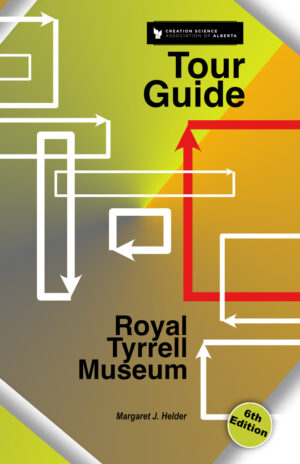
Paperback / $6.00 / 55 Pages
The brand new book Gifted Mind has it all: inspiring message, an exciting story with diverse characters, conflict resolution and a happy ending. This is a book that the reader will be reluctant to put down. Best of all, however, this is a true account of how God worked in the life of the amazing inventor of the magnetic resonance imaging machine (MRI). This machine has only been available since the 1980s, yet it has impacted for good the lives of millions of people.
Order Online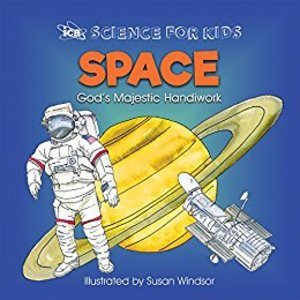

Paperback / $10.00 / 111 Pages / full colour
The brand new book Gifted Mind has it all: inspiring message, an exciting story with diverse characters, conflict resolution and a happy ending. This is a book that the reader will be reluctant to put down. Best of all, however, this is a true account of how God worked in the life of the amazing inventor of the magnetic resonance imaging machine (MRI). This machine has only been available since the 1980s, yet it has impacted for good the lives of millions of people.
Order Online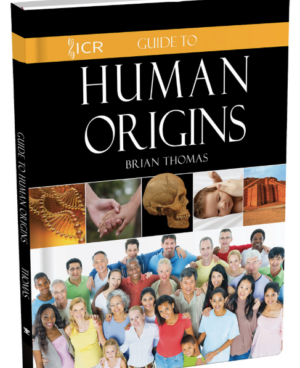
Hardcover / $18.00 / 117 Pages / Full colour
The brand new book Gifted Mind has it all: inspiring message, an exciting story with diverse characters, conflict resolution and a happy ending. This is a book that the reader will be reluctant to put down. Best of all, however, this is a true account of how God worked in the life of the amazing inventor of the magnetic resonance imaging machine (MRI). This machine has only been available since the 1980s, yet it has impacted for good the lives of millions of people.
Order Online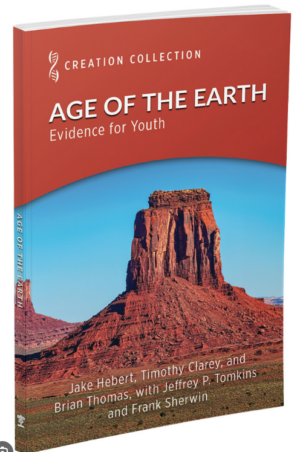
Paperback / $10.00 / 192 Pages / Full colour
The brand new book Gifted Mind has it all: inspiring message, an exciting story with diverse characters, conflict resolution and a happy ending. This is a book that the reader will be reluctant to put down. Best of all, however, this is a true account of how God worked in the life of the amazing inventor of the magnetic resonance imaging machine (MRI). This machine has only been available since the 1980s, yet it has impacted for good the lives of millions of people.
Order Online