

Level


It is easy to remind ourselves not to believe everything which is confidently declared as fact, but it is quite another to actually follow that good advice. How many generations of English students, for example, have memorized Shakespeare’s ominous declaration in Merchant of Venice: “All that glitters is not gold–/ Often have you heard that told.” (Act II Scene 7). Even today however, centuries after Shakespeare’s time, we all too often believe appearances, whether they be objects for sale or statements of scientific fact. Read the rest of this entry »

The Creation Science Association of Alberta is delighted to announce that biologist and long time creation apologist Dr. Jerry Bergman has agreed to speak at our Creation Weekend October 14 and 15, 2011. Dr. Bergman is a well known author and speaker on creation issues. His articles in Dialogue are extremely popular and among his published books, our association sells Slaughter of the Dissidents and Persuaded by the Evidence. What makes Dr. Bergman particularly interesting is the story of his rejection of atheism based on deficiencies in evolution theory. Read the rest of this entry »
Creation Science Association of Alberta is delighted to announce that Dr. Marcus Ross has agreed to speak at our creation weekend in Edmonton on Friday and Saturday, October 15 and 16, 2010. This young scientist brings with him a wealth of experience and expertise. He graduated with a B.S. from The Pennsylvania State University, a M. S. in Paleontology at south Dakota School of Mines and Technology and a Ph.D. in Geosciences from University of Rhode Island. His doctoral thesis dealt with the abundance and spread of mosasaurs, marine reptiles which are found in Cretaceous sediments, rock levels similar to those of many dinosaurs. Read the rest of this entry »
This DVD features discussion by Dr. Andrew Snelling, author of Earth’s Catastrophic Past, an 1100 page work which discusses multiple issues connected to the worldwide flood of Noah. This man is well known for his work on radiometric dating, some of it with the RATE project from Institute for Creation Research, which examined the significance of various dating techniques for conclusions about the age of the earth. He declares firstly that we only think of the earth as old because we expect the rocks to be old, based on a comparison with geological processes going on today. However instead of the present interpreting the past, we should rather turn our understanding around and realize that what happened in the past, explains what we see in the present. Read the rest of this entry »
Of all the scientific disciplines which resist solution, earthquake prediction certainly ranks close to the top of the list. One need only review the history of recent major events to discover how difficult this issue is. Read the rest of this entry »
It was just a matter of time, of course, following the discovery of geckos’ amazing ability to stick to smooth surfaces by means of molecular forces (see Let’s Learn from the Best), that another such animal would be discovered. One might have expected that the next discovery would be in another reptile, similar to the gecko. Imagine our surprise, then when we heard that the second example is nothing like the first. An article published last year in the Journal of Experimental Biology reveals that such a phenomenon has been discovered in a jumping spider (Evarcha aracuata) commonly found in Europe. While many creatures such as flies use an adhesive fluid (ugh) to stick themselves to surfaces, these jumping spiders use ‘dry adhesion’ like the geckos. Read the rest of this entry »
You have to wonder how a big science project in biology, which involved 32 laboratories from 10 countries and 440 scientists, and which cost $130 million, could be controversial with many other mainstream biologists. The lead articles were published in the journal Nature on September 6, 2012. What could be controversial about that? Well it transpires that many scientists, who were not involved, did not like the initial thinking on which the project was based, how the research was carried out, and how the conclusions were drawn. What certain mainstream scientists particularly did not like was that so many intelligent design and creation scientists were so pleased. Read the rest of this entry »
Evolutionists have long had a difficult time trying to account for the development of cells with nuclei. The first step, of course, is to agree on a suitable ancestor. The popular choice is bacteria (prokaryotes) which typically have only a single circular chromosome lying free in the cell. Unfortunately there are numerous structural and metabolic differences between the assumed ancestors and presumed descendants. Various theories have been proposed to explain how this new cell type might have developed, but none has proved extremely satisfactory. Thus the old theories tend to get recycled. An explanation is accepted for a while and later falls into disfavour as another old theory is retrieved from mothballs. The problem is that none of these theories fits the observed facts very well at all. Read the rest of this entry »
CSAA’s featured speaker for Creation Weekend 2011 was well known creation apologist Dr. Jerry Bergman. Large numbers of people came to hear one or more of his lectures and all declared themselves delighted with his genial, non-confrontational manner and his interesting material. In that Dr. Bergman’s area of expertise is biology, chemistry and medical anatomy, the issues he discussed were quite different from the geological topics which we have considered in recent years. This material demonstrated anew that the issue of creation is broad and encompasses all aspects of nature. Read the rest of this entry »

When we walk outside, putter about the garden, or even splash in waves at the beach, we are making observations of nature whether we realize it or not.
In our backyard during the summer, for example, plump saucy robins take up residence and the male fights off all invader robins. The resident pair is displaying territoriality or the determination to defend their property against all other robins. Other bird species come and go, but our resident robins don’t care. Read the rest of this entry »

The striking image on the cover of this book is a crystal of DNA. What more effective illustration could one imagine for a book which deals with the significance of biochemistry for our understanding of biology? Read the rest of this entry »
“Everybody” knows, one might suppose, that evolution is about facts and the creation model is about belief. Certainly this was the message of the recent PBS TV series entitled “Evolution” which aired in September 2001. Indeed information sent to all the PBS stations stated this very thing: “All known scientific evidence supports evolution…. New discoveries over the past 150 years have all supported the validity of the theory of evolution.” (PBS Internal Memo. 2001. The Evolution Controversy: Use it or Lose it. Evolution Project / WGBH Boston. p. 5. June 15.) The memo further defined a scientific theory as a “higher level of understanding that ties ‘facts’ together.” (p. 5). As to the creation model, the memo dismissed it as “not science. It is part of a religious belief system…” (p. 6). Such statements and other similar ones over the years have convinced many among the public that science in general and evolution in particular are based on observations from the natural world and thus they are empirically or factually based. The interesting thing is that this is not the modern understanding of science among scientists themselves. They have long since abandoned much concern for actual data. Read the rest of this entry »
Geologist Dr. Steven Austin has promised to provide Albertans with some fascinating and exciting information when he comes to Edmonton for the November 6-7 weekend. On the Friday evening, November 6 (Millbourne Alliance Church), he has promised to discuss “Mount St. Helens : Explosive Evidence for Creation.” Since the eruption of that volcano in 1980, Dr. Austin has presented this material to many audiences and the response is always very positive. Read the rest of this entry »
While Kurt Wise’s original field of expertise is fossils, readers of his book Faith, Form and Time will discover that he is also very familiar with mathematics, astronomy, biology and of course, Scripture. This is what makes him so interesting to listen to. Read the rest of this entry »
One of my favourite ways to spend a cold winter day is sitting on the couch with one child on each side and possibly a third on my lap while reading stories. But with a daughter (5) who loves princess stories, and a son (3) who rates stories based on the quality of trucks in them, it can be difficult to find a story that we will all enjoy over and over. However, since we first read “The Adventures of Arkie the Archaeopteryx” by Ryan Jaroncyk and “The Oxpecker and the Giraffe: I Need You and You Need Me” by Patrick Fitzpatrick, they both have asked for these stories again and again… much to my own delight. Read the rest of this entry »
FEATURED BOOKS AND DVDS

Paperback / $6.00 / 55 Pages
One of my favourite ways to spend a cold winter day is sitting on the couch with one child on each side and possibly a third on my lap while reading stories. But with a daughter (5) who loves princess stories, and a son (3) who rates stories based on the quality of trucks in them, it can be difficult to find a story that we will all enjoy over and over. However, since we first read “The Adventures of Arkie the Archaeopteryx” by Ryan Jaroncyk and “The Oxpecker and the Giraffe: I Need You and You Need Me” by Patrick Fitzpatrick, they both have asked for these stories again and again… much to my own delight. Read the rest of this entry »
Order Online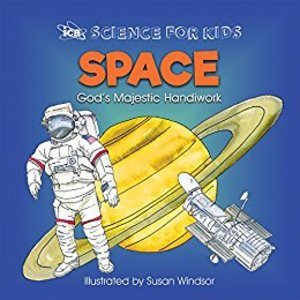
Paperback / $10.00 / 111 Pages / full colour
One of my favourite ways to spend a cold winter day is sitting on the couch with one child on each side and possibly a third on my lap while reading stories. But with a daughter (5) who loves princess stories, and a son (3) who rates stories based on the quality of trucks in them, it can be difficult to find a story that we will all enjoy over and over. However, since we first read “The Adventures of Arkie the Archaeopteryx” by Ryan Jaroncyk and “The Oxpecker and the Giraffe: I Need You and You Need Me” by Patrick Fitzpatrick, they both have asked for these stories again and again… much to my own delight. Read the rest of this entry »
Order Online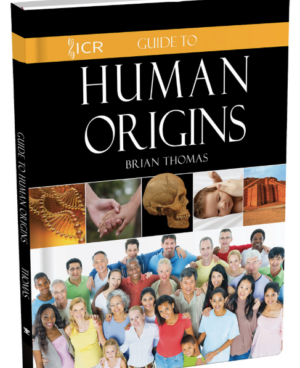
Hardcover / $18.00 / 117 Pages / Full colour
One of my favourite ways to spend a cold winter day is sitting on the couch with one child on each side and possibly a third on my lap while reading stories. But with a daughter (5) who loves princess stories, and a son (3) who rates stories based on the quality of trucks in them, it can be difficult to find a story that we will all enjoy over and over. However, since we first read “The Adventures of Arkie the Archaeopteryx” by Ryan Jaroncyk and “The Oxpecker and the Giraffe: I Need You and You Need Me” by Patrick Fitzpatrick, they both have asked for these stories again and again… much to my own delight. Read the rest of this entry »
Order Online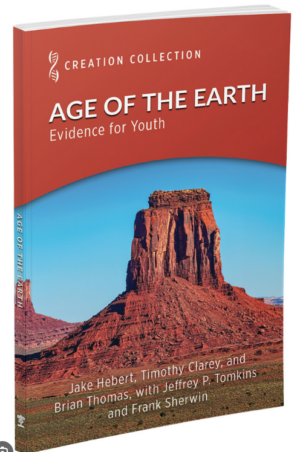
Paperback / $10.00 / 192 Pages / Full colour
One of my favourite ways to spend a cold winter day is sitting on the couch with one child on each side and possibly a third on my lap while reading stories. But with a daughter (5) who loves princess stories, and a son (3) who rates stories based on the quality of trucks in them, it can be difficult to find a story that we will all enjoy over and over. However, since we first read “The Adventures of Arkie the Archaeopteryx” by Ryan Jaroncyk and “The Oxpecker and the Giraffe: I Need You and You Need Me” by Patrick Fitzpatrick, they both have asked for these stories again and again… much to my own delight. Read the rest of this entry »
Order Online