

Level



For close to 40 years now, the Creation Science Association of Alberta has brought interesting and qualified speakers to the province. In keeping with this excellent tradition, biologist Dr. Jerry Bergman is scheduled to speak in Edmonton on October 14 and 15, 2011. Read the rest of this entry »

You are invited to
Creation Weekend 2022
Featuring Patricia Engler
Youth Outreach Coordinator for Answers in Genesis and author of a new book Prepare to Thrive
Saturday, October 15, 2022
Hybrid Event with In Person or Online Options
In Person Option
– View presentations on a large screen and meet others.
– Browse books and DVDs provided for sale.
– No need to register for this option.
– Location: Meadowlands Baptist Church (2215 17 St NW, Edmonton)
– Attendance is free.
At Home Option
– Watch presentations using Zoom.
– Register for free at www.create.ab.ca/register
10:00 a.m. – Session 1
Understanding Genesis,
the Foundation of our Christian Faith
Why are Western nations growing less Christian every year – and what can we do about it? Find out why Genesis provides the foundation for the Biblical worldview, what happens when we compromise that foundation, and how everyday Christians can respond.
2:00 p.m. – Session 2
Stories from Backpacking Around the World
in Search of Christian Students
How do Christian students around the world keep their faith? To find out, Patricia backpacked around the world interviewing students. With a country-by-country retelling of her experiences, key takeaways from interviews, and stories of God’s provision along the way, this presentation combines topics of apologetics, higher education, and the adventure of the Christian life.
Not surprisingly, with an upbeat and exciting speaker, the audiences at our Creation Weekend sessions in October 2012 were large and enthusiastic. The final session ended with a standing ovation, which is most unusual for a lecture. So it was that David Coppedge of Santa Clarita, provided amazing illustrations, interesting information and profound insights. Read the rest of this entry »
Most people, over the years, have heard about big name atheistic scientists. The most prominent example today is evolutionary biologist Sir Richard Dawkins, who holds the Chair for Public Understanding of Science at Oxford University. Because of his prominent position in academia, he commands lots of attention in his campaign against the “malignant influence of organized religion in society.” It is easy enough to dismiss Richard Dawkins as extremist. Certainly his views are extreme, but the astonishing thing is that they are becoming mainstream in powerful scientific circles. Read the rest of this entry »
The genius of the English language, many people say, is that it freely borrows from other languages. For example, the term “déjà vu” is French and it means “already seen.” We might more readily say “been there, done that!” Another equivalent expression is “nothing new under the sun.” Indeed some things are just so-o-o-o predictable. Among current events, none seems more aptly connected to the term déjà vu than the resistance of established scientists to criticism, any criticism, of their views. Read the rest of this entry »

John Whitcomb and Henry Morris’ 1961 classic The Genesis Flood was, of course, a wonderful work. Countless people, among them many scientists, have been positively influenced by its message. In the ensuing half century however, a lot of new information and many new arguments against “the flood” have appeared. The time has long since come for an update of the 1961 work. Read the rest of this entry »
We humans are proud of our accomplishments in science, technology, the arts, and music. And, we have a right to be proud: the technological wonders of the last century have radically changed our world and benefited us enormously. While basking in our accomplishments, though, it behooves us to acknowledge the fact that we have used the natural world as a model for many of our achievements. Many scientists spend a lifetime studying and learning from the wisdom expressed everywhere in creation. In the fields of “engineering, chemistry, ballistics, aerodynamics – in fact in almost every area of human endeavor – nature has been there first” and the natural world is “infinitely more economical of resources and generally superior in performance” than our best efforts (Felix Paturi. 1976. Nature, Mother of Invention. Harper & Row p. 1). Read the rest of this entry »
It was in April 1953 that Frances Crick and James Watson published their proposed description of the DNA molecule. As they anticipated, biology was forever changed. Now biologists had a molecule which they could study, which stored hereditary information. The 1960s saw the emergence of the ‘standard model,’ which held that DNA codes for proteins which determine the characteristics of each creature. However on the occasion of the 60th anniversary, one commentator in the journal Nature declared: “We do not know what most of our DNA does, nor how, or to what extent it governs traits.” (496 #7446 p. 419). Read the rest of this entry »
Diatoms are a major group of plants which float in open water, and they are one of the most successful types of microscopic algae known. The estimated over 100,000 known species are found in the oceans, in freshwater, in soils and even on damp surfaces. Most diatoms are unicellular, although some can form colonies in the shape of long filaments or ribbons. As eukaryotes or cells with a nucleus, they have highly complex cells, comparable to other eukaryotes such as mammals and even humans (Philippe, et al., 1994, Journal of Evolutionary Biology 7: 247). Read the rest of this entry »
It’s fun to go to a museum to view the mounted dinosaur skeletons. In the Royal Tyrrell Museum in Drumheller, Alberta, the poses suggest tension. There are running dinosaurs, fighting dinosaurs, carnivorous dinosaurs about to kill herbivore victims, and others caught in the act of raiding dinosaur nests. The displays are actually stories without words. At a glance they communicate current scientific interpretations about dinosaur lifestyles. But these are not the really dramatic displays. It is the dinosaur skeletons still entombed in rock, which should rivet our interest. These artifacts cry out with information. Read the rest of this entry »
The big surprise in April 1953 was not that the structure, and by implication the function, of DNA had been discovered, but rather who had done it. With established scientists like American Linus Pauling of Caltech in Pasadena, and British scientists Maurice Wilkins and Rosalind Franklin at King’s College, University of London, carrying out such research, it was expected that the problem would soon be solved. These scientists all had research funds, experience and appropriate equipment. Read the rest of this entry »
An avid fan of spy stories, I have read many which involve an apparently harmless document (like a friendly letter). But the document actually conveys dangerous information if one is provided with the appropriate convention for decoding it. Read the rest of this entry »
History is full of sad stories. Nobody needs to tell us that. Nevertheless many tragic events have been obscured by the mists of time. It sometimes seems that we scarcely know or care any more about the crusades, European wars or treaties during the Middle Ages or events before or after that time. Eighty years ago however, the assassination of the Romanovs, the Russian czar and his family took place in the Siberian town of Yekaterinburg. The events were so shrouded in mystery, and the victims so interesting (particularly the four beautiful daughters), that public interest in the story has never faded. Now, thanks to some remarkable espionage carried out in Russia during the final years of the Communist regime, and to some recently developed skills in forensic science, the final chapter on the Romanov saga will be written during the summer of 1998. If all goes according to plan, the Romanovs will be buried in the family sepulchre in St. Peter and St. Paul Cathedral in St. Petersburg. The funeral service with appropriate imperial grandeur is scheduled for July 17 — 80 years to the day after their untimely deaths. Read the rest of this entry »
Jason Lisle, Ph.D., graduated in astronomy from the University of Colorado. After years of experience in teaching and conducting research in solar astrophysics, he wrote Taking Back Astronomy: the Heavens Declare Creation (2006) which was aimed at junior high to adult readers. Now he has written The Ultimate Proof of Creation: resolving the origins debate (2009). Read the rest of this entry »
We all like to communicate, don’t we – at the very least to tell others what to do. Indeed a slang expression has been coined about this “Communication is the name of the game!” People, of course, are able to communicate in words. However there are other sorts of communication which do not involve words, but which nevertheless involve information. Some scientists, especially in their study of biology, have become very interested in information and its source. Dr. A. E. Wilder-Smith, for example, discussed the genesis of biological information in his 1981 book The Natural Sciences Know Nothing of Evolution. Moreover this fall two new books on this subject (by Dr. William A. Dembski) are scheduled to be released. Dr. Dembski is an associate editor of Origins and Design (www.arn.org) and the titles of these new books are The Design Inference (Cambridge) and Mere Creation: Reclaiming the Book of Nature (InterVarsity). Dr. Dembski’s interest in information theory is in its implications for origins theory. This also was Dr. Wilder-Smith’s concern. In addition there is another book recently translated from German, which provides fascinating insights on this topic. The title of Dr. Werner Gitt’s book is In the Beginning was Information. Read the rest of this entry »
FEATURED BOOKS AND DVDS

Paperback / $6.00 / 55 Pages
We all like to communicate, don’t we – at the very least to tell others what to do. Indeed a slang expression has been coined about this “Communication is the name of the game!” People, of course, are able to communicate in words. However there are other sorts of communication which do not involve words, but which nevertheless involve information. Some scientists, especially in their study of biology, have become very interested in information and its source. Dr. A. E. Wilder-Smith, for example, discussed the genesis of biological information in his 1981 book The Natural Sciences Know Nothing of Evolution. Moreover this fall two new books on this subject (by Dr. William A. Dembski) are scheduled to be released. Dr. Dembski is an associate editor of Origins and Design (www.arn.org) and the titles of these new books are The Design Inference (Cambridge) and Mere Creation: Reclaiming the Book of Nature (InterVarsity). Dr. Dembski’s interest in information theory is in its implications for origins theory. This also was Dr. Wilder-Smith’s concern. In addition there is another book recently translated from German, which provides fascinating insights on this topic. The title of Dr. Werner Gitt’s book is In the Beginning was Information. Read the rest of this entry »
Order Online

Paperback / $10.00 / 111 Pages / full colour
We all like to communicate, don’t we – at the very least to tell others what to do. Indeed a slang expression has been coined about this “Communication is the name of the game!” People, of course, are able to communicate in words. However there are other sorts of communication which do not involve words, but which nevertheless involve information. Some scientists, especially in their study of biology, have become very interested in information and its source. Dr. A. E. Wilder-Smith, for example, discussed the genesis of biological information in his 1981 book The Natural Sciences Know Nothing of Evolution. Moreover this fall two new books on this subject (by Dr. William A. Dembski) are scheduled to be released. Dr. Dembski is an associate editor of Origins and Design (www.arn.org) and the titles of these new books are The Design Inference (Cambridge) and Mere Creation: Reclaiming the Book of Nature (InterVarsity). Dr. Dembski’s interest in information theory is in its implications for origins theory. This also was Dr. Wilder-Smith’s concern. In addition there is another book recently translated from German, which provides fascinating insights on this topic. The title of Dr. Werner Gitt’s book is In the Beginning was Information. Read the rest of this entry »
Order Online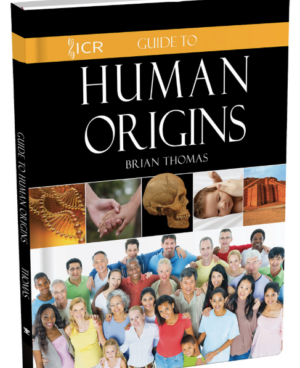
Hardcover / $18.00 / 117 Pages / Full colour
We all like to communicate, don’t we – at the very least to tell others what to do. Indeed a slang expression has been coined about this “Communication is the name of the game!” People, of course, are able to communicate in words. However there are other sorts of communication which do not involve words, but which nevertheless involve information. Some scientists, especially in their study of biology, have become very interested in information and its source. Dr. A. E. Wilder-Smith, for example, discussed the genesis of biological information in his 1981 book The Natural Sciences Know Nothing of Evolution. Moreover this fall two new books on this subject (by Dr. William A. Dembski) are scheduled to be released. Dr. Dembski is an associate editor of Origins and Design (www.arn.org) and the titles of these new books are The Design Inference (Cambridge) and Mere Creation: Reclaiming the Book of Nature (InterVarsity). Dr. Dembski’s interest in information theory is in its implications for origins theory. This also was Dr. Wilder-Smith’s concern. In addition there is another book recently translated from German, which provides fascinating insights on this topic. The title of Dr. Werner Gitt’s book is In the Beginning was Information. Read the rest of this entry »
Order Online
Paperback / $10.00 / 192 Pages / Full colour
We all like to communicate, don’t we – at the very least to tell others what to do. Indeed a slang expression has been coined about this “Communication is the name of the game!” People, of course, are able to communicate in words. However there are other sorts of communication which do not involve words, but which nevertheless involve information. Some scientists, especially in their study of biology, have become very interested in information and its source. Dr. A. E. Wilder-Smith, for example, discussed the genesis of biological information in his 1981 book The Natural Sciences Know Nothing of Evolution. Moreover this fall two new books on this subject (by Dr. William A. Dembski) are scheduled to be released. Dr. Dembski is an associate editor of Origins and Design (www.arn.org) and the titles of these new books are The Design Inference (Cambridge) and Mere Creation: Reclaiming the Book of Nature (InterVarsity). Dr. Dembski’s interest in information theory is in its implications for origins theory. This also was Dr. Wilder-Smith’s concern. In addition there is another book recently translated from German, which provides fascinating insights on this topic. The title of Dr. Werner Gitt’s book is In the Beginning was Information. Read the rest of this entry »
Order Online