

Level



Among living creatures, it does not take a specialist to realize that jellyfish are not dainty delights of the deep. Although they may be beautiful in appearance, jellyfish are successful predators. Read the rest of this entry »

Despite the fine quality of their fur coats, they look a little dumpy. Their teeth also are a little too prominent to be pleasing – but their whiskers are cute. Certainly they are prominent Canadians. On formal occasions they go by the name Castor canadensis, but to their friends they are simply beavers. The plan of action for any beaver couple is to raise their young and to enjoy long healthy lives. This is not a surprising nor an unusual agenda. Nevertheless of all the wildlife creatures that make their home in most parts of North America, the beaver is fast becoming extremely unpopular. The fact is that beavers are the only animals in the world which can change the landscape to suit their own needs and desires. The trouble is that the beavers’ alterations often do not fit the plans of people living in the same area. Then again in other parts of the country, wildlife officials regard beavers as economical wetlands managers. Read the rest of this entry »
In science, the word “serendipity” refers to an unexpected, but happy discovery. Typically what is meant, is a discovery which was not sought but which leads to significant advances in knowledge or technology. Penicillin, for example was a serendipitous discovery by Sir Alexander Fleming in 1928. What he was trying to do, was grow cultures of common bacteria (germs). But what was that pesky mold doing growing in the culture? When Sir Alexander realized that the mold seemed to discourage the growth of the bacteria…. well the rest is history. However, I am not sure that the unlooked for discovery of gigantic sand waves in the Juan de Fuca Strait near Victoria, BC would qualify as serendipitous or not. While they seem to be the biggest and best sand waves known, scientists are apparently not curious enough to study the phenomenon further. Read the rest of this entry »
Carol Tupper is an Albertan, an artist, and an author. Born and raised in southern Alberta, she loves the prairies and has also fallen in love with our forests and the Canadian Rockies. Since early childhood, Carol has enjoyed art and English. Both are gifts that she is using for the benefit of many. The town of Three Hills sports a mural done by Carol. She wrote her first book in grade nine for her nephew. Read the rest of this entry »
The long awaited Illustra Media DVD on the Cambrian fossil record has finally been released. It was worth waiting for! The results are sensational. As far as visual effects go, this one exceeds the quality of Unlocking the Mystery of Life, and The Privileged Planet which Illustra Media also produced, and which set a new high standard for videos about nature. Read the rest of this entry »
Can you imagine a trip to England without a visit to the white cliffs along the south east coast? We couldn’t, so we went. There we stood at the foot of an awe inspiring cliff of sparkling white chalk. Coarse looking, but flat bedding planes divided the towering wall above into endless horizontal layers or strata. It seemed strange however that the shore was covered with hard, rounded pebbles as well as some shiny black fragments with sharp edges rather than white chalk. Closer inspection indicated that the shiny black chunks and the grayish rounded pebbles were of the same material — only the pebbles were rounded and worn by wave action. Now where did these pebbles of hard material come from? When you come to think of it — where did the chalk above come from too? Read the rest of this entry »
Have you ever discovered something new, like a new recipe, a new and better way to carry out a task, or a new object in the sky? Whether you have invented a device which will make you rich, or whether you have identified a new phenomenon in nature, the joy of discovery is a reward in itself. When it comes to identifying new organisms, many people have turned their attention to the rain forest. New plants and new animals, often insects, are routinely described from that part of the world. Deep sea divers have also encountered some very strange creatures from the ocean depths. The sea between Denmark and Sweden, however has been fished for many centuries. We would not expect to find any new creatures in those cold waters, would we? Read the rest of this entry »
As a rule, scientists seek answers. They want to answer the “why” questions. Why, for example, are plants green? Why is blood red? These are very simple queries compared to the biggies like why does quantum physics work. Nevertheless, believe it or not , we are as far from answering why chlorophyll is green, and blood cells are red, as we are from explaining quantum mechanics. Two commentators in fact recently termed the reason blood is red a “visual pun of molecular wit.” (Morrison and Morrison. 1998. Scientific American. March p. 106) The explanation for colour in chlorophyll is similarly obscure. The situation becomes even more interesting when we discover that chlorophyll and the heme component of hemoglobin are chemically extremely similar . Read the rest of this entry »
Some people are tempted to stay inside when the weather gets cold. That, of course, is neither me nor you! We know that there is plenty to do, and plenty to learn, when the weather becomes cool and even downright chilly. Read the rest of this entry »
Some things in nature are so unexpected that our reaction can only be one of wonder or amazement. Did you know that some plants, innocent in appearance, but vicious in character, lurk in ponds throughout the world? These plants attract, catch and eat aquatic insects, water fleas and young tadpoles, fish fry, tiny worms and very young insect larvae including mosquito wrigglers. Read the rest of this entry »
Have you ever read The Enormous Crocodile by Roald Dahl? It is such a fun story! Even grown ups laugh about this nasty scheming reptile who keeps devising new and ingenious ways to catch children for his supper. He describes his schemes as “secret plans and clever tricks.” Various jungle animals however foil each sneaky plan and the nasty croc eventually gets launched by an elephant into outer space. Read the rest of this entry »
Imagine a June evening in south central Canada or the nearby United States. As dusk deepens, tiny dots of light appear on bushes, grass or in the air. The tiny lights seem to flash in code. These remarkable lights are fireflies. The more we learn about these insects, the more amazing they appear. This is certainly not a case of familiarity breeding contempt. Adult fireflies are beetles, but unusual beetles. They possess the ability to produce light within their bodies. The adult phase, which many of us have seen, is short and spectacular. Most adult fireflies last only a few days and their principal purpose is to reproduce. Read the rest of this entry »
When I say I’m young, people laugh! Well, I am young, compared to lots of things: the pyramids of Egypt, for example. Whether an object or person is young or old, you see, depends upon what you are comparing. Even thousands of years can be young in the right context. For example, I read recently in Scientific American that the rings of the planet Saturn are “young”. In that case, astronomers were not comparing these rings to the ages of any of us living today, but rather to evolutionary ideas about the solar system. Most astronomers imagine that the solar system is billions of years old. However the ring systems around several planets in our solar system may be only “several thousand years” (Joseph Burns et al. 2002. Scientific American 286 #2 p. 73). That’s a huge difference. But why do we care? What do several zeros (or not) at the end of a number matter anyway? The problem for secular scientists is to explain how young rings came to be around “old” planets. The alternative, of course, is to conclude that both the planets and the rings are young. Read the rest of this entry »
November 13, 2004, a beautiful fall morning, found me driving south to Red Deer to hear John McKay of Australia. He has been described as a veteran creation geology expert and a walking encyclopedia of creation knowledge. With accolades like that, I was excited about this opportunity to learn. This man’s father was a Scottish lawyer, so he joked that he learned how to argue while very young. Read the rest of this entry »
What a glorious occasion it was. On Tuesday, November 9th, I had the opportunity to hear Dr. Vij Sodera, a surgeon from the United Kingdom, speak on “Human Fossils: the myth of evolution from apes.”
As a medical doctor, Vij Sodera compared various skeletons that have been found, and concluded there is no evidence for evolution. The artifacts represent either apes or humans, but there are no missing links or transitional forms. Of special interest to me were two aspects of the discussion: one on skulls and the other on feet. Read the rest of this entry »
FEATURED BOOKS AND DVDS

Paperback / $6.00 / 55 Pages
What a glorious occasion it was. On Tuesday, November 9th, I had the opportunity to hear Dr. Vij Sodera, a surgeon from the United Kingdom, speak on “Human Fossils: the myth of evolution from apes.”
As a medical doctor, Vij Sodera compared various skeletons that have been found, and concluded there is no evidence for evolution. The artifacts represent either apes or humans, but there are no missing links or transitional forms. Of special interest to me were two aspects of the discussion: one on skulls and the other on feet. Read the rest of this entry »
Order Online
Paperback / $10.00 / 111 Pages / full colour
What a glorious occasion it was. On Tuesday, November 9th, I had the opportunity to hear Dr. Vij Sodera, a surgeon from the United Kingdom, speak on “Human Fossils: the myth of evolution from apes.”
As a medical doctor, Vij Sodera compared various skeletons that have been found, and concluded there is no evidence for evolution. The artifacts represent either apes or humans, but there are no missing links or transitional forms. Of special interest to me were two aspects of the discussion: one on skulls and the other on feet. Read the rest of this entry »
Order Online
Hardcover / $18.00 / 117 Pages / Full colour
What a glorious occasion it was. On Tuesday, November 9th, I had the opportunity to hear Dr. Vij Sodera, a surgeon from the United Kingdom, speak on “Human Fossils: the myth of evolution from apes.”
As a medical doctor, Vij Sodera compared various skeletons that have been found, and concluded there is no evidence for evolution. The artifacts represent either apes or humans, but there are no missing links or transitional forms. Of special interest to me were two aspects of the discussion: one on skulls and the other on feet. Read the rest of this entry »
Order Online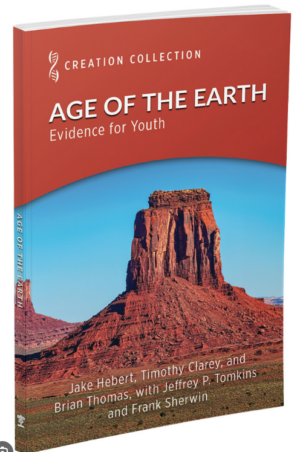
Paperback / $10.00 / 192 Pages / Full colour
What a glorious occasion it was. On Tuesday, November 9th, I had the opportunity to hear Dr. Vij Sodera, a surgeon from the United Kingdom, speak on “Human Fossils: the myth of evolution from apes.”
As a medical doctor, Vij Sodera compared various skeletons that have been found, and concluded there is no evidence for evolution. The artifacts represent either apes or humans, but there are no missing links or transitional forms. Of special interest to me were two aspects of the discussion: one on skulls and the other on feet. Read the rest of this entry »
Order Online