

Level



Every season of the year provides its share of interest for young adventurers, or the young at heart. In winter, for example, have you considered how beautiful the silhouettes of the trees are against the snowy background? The deciduous (without leaves) trees look particularly artistic because we can see the branching pattern. Every tree has a characteristic canopy shape as a result of the way that the branches grow. This shape enables the tree in summer to display its leaves to best advantage so that the maximum possible sunshine is intercepted and the minimum number of leaves remains in the shade. Read the rest of this entry »

Some people like a good challenge and some don’t. Some people like the challenge of climbing Mount Everest, while others would prefer to stay home. Such people might point out that there are some challenges which are best ignored. There could well be challenges which are just too difficult or time consuming to undertake. For example, in August a team from Cambridge University reported that it took them twenty two years to produce a synthetic version of azadirachtin, a product which India’s neem tree (Azadirachta indica) effortlessly produces in large quantities. Read the rest of this entry »
As a society, it is obvious that we are very impressed with the sophistication of our modern technology. It is also evident that the theoretical basis for this technology is fancy mathematics. Not surprisingly then, although not everybody can do advanced math, we consider our society to be advanced both in terms of knowledge base and physical know how. Read the rest of this entry »
Since the advent of global positioning satellites, or at least since their availability to civilians, scientists have found many uses for these devices. One of the more interesting applications is to track animals, as in the “fish with chips” program. This is a multimillion dollar Census of Marine Life project. In conjunction with this program, thousands of marine animals in the Pacific Ocean, including many fish, have been fitted with electronic surveillance tags. Read the rest of this entry »
Scientists are continually discovering remarkable molecular machines which work inside each living cell. One such machine involves proofreading. Anytime you or I copy a document, it is always a good idea to proofread the script. Since each cell copies or duplicates its own genetic code or DNA before cell division, the cell would be well advised to check the new strands to make sure there are no copying errors. Read the rest of this entry »
Were the Russians smart, or what? While their colony in Antarctica was obviously one of superlatives, scarcely anybody envied their choice. Established in 1957 in the southeast sector of the continent, it was 1500 km from the coast and definitely the highest, driest and coldest choice possible. Here, in this interior region, the ice pack was extremely deep so that the elevation of the camp was a lofty 3500 m above sea level. Despite all that ice, the climate was very dry indeed. Some have claimed that dry cold does not feel so intense, but at -89C, (the coldest temperature ever recorded on our planet and observed at this site), such arguments mean nothing. Even a more typical -55C in this vicinity is too cold for comfort. As far as the eye could see at Vostok, as the Russians named their camp, there was nothing but bleak cold whiteness. Almost forty years would pass before the Russians discovered that Vostok offered more than desolation. Read the rest of this entry »
In the American southwest, some particularly unique and dramatic landscapes have been preserved in the national parks. No one can fail to be impressed by the steep V-shaped gorge and the diagonal patterning (between horizontal erosion surfaces) which characterizes the rocks of Zion National Park in Utah. Similar sandstone rocks extend over a seven-state area, but they are not all called by the same name. In various parts of their range, these rocks are known either as Navajo, or Aztec, or Nugget Sandstone. Read the rest of this entry »
On the weekend of November 6/09 large crowds came to hear Dr. Steven Austin, senior research scientist from Institute for Creation Research, discuss his work in geology. On the Friday evening, he described events surrounding the eruption of Mount St. Helens in May 1980. One result was pyroclastic (very hot) mud flows which deposited and quickly eroded a canyon similar in appearance to the Grand Canyon, only at a smaller scale (one twenty fifth the size). This miniature, but still impressive, canyon, demonstrates that obvious layering of sediment and erosion of these layers can happen very quickly. No long ages are required. Read the rest of this entry »
In Nova Scotia, on the shores of Chignecto Bay (near the head of the Bay of Fundy) lies the village of Joggins. Like many communities in Nova Scotia, this one first made a living by mining coal. As early as 1720, coal was exported from there to Boston. At its peak, the mine yielded about 91,000 tonnes of coal per year. The Joggins mine finally closed in the late 1950s, but in recent years, interest in this area has continued greater than ever. The 150 foot high cliff on the shore of the bay, reveals layers of sandstone, mudstone and fossilized plants. These have a story to tell. Read the rest of this entry »
Do you ever take a moment to gaze at the night sky? During late August and early September of 2003, who could miss the sharply focused bright red spot in the sky? Other celestial bodies may have seemed faint and far away, obscured perhaps by light pollution, but that bright body claimed our whole attention anyway. It was Mars, the red planet, which burnt into our memories. The interesting thing is that this scene was just as remarkable and unique as it appeared. Astronomers tell us that Mars has not been this close to Earth in 60,000 years. They base such conclusions on computer models of planetary motion. However, in a young universe, it may be that Mars has never approached us this closely before. We live in special times. Read the rest of this entry »
Anybody studying biology today is aware that proteins form the molecular machines that keep the cells of our bodies healthy. But how many students are told that these proteins are actually beautiful? Read the rest of this entry »
“Beyond the Bare Bones” is the theme of CSAA’s Creation Weekend October 15 and 16, 2010 with palaeontologist Dr. Marcus Ross. All the events will take place at Mill Woods Assembly, 66 Street and 23 Avenue in Edmonton. Read the rest of this entry »
Science is not everybody’s cup of tea. Most people are busy – and their major interest may be work or family or church related. So why should you or anybody else care about physics or any other science related issue? The fact of the matter is that scientific theories have huge effects on public attitudes. It is always a good idea to keep an eye on current developments. Certainly there are few theories as famous today as the Big Bang. Even some Christian apologists make a special point of supporting long ages and Big Bang cosmology. They may be less inclined to do that in the future. Read the rest of this entry »
This is a very welcome new book. Our catalogues provide beautifully illustrated books on fossils for young students of the junior high variety, but little for interested adults that is not highly technical. Here we find a nicely illustrated book with discussion at an adult, but not overwhelmingly technical level. On each topic, the authors firstly present the evolutionary argument and then they show how this conclusion does not actually represent the fossil description, location in the rocks and comparison with other fossils. Read the rest of this entry »
Every family, whether into science of not, should obtain a copy of this book for the sake of their children (upper elementary through high school). This deluxe book, The World of Animals, is a wonderful reference book which describes anatomy and ecological significance of the main groups of animals. Read the rest of this entry »
FEATURED BOOKS AND DVDS
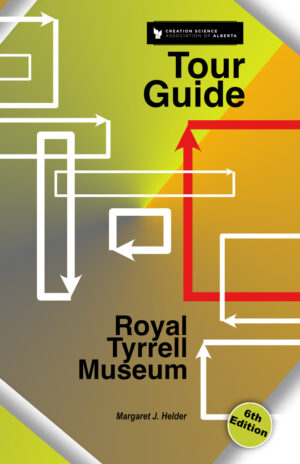
Paperback / $6.00 / 55 Pages
Every family, whether into science of not, should obtain a copy of this book for the sake of their children (upper elementary through high school). This deluxe book, The World of Animals, is a wonderful reference book which describes anatomy and ecological significance of the main groups of animals. Read the rest of this entry »
Order Online
Paperback / $10.00 / 111 Pages / full colour
Every family, whether into science of not, should obtain a copy of this book for the sake of their children (upper elementary through high school). This deluxe book, The World of Animals, is a wonderful reference book which describes anatomy and ecological significance of the main groups of animals. Read the rest of this entry »
Order Online
Hardcover / $18.00 / 117 Pages / Full colour
Every family, whether into science of not, should obtain a copy of this book for the sake of their children (upper elementary through high school). This deluxe book, The World of Animals, is a wonderful reference book which describes anatomy and ecological significance of the main groups of animals. Read the rest of this entry »
Order Online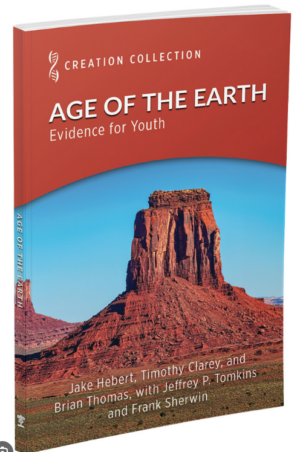
Paperback / $10.00 / 192 Pages / Full colour
Every family, whether into science of not, should obtain a copy of this book for the sake of their children (upper elementary through high school). This deluxe book, The World of Animals, is a wonderful reference book which describes anatomy and ecological significance of the main groups of animals. Read the rest of this entry »
Order Online