

Biology


Camels are one of the most amazing animals known to humans. They are the workhorse of the desert and a gift to generations of people. The Bible mentions camels over 60 times, indicating their central importance in Biblical times. The Bible notes two kinds of camels, the two humped Bactrian camel, and the larger one hump dromedary camel, Camelus dromedarius, family Camelidae. Both kinds now live in the hot dry deserts of the Middle East. Read the rest of this entry »
The archer fish (Toxotidae jaculatrix, from ejaculator fish) –– named due to its expert archery skills–– is one of the most amazing types of fish known to humans (Smith, 1936). When first researched by scientists in the 1920s, researchers “could hardly believe their eyes” at its shooting ability (Pinney, 1977, p. 3). The existence of the fish was actually first reported by explorers in 1764, but scholars could not accept the reports of the existence of this amazing fish (Lüling, 1963, p. 100). Read the rest of this entry »

As a perfect companion was created for man, namely woman, so too was a perfect companion created for both men and women. That companion was the dog. A study of dogs’ design, temperament, variety, and personality shows they were created specifically to be companions, helpmates, and servants for humans. No other animal is even close that meets these many requirements.
That God made the perfect companion for both men and women, namely the dog, humans agree. In the United States, 77 million dogs live; 1.6 per household. From 2018 to 2020, the Canadian dog population grew from 7.6 million to 7.7 million. In the entire world, the number of dogs is close to a billion! Dogs are so loved that their passing evokes more emotional responses than any other animal, often more than even the death of a close relative (Bova, 2022). The fact is “for many modern dogs, social bonding is vital to their individual well-being” as it is for ours (Morey,1994, p. 346). Dogs were genetically programmed to have unconditional love for their human master. They will fiercely protect their master and at the same time also show great affection for him or her. Dogs are loyal, trainable and able to work very hard from sun up to sun down.
Read the rest of this entry »
Eggs are complex structures designed to allow the embryo to develop outside of the mother’s body. An animal egg (Latin, ovum) provides a protective shell in which an embryo can develop. In most birds, reptiles, insects, mollusks, fish, and monotremes (mammals that lay eggs instead of giving birth to live young), the egg contains an ovum or, if fertilized, a zygote. A zygote results from fertilization of an ovum, and develops into an embryo. Read the rest of this entry »
Penguins are one of only two bird groups of which it is claimed they once flew but have since lost this ability. The other group of flightless birds is the ratites, which include the ostrich, the kiwi, the rheas, and the emu. Read the rest of this entry »
We hear all the time about how complicated living cells are. It makes us think that such entities were designed to work as they do. People who support the idea that all things came about by natural processes, however, do not want to think that there is a mind behind what we see in all living creatures from microbes up to the largest, most complicated organisms. These latter people want to show how the living cell developed spontaneously, without any direction. So they want to demonstrate that there were early cells which were much much simpler than what we see today, cells that could have appeared through natural processes. These scientists want to demonstrate that the barriers to spontaneous development are not too high. Read the rest of this entry »
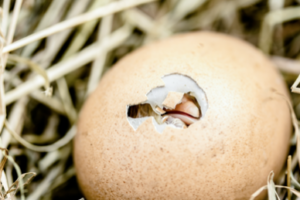
A chicken egg appears to be a simple structure consisting of a hard shell enclosing the egg white with a yellow yolk at the centre. In fact, it is an exceedingly complex structure described as a “miracle of engineering.” Other accolades for the egg include “Nature’s Perfect Package” (1) and “Life’s Perfect Invention… nature’s most perfect life support system.” (2) David Attenborough in his documentary revealed the wonder behind what he calls these “incredible miracles of nature.”
Read the rest of this entry »
Genetic information is so detailed that questions often arise as to where it came from. Genes may either be homologues to genes in other species (similar in composition to genes in other organisms and assumed to have originated from a common source), or they may be entirely different. These different genes are called orphan genes. Orphan genes (often spelled ORFan genes) are species specific genes that are significantly different from all other known genes, and are thus genetically isolated from the enormous set of genetic possibilities. Read the rest of this entry »
DVD / $20.00 / 84 Minutes
Not only are animals amazingly diverse, but their lifestyles are a source of wonder as well. This video share the significant challenges animals face in order to survive. The message makes nature much more meaningful for the Christian. Suitable for the whole family. Presented by Dr. Gordon Wilson.
Order Online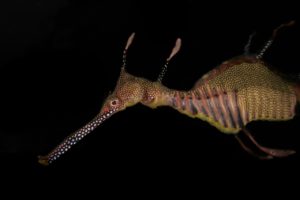
Sea dragons (or seadragons) have long had the honor of being on the list of ugliest animals on Earth. The foot-long (from 30-to-45 centimeters) sea dragons, although classified as a fish, look like no fish an ichthyologist has ever seen. They look more like large worms with leaf appendices, a design that has baffled taxonomists and evolutionists alike ever since they were discovered over 200 years ago. This has been a major problem in not only classification, but in producing a plausible evolutionary tree. They do not fit into the category of insects and other water life, so, by default, they are classified as fish. The reason for this classification is they spend their life in water, have fin-like structures like fish to help them move, their young hatch from eggs, and they breathe by gills.[1] Aside from these traits they are very unlike fish.
Read the rest of this entry »A careful examination of objects by both telescopes and microscopes reveals a major contrast between human-constructed objects and those designed by the Creator. Human made objects, such as a watch, reveal more imperfections as the magnification by which they are viewed is increased. An old-fashioned gear watch is an object of beauty when viewed by the naked eye. Under the microscope, though, the flaws in the machining process become more apparent until, under high power, a watch looks not only imperfect, but crude.
In contrast, increasing magnification of the natural world reveals new detail and perfection. Read the rest of this entry »

In recent years, people have become really interested in genetics. They ask questions like “Who were my ancestors? What can I learn about my family through our genes? What mix of nationalities do I have?” As the genomes of various species, including humans, have been mapped, scientists have reflected on many issues. One of those issues is molecular clocks.
Read the rest of this entry »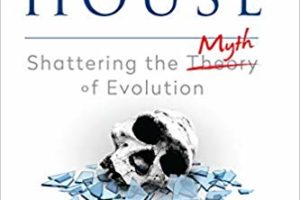
One of the pleasures of staffing a book table are the conversations that happen with people looking at the resources. On many occasions, individuals have requested an introduction to creation. Before responding, I have often inquired what the person’s interests are. If the person is interested in physics and mathematics, or in apologetics, there might be little point in showing them a work on fossils, for example. In the 1970s and 1980s, there were general introductory books like Scientific Creationism and What is Creation Science? But that was then, and this is now. There are many areas of science that were not even contemplated then, but which we have to deal with today. The good news now is that some general introductory works have appeared which can be very helpful to many people seeking insights into the issues. Read the rest of this entry »
During the 1960s and 1970s, improved strains of wheat and rice resulted in a doubling of crop yields. Despite predictions of disaster from some environmentalists, the world continued to feed quickly growing human populations. This green revolution, kick-started by the research of American plant scientist Norman Borlaug and Indian rice geneticist M. S. Swaminathan, provided much higher yielding crops. However for optimum growth, these crops require the widespread application of nitrogen fertilizers and other chemicals. As a byproduct of this practice, a significant amount of fertilizer ends up in natural waterways. As a result, scientists now consider the application of such chemicals as “so last century!” (Nature October 30, 2014 p. S52). The hunt is now on for crops that do not require chemical inputs and yet produce high yields. Read the rest of this entry »
There is no doubt that we are all tired of hearing about viruses! However, they actually do demonstrate some interesting features when we look at them more closely. These submicroscopic particles can reproduce themselves only inside a living cell. All life forms are susceptible to attack by at least one kind of virus. Basically, a virus consists of a protective protein coat with genetic information (RNA or DNA) enclosed inside. In that viruses commandeer the life processes of a cell which they have invaded, they tend not to need a lot of genetic information. Mainly their information deals with how to synthesize the protein coat and any associated molecular machines for packaging the genetic material into the protein capsid (coat). Read the rest of this entry »
FEATURED BOOKS AND DVDS

Paperback / $6.00 / 55 Pages
There is no doubt that we are all tired of hearing about viruses! However, they actually do demonstrate some interesting features when we look at them more closely. These submicroscopic particles can reproduce themselves only inside a living cell. All life forms are susceptible to attack by at least one kind of virus. Basically, a virus consists of a protective protein coat with genetic information (RNA or DNA) enclosed inside. In that viruses commandeer the life processes of a cell which they have invaded, they tend not to need a lot of genetic information. Mainly their information deals with how to synthesize the protein coat and any associated molecular machines for packaging the genetic material into the protein capsid (coat). Read the rest of this entry »
Order Online

Paperback / $10.00 / 111 Pages / full colour
There is no doubt that we are all tired of hearing about viruses! However, they actually do demonstrate some interesting features when we look at them more closely. These submicroscopic particles can reproduce themselves only inside a living cell. All life forms are susceptible to attack by at least one kind of virus. Basically, a virus consists of a protective protein coat with genetic information (RNA or DNA) enclosed inside. In that viruses commandeer the life processes of a cell which they have invaded, they tend not to need a lot of genetic information. Mainly their information deals with how to synthesize the protein coat and any associated molecular machines for packaging the genetic material into the protein capsid (coat). Read the rest of this entry »
Order Online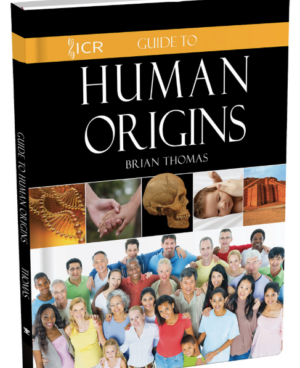
Hardcover / $18.00 / 117 Pages / Full colour
There is no doubt that we are all tired of hearing about viruses! However, they actually do demonstrate some interesting features when we look at them more closely. These submicroscopic particles can reproduce themselves only inside a living cell. All life forms are susceptible to attack by at least one kind of virus. Basically, a virus consists of a protective protein coat with genetic information (RNA or DNA) enclosed inside. In that viruses commandeer the life processes of a cell which they have invaded, they tend not to need a lot of genetic information. Mainly their information deals with how to synthesize the protein coat and any associated molecular machines for packaging the genetic material into the protein capsid (coat). Read the rest of this entry »
Order Online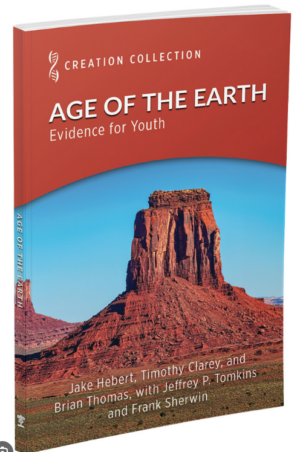
Paperback / $10.00 / 192 Pages / Full colour
There is no doubt that we are all tired of hearing about viruses! However, they actually do demonstrate some interesting features when we look at them more closely. These submicroscopic particles can reproduce themselves only inside a living cell. All life forms are susceptible to attack by at least one kind of virus. Basically, a virus consists of a protective protein coat with genetic information (RNA or DNA) enclosed inside. In that viruses commandeer the life processes of a cell which they have invaded, they tend not to need a lot of genetic information. Mainly their information deals with how to synthesize the protein coat and any associated molecular machines for packaging the genetic material into the protein capsid (coat). Read the rest of this entry »
Order Online