

Biology


Dr. Gordon Wilson’s presentations at Creation Weekend 2018 were extremely well received. The first lecture dealt with natural evil. Mankind has long pondered why our beautiful creation is so full of cruelty and death. Indeed our ecology as it is now, runs on death. And many creatures survive entirely by consuming other creatures. The big question, Dr. Gordon Wilson declared, is how this situation came to be since God created everything in an unfallen state, all of it very good. Moreover, Scripture tells us that there was no physical death, animal or human, before the fall. All animals were vegetarian. Read the rest of this entry »

While we may be aware of wonderful living creatures, we seldom reflect on the blessings of the material world. But the apostle Paul, way back in New Testament times in Lystra, assured his pagan audience that God provides favourable natural conditions to draw attention to himself. While God uses material blessings to draw attention to himself, some people wonder whether evolution can be included under the umbrella of God’s providential design. Since evolution is by definition a process that involves only matter and energy, then the evolutionary process can never involve foresight or design which are non-material. When we look at life however, we see features which demonstrate intelligent purpose and planning, thereby pointing to the work of God. Read the rest of this entry »
The study of science really was a lot less complicated a generation or so ago. What we knew about the planets in our solar system, for example, was short and sweet. The planets basically had location, size and mass, rings or no rings, moons and names. That wasn’t too hard to learn. Since the advent of the space age however we have discovered a wealth of exciting new information. Every planet is different not only in appearance from all the other planets, but also in important physical characteristics. Three planets (Venus, Uranus and Pluto) spin in a backwards (retrograde) direction as do a few moons. In addition the axis of rotation for Uranus is tipped so steeply that it is basically spinning sideways. Moreover four gaseous planets, Jupiter, Saturn, Uranus and Neptune, all exhibit magnetic fields just as Earth does. The orientation of the field however with these giants is exactly opposite to that on earth. A compass on any of the four Jovian planets would point southward. Evidently the solar system is becoming more complicated with the launch of each additional probe. Read the rest of this entry »
An interesting new book has appeared which features questions and answers and discussion on design in nature. The author informs us that there are two ways to interpret the amazing details of how creatures survive and reproduce in their environments. Firstly, we can consider if the component parts of the organism, or even a whole organism itself, actually fulfill a purpose. If the characteristics promote the success of the creature, then the answer is yes. Next we can ask ourselves what might be the best explanation for the fit of the creature with its environment. It is the case that people intuitively link such purpose with intelligence planning, declares the author. Thus we can conclude that the creature was designed for its role in nature. Here we see an inescapable example of God`s work of design since design flows from a real designer. Read the rest of this entry »

You don’t have to travel to Africa to see beautiful creatures. Certainly Africa has amazing biodiversity. One of our daughters travelled to an east African country this past summer. In a nearby National Wildlife Park she saw zebras, lions, elephants, hippos, gazelles, giraffes, wildebeest and crocodiles. And she managed to take some spectacular pictures.
The rest of us might well declare that since we cannot go to a beautiful African wildlife park anytime soon, we are excused from conducting observations in the great outdoors. That however definitely is not the case. Even city dwellers can manage to view some wonderful wildlife nearby. Read the rest of this entry »
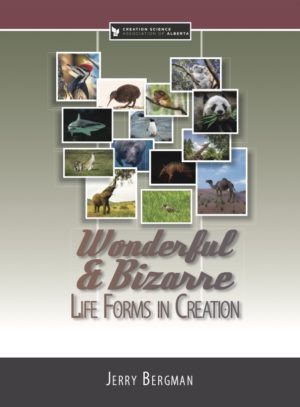
Paperback / $22.00 / 138 Pages / full colour
Discover this collection of amazing creatures that illustrate the enormous variety of God’s
creation. The selection includes some popular animals such as pandas, koala, elephant, giraffe,
camel and penguins as well as some totally weird creatures. Explore the details concerning
each creature as well as the serious problems each presents for evolution theory.

Dr. Jerry Bergman, who needs no introduction to readers of Dialogue, is the author of a delightful new book for families and animal-lovers and all who enjoy fascinating details from nature. Readers of Dialogue, for more than fifteen years, have been blessed with little known insights into some well-known creatures. His new book Wonderful and Bizarre Life Forms and Creation is a collection of the “best of Bergman” from Dialogue plus a few completely new chapters. The twenty-three chapters present each creature with pictures and highlights. This is an attractive and well documented book in full colour, which will inspire much reflection and discussion. Many will want to buy several copies, one for personal use, and others for those special people in their lives! Read the rest of this entry »
Order OnlineGeophysicist Dr. John Baumgardner came to Edmonton after having delivered lectures in the Lower Mainland of B.C., and in Calgary. In Edmonton he delivered four lectures to large appreciative audiences. In all his presentations Dr. Baumgardner set the context by declaring that in our society today, secular science is used as a weapon to draw young people away from their early Christian training. Dr. Baumgardner illustrated this with images of five castles, strongholds deployed in a battle against the knowledge of God. These strongholds are Darwinian evolution, uniformitarian geology, big bang cosmology, materialist philosophy and radioisotope dating methods. During this lecture series in Edmonton, our guest speaker touched on materialist philosophy (Friday evening), Darwinian evolution (Saturday morning and afternoon) and uniformitarian geology (Saturday evening). Read the rest of this entry »
Creation Weekend 2015 proved to be as exciting and informative as the organizers had hoped. Dr. Raymond Damadian, of New York, inventor of the MRI scanner and founder of FONAR Corporation, provided large audiences in Edmonton with lots to think about. In his initial lecture on Friday evening, Dr. Damadian shared some of the story of how he first came to the idea for an MRI scanner and how he was able to demonstrate the effectiveness of his idea. Read the rest of this entry »
Versatile and Beautiful
Have you ever noticed how beautiful objects are which are made of wood? The people of Bible times also appreciated and used beautiful wood. The ancient Phoenicians (Canaanites) exported cedar wood for temples and palaces of many contemporary empires. One of their more famous customers was the Assyrian Sennacherib (about 700 B.C.) who commissioned two fleets of ships to be built from the cedars of Lebanon, one for the Tigris River and the other on the Euphrates River. King David himself made extensive use of cedar wood in his palace and his son, Solomon, proved to be even more enthusiastic about the cedars of Lebanon (Cedrus labani). Solomon promised massive payments to his friend and father-in-law King Hiram of Tyre in return for importing cedar trees for the temple. Much later, the Romans sought cedar wood from Lebanon for their own ships. However, Emperor Hadrian cautioned against over-exploiting this resource. Unfortunately, nobody listened and few of these trees remain today. Read the rest of this entry »
Woodpeckers (family Picidae) are found almost everywhere on the continents except extreme polar regions. Most species live in forests or woodland habitats, and many of the about 30 genera and 214 known species are now threatened due to loss of habitat or habitat fragmentation. The smallest woodpecker is the Bar-breasted Piculet (seven grams and eight cm tall) and the largest is the Imperial Woodpecker (average over 600g (1.3 lb) and 58 cm (23 inches) tall. Some species exhibit differences in appearance of the sexes such as body size, weight and bill length. In such cases, the males are larger. Read the rest of this entry »
FEATURED BOOKS AND DVDS
Paperback / $6.00 / 55 Pages
Woodpeckers (family Picidae) are found almost everywhere on the continents except extreme polar regions. Most species live in forests or woodland habitats, and many of the about 30 genera and 214 known species are now threatened due to loss of habitat or habitat fragmentation. The smallest woodpecker is the Bar-breasted Piculet (seven grams and eight cm tall) and the largest is the Imperial Woodpecker (average over 600g (1.3 lb) and 58 cm (23 inches) tall. Some species exhibit differences in appearance of the sexes such as body size, weight and bill length. In such cases, the males are larger. Read the rest of this entry »
Order Online
Paperback / $10.00 / 111 Pages / full colour
Woodpeckers (family Picidae) are found almost everywhere on the continents except extreme polar regions. Most species live in forests or woodland habitats, and many of the about 30 genera and 214 known species are now threatened due to loss of habitat or habitat fragmentation. The smallest woodpecker is the Bar-breasted Piculet (seven grams and eight cm tall) and the largest is the Imperial Woodpecker (average over 600g (1.3 lb) and 58 cm (23 inches) tall. Some species exhibit differences in appearance of the sexes such as body size, weight and bill length. In such cases, the males are larger. Read the rest of this entry »
Order Online
Hardcover / $18.00 / 117 Pages / Full colour
Woodpeckers (family Picidae) are found almost everywhere on the continents except extreme polar regions. Most species live in forests or woodland habitats, and many of the about 30 genera and 214 known species are now threatened due to loss of habitat or habitat fragmentation. The smallest woodpecker is the Bar-breasted Piculet (seven grams and eight cm tall) and the largest is the Imperial Woodpecker (average over 600g (1.3 lb) and 58 cm (23 inches) tall. Some species exhibit differences in appearance of the sexes such as body size, weight and bill length. In such cases, the males are larger. Read the rest of this entry »
Order Online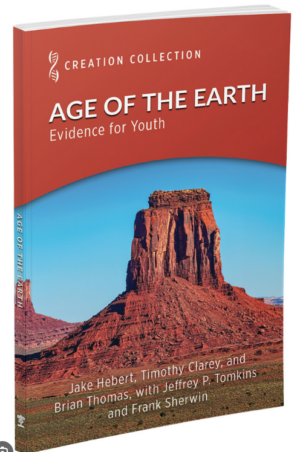
Paperback / $10.00 / 192 Pages / Full colour
Woodpeckers (family Picidae) are found almost everywhere on the continents except extreme polar regions. Most species live in forests or woodland habitats, and many of the about 30 genera and 214 known species are now threatened due to loss of habitat or habitat fragmentation. The smallest woodpecker is the Bar-breasted Piculet (seven grams and eight cm tall) and the largest is the Imperial Woodpecker (average over 600g (1.3 lb) and 58 cm (23 inches) tall. Some species exhibit differences in appearance of the sexes such as body size, weight and bill length. In such cases, the males are larger. Read the rest of this entry »
Order Online