

Biology



Review: Mary and Gary Parker. 2007. The Complete Zoo Adventure. Hardcover with coil and envelope with cards. Full colour. 160 pages. Read the rest of this entry »

In many parts of North American, the most common wild mammals one sees are rodents in the order Rodentia. The largest known modern rodent is the South American semiaquatic capybara, which can grow to be 107 to 134 cm (3.51 to 4.40 ft) long, 50 to 64 cm (20 to 25 in) tall and typically weighs 35 to 66 kg (77 to 150 lb). Rodents are classified in one of the most successful mammalian groups today (Churakov et al. p. 1315). Read the rest of this entry »
When we study nature, it is probably a good idea to expect the unexpected.
Certainly the richness and variety of living creatures can never fail to amaze us. One fascinating situation involves certain parasites or disease causing organisms. In several cases, a parasite passes through two entirely different kinds of host in order to continue its nasty parasitic existence. Not only are these situations fascinating, but biologists are mystified how these relationships could ever have developed. Read the rest of this entry »

Paperback / $10.00 / 176 Pages
Discovering God’s Underwater Wonders
When you visit an aquarium, what might you see? Where did this variety of life come from? Evolution says a single-cell organism developed into marine invertebrates, then vertebrates, then life that crawled out on land, and eventually—us! But the evidence tells a different story. The fossil record shows no transitions from water to land. Join ICR scientists as they explore the wonders of God’s underwater world.
Order OnlineA seahorse (family Syngnathidae, genus Hippocampus meaning “horse sea monster”) is like no other animal on earth. It is the only fish that swims upright. It is not just a fish that travels on its tightly curled tail, but its whole body is designed around how it swims. For example, its elaborate balancing mechanism uses an air bubble inside of a specially designed swim bladder to maintain upright posture. Read the rest of this entry »
Tree sloths are one of the strangest families one could imagine and seem to have very little in common with any other animal kind (Edmonds, p. 38). They are the world’s only inverted quadruped (Cooke, p. 52). Sloths are almost comically slow-moving mammals, deliberately moving so slowly that it looks like a movie of them is being played in slow motion. Neither prodding nor threats will make them move much faster, partly because when on the ground, their small legs are so weak that they have to drag their heavy middle along the surface (Cooke, p. 51). A tortoise would easily beat them in a race. Their cruising speed is a mere 0.19 miles per hour, but they can climb a tree at a fairly good clip, for a sloth that is. They often sleep, or appear to sleep, one cannot always tell, about 10 hours a day in trees in the Central and South America rain forests. In contrast to most mammals, they are neither strictly nocturnal nor diurnal, but frequent nappers instead (Hoke, p. 88). Read the rest of this entry »

I remember one beautiful summer day when our family decided to hike in a local wetland (marsh). As they scampered along, the children were very taken by yellow snapdragon-like flowers projecting above the water surface. Was this somebody’s idea of a joke? Who planted garden flowers under water? This plant however is anything but humorous. Its purpose is to trap and digest small aquatic organisms like water fleas, mosquito wrigglers, tiny worms or anything that is the right size and moves.
Read the rest of this entry »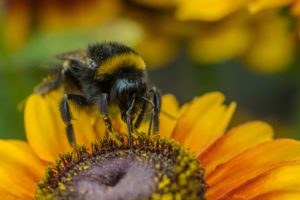
An interesting article appeared recently in the journal Science that suggested that bumble bees have solved a problem that plant physiologists have been working on for one hundred years! It was in 1920 that plant physiologists Wightman W. Garner (1875-1956) and Harry A. Allard (1880-1963), while working with tobacco and flowering cosmos, discovered that the correct length of day is essential for the onset of flowering in these plants. They named the phenomenon “photoperiodism,” and it is an extremely important control on the beginning of the flowering process in many plants. Read the rest of this entry »
Everyone knows that there are amazing phenomena in the natural world which are totally unexpected. Consider, for example, the male horseshoe crab whose eyes are one million times more sensitive to light at night than during the day. Shakespeare referred to such situations when he had Hamlet declare: “There are more things in heaven and earth, Horatio, then are dreamt of in your philosophy.” (Act 1 Scene 5)
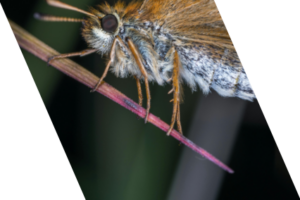
In that context, would you believe that there is a night flying moth that migrates long distances using the night sky for its navigation system? Let’s see what that moth would need to achieve this:
Read the rest of this entry »
Sugar gliders look like chipmunks, glide like flying squirrels, and their young (called joeys like kangaroos), can live for several weeks after birth in their mother’s pouch like opossums, and amazingly they belong in the same family as kangaroos. No wonder their origin has stymied evolutionists. The three types of gliders are so different that evolutionists propose that they “evolved at least three times independently in closely related glider species, including sugar gliders. But the question lingers as to how it evolved.” [i]
Read the rest of this entry »Have you walked in a pasture lately, closely examining some fresh cow dung? A delightful little fungus grows there. It is so interesting you will wish to give it more than a fleeting glance. Read the rest of this entry »
Now that the warm weather has finally arrived, most of us are more than willing to throw off the winter coats and to head outdoors in less confining outfits. Jump, breathe in the air, open your eyes and your ears. What do you hear (besides traffic)? Read the rest of this entry »
Tarsiers are chipmunk sized nocturnal primates known for their enormous night adapted eyes and koala-like body appearance. Their face, which resembles that of an owl, is the epitome of innocence. Tarsiers are covered with very soft, beautiful, velvety fur, which is generally buff, beige, or ochre in color. The head and body together range from 10 to 15 cm in length, followed by a 20 to 25 cm long slender tail. Read the rest of this entry »
This is not exactly recent news, but the one hundredth birthday of evolutionist Ernst Mayr draws renewed attention to it. Within the past thirty years, the standard view of evolution theory has been shown to be woefully inadequate. Read the rest of this entry »
Our new minivan is equipped with airbags. They seem a little scary. The car manual recommends that young children not sit in the front passenger seat, that adults like me push the seat as far back as possible, that one not lean forward over the dashboard etc. etc. How tedious! Just what are these things that lurk in the front of our vehicle? Everyone knows they are a safety device. But just the same airbags seem like a monster which is difficult to control. It’s almost like having a tiger by the tail. Read the rest of this entry »
FEATURED BOOKS AND DVDS

Paperback / $6.00 / 55 Pages
Our new minivan is equipped with airbags. They seem a little scary. The car manual recommends that young children not sit in the front passenger seat, that adults like me push the seat as far back as possible, that one not lean forward over the dashboard etc. etc. How tedious! Just what are these things that lurk in the front of our vehicle? Everyone knows they are a safety device. But just the same airbags seem like a monster which is difficult to control. It’s almost like having a tiger by the tail. Read the rest of this entry »
Order Online
Paperback / $10.00 / 111 Pages / full colour
Our new minivan is equipped with airbags. They seem a little scary. The car manual recommends that young children not sit in the front passenger seat, that adults like me push the seat as far back as possible, that one not lean forward over the dashboard etc. etc. How tedious! Just what are these things that lurk in the front of our vehicle? Everyone knows they are a safety device. But just the same airbags seem like a monster which is difficult to control. It’s almost like having a tiger by the tail. Read the rest of this entry »
Order Online
Hardcover / $18.00 / 117 Pages / Full colour
Our new minivan is equipped with airbags. They seem a little scary. The car manual recommends that young children not sit in the front passenger seat, that adults like me push the seat as far back as possible, that one not lean forward over the dashboard etc. etc. How tedious! Just what are these things that lurk in the front of our vehicle? Everyone knows they are a safety device. But just the same airbags seem like a monster which is difficult to control. It’s almost like having a tiger by the tail. Read the rest of this entry »
Order Online
Paperback / $10.00 / 192 Pages / Full colour
Our new minivan is equipped with airbags. They seem a little scary. The car manual recommends that young children not sit in the front passenger seat, that adults like me push the seat as far back as possible, that one not lean forward over the dashboard etc. etc. How tedious! Just what are these things that lurk in the front of our vehicle? Everyone knows they are a safety device. But just the same airbags seem like a monster which is difficult to control. It’s almost like having a tiger by the tail. Read the rest of this entry »
Order Online