

Biology


DVD / $15.00 / 64 Minutes
The Beauty and Design of Butterflies
From caterpillars to the amazing details of what happens in the chrysalis, to astonishing details of the Monarch butterflies’ migration patterns, this DVD is certain to provide new insights, even to nature lovers. Spectacular insights into wonderful design.

New Uses for Old Patents
Our uses for good bonding agents are almost endless. We glue craft items, chipped china, broken toys, furniture which has come apart, and so on. The list seems endless. There are industrial uses and medical uses for glue too. During the Vietnam war, for example, the American army developed a medical superglue for treating wounds. This product was less than ideal however because it required dry surfaces in order to set. But, as everyone knows, wounds tend to be wet and yucky. Certainly there would be no dry surfaces inside the body. Now English scientists are getting into the act. Actually they are working with a glue which was invented long ago. They are just learning how to make use of this special product. Read the rest of this entry »

Mudskippers are amphibious fishlike creatures that use their short muscular pectoral and pelvic fins to “walk” on mud in a series of skipping like steps, thus their name. These unique about 30 cm long creatures, typically live in intertidal habitats where the water level changes with each tide change (Hafer, 2016, p. 66). Most other intertidal fish survive tide changes by taking refuge under wet seaweed or in tide pools. Mudskippers are different. They exhibit many unique adaptations to their muddy environment that are rarely, or never, found in other intertidal fishes (Marsh, 2015). Read the rest of this entry »
Sometimes it seems as if information is the most important commodity in our technological age. Information, of course, can be put to good or bad uses. We would all agree, no doubt, that computer viruses are a bad use of information. In that situation, a small piece of computer code (information), once it is inside your computer, can take over the whole operating system, with disastrous results for your interests. Of course such problems are nothing new. The term “virus” comes from natural phenomena that do the very same thing to living cells. Invading information occurs to even the smallest cells, bacteria. In fact, some of the bacteria that most threaten our health, are themselves the victims of invasive information from outside unrelated sources. Consider the case of the infamous Escherischia coli 0157:H7, cause of potentially fatal hamburger disease and in some isolated situations, contaminated water. Read the rest of this entry »
Illustra Media has produced many excellent DVDs, but the last one Flight: the Genius of Birds is one of their most awesome! It is certainly one that will appeal to entire families. While the previously released Metamorphosis (dealing with butterflies) provides amazing scenes and discussion, Flight not only provides wonderful photography, but also discussion which is easily understood by all. Moreover, even if one could not understand a word of the commentary, the scenes of birds in flight and the graphics still convey a powerful message. Read the rest of this entry »
Of the five senses which keep us in touch with the world, most of us are particularly aware of eyesight and hearing. Of course we are very thankful for these gifts. One sense that we tend to take for granted however, is the sense of smell. This sense does not seem very complicated or amazing. Nevertheless a little research reveals that our sense of smell is not only exquisitely designed, but it is also poorly understood by biologists. Of all our senses, that of smell seems to be the most complicated. Read the rest of this entry »
No sea animal elicits such fear and terror in the common people as do sharks. Gruesome shark attacks on humans are part of both the folklore and history of many cultures, including our own. Their predatory skill both fascinates and frightens us. Even though sharks rarely attack humans, when an attack occurs, it tends to be widely publicized by the mass media. Ironically, their very survival is now threatened by human-related activities, such as net fishing.
Nature is so full of wonderful creatures that it must be hard to focus on one for special study. However in recent years, a strange assortment of animals have enjoyed a brief moment of scientific attention. In each case the occasion for this special fame was the publication of the genome of that organism. The genome consists of details concerning the DNA molecules in each cell of the organism. DNA, or the genetic information, is made up of four special molecules (called nucleotides) strung together. It is the order of the nucleotides, like beads on a string, which determines the information content of the DNA for each particular organism. Read the rest of this entry »
A lot of people in these COVID times, especially young people, are growing tired of the same old scene, the same four walls, the same view out the windows. No matter how beautiful the scene, it soon ceases to interest us if that is all we see. Nevertheless, even in our same old environments, it is still possible to maintain the flame of interest in the creation. Some young people in Alberta recently shared with me some of their interests in the creation. Clearly their stories show how they are keeping their interests alive. Indeed, these stories can help enhance our appreciation of the creation too. Read the rest of this entry »
Have you ever noticed that everybody seems to place a high value on problem solving? I can well imagine one’s mother saying “This room is way too messy! How are you going to manage your clothes, toys, electronic gadgets (or whatever) so that this does not happen again?” She clearly expects you to come up with a plan and to follow it! Possibly you may come up with some way to organize your treasures in order to keep mum happy. Read the rest of this entry »
The new generation of creation scientists are young, smart and sophisticated. Along with geneticists, taxonomists, and palaeontologists, experts in DNA sequencing analysis and phylogenetic analysis (the search for relationship patterns) are asking new questions and revisiting old issues. No longer do they concentrate on fighting evolutionary theories. They don’t need to. Rather, they are forging new creation-based theories. With this positive approach, they are certain to attract yet further support from Christians in educational and professional circles. It was to learn more about some new initiatives that I attended a conference in Lynchburg, Virginia on August 5-7, 1999. Read the rest of this entry »
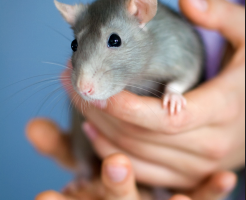
Rats have the worst reputation of any known mammal. The reasons are many. Rats are often found in filthy places such as garbage dumps or sewers where they come to search for food. Worse, rats serve as disease vectors, causing the plague, more accurately, the fleas on them cause disease. The Black Death killed as many as 50 million persons in Europe in the 1600s, wiping out as much as 60 percent of the existing population. Not surprisingly, people often demonstrate a visceral reaction to a rat’s hairless tail and feet.
Read the rest of this entry »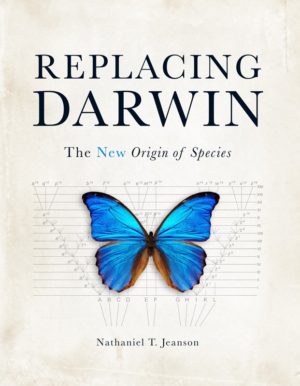

Hardcover / $25.00 / 335 Pages / colour as well as black and white
What Darwin knew about biology was so meager compared to what we know today. Dr. Nathaniel Jeanson, recently graduated from Harvard in cell biology, demonstrates that Darwin did not know enough to provide a platform for our understanding of nature. The author discusses how there are abundant data that best fit ideas of created kinds and recent creation rather than gradual evolution. A really interesting discussion of what Ôsurvival of the fittestÕ does and does not accomplish.
Order OnlineReview of Evolution’s Achilles’ Heels (book)
Like Alice of Wonderland fame (in Through the Looking Glass), who found that she had to run extremely fast just to stay in the same place, so also it is hard to maintain an up-to-date understanding in science. The scientific journals constantly churn out new articles with new information and arguments. Keeping up to date is hard work! But it is extremely helpful to have an understanding of current issues in science and their significance. This makes the new book Evolution’s Achilles’ Heels (Robert Carter, Editor) and its companion DVD of the same title, extremely relevant. Read the rest of this entry »
Have you ever wondered how this transformation takes place? The caterpillar makes his cocoon (or chrysalis) and out pops the butterfly – pretty simple, right? Simple – until you realize that nearly every single organ in the caterpillar body is destroyed and then remade into a beautiful butterfly. Eat leaves? Now change your diet to drinking nectar. Those tiny suction-cupped feet? Forget those – now you can fly with wings that make the whole world envious of your beauty. Read the rest of this entry »
FEATURED BOOKS AND DVDS
Paperback / $6.00 / 55 Pages
Have you ever wondered how this transformation takes place? The caterpillar makes his cocoon (or chrysalis) and out pops the butterfly – pretty simple, right? Simple – until you realize that nearly every single organ in the caterpillar body is destroyed and then remade into a beautiful butterfly. Eat leaves? Now change your diet to drinking nectar. Those tiny suction-cupped feet? Forget those – now you can fly with wings that make the whole world envious of your beauty. Read the rest of this entry »
Order Online
Paperback / $10.00 / 111 Pages / full colour
Have you ever wondered how this transformation takes place? The caterpillar makes his cocoon (or chrysalis) and out pops the butterfly – pretty simple, right? Simple – until you realize that nearly every single organ in the caterpillar body is destroyed and then remade into a beautiful butterfly. Eat leaves? Now change your diet to drinking nectar. Those tiny suction-cupped feet? Forget those – now you can fly with wings that make the whole world envious of your beauty. Read the rest of this entry »
Order Online
Hardcover / $18.00 / 117 Pages / Full colour
Have you ever wondered how this transformation takes place? The caterpillar makes his cocoon (or chrysalis) and out pops the butterfly – pretty simple, right? Simple – until you realize that nearly every single organ in the caterpillar body is destroyed and then remade into a beautiful butterfly. Eat leaves? Now change your diet to drinking nectar. Those tiny suction-cupped feet? Forget those – now you can fly with wings that make the whole world envious of your beauty. Read the rest of this entry »
Order Online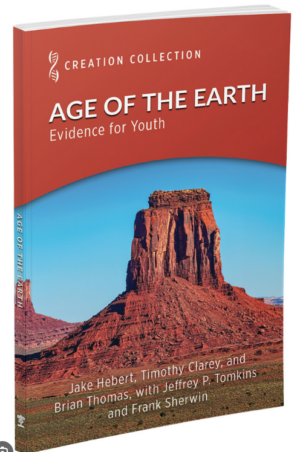
Paperback / $10.00 / 192 Pages / Full colour
Have you ever wondered how this transformation takes place? The caterpillar makes his cocoon (or chrysalis) and out pops the butterfly – pretty simple, right? Simple – until you realize that nearly every single organ in the caterpillar body is destroyed and then remade into a beautiful butterfly. Eat leaves? Now change your diet to drinking nectar. Those tiny suction-cupped feet? Forget those – now you can fly with wings that make the whole world envious of your beauty. Read the rest of this entry »
Order Online