

Biology


Creation Weekend 2015
October 23 & 24, 2015
It is not very often that an Edmonton audience has the opportunity to hear a world class expert tie together medical research, technology and Christian faith. Read the rest of this entry »

Book Review of Guide to Animals
The author, Frank Sherwin has organized his introduction to animals in interesting ways. The message is conveyed partly by the text, partly by his organization of topics, but also by the amazing variety of beautiful illustrations. In style, this book closely resembles its sister publication Guide to Creation Basics. Read the rest of this entry »
In past ages, Christian faith had a large impact on society. This faith determined the laws, the festivals/holidays, attitudes to family and to the environment. Of course, none of these customs and values perfectly reflected biblical norms, but that was at least the hope. More recently the pervasive belief system of society has turned from God to evolution. This about face has changed society’s values and hopes. Not least of these changes has been what society considers important to teach children. Soon we discover that evolution has become the foundation on which most curricula are based. This is the elephant in the (class) room. Attitudes in the public square, and attitudes in education, are based on a tacit acceptance of evolution, but nobody bothers to mention it.
Read the rest of this entry »
You have to wonder how a big science project in biology, which involved 32 laboratories from 10 countries and 440 scientists, and which cost $130 million, could be controversial with many other mainstream biologists. The lead articles were published in the journal Nature on September 6, 2012. What could be controversial about that? Well it transpires that many scientists, who were not involved, did not like the initial thinking on which the project was based, how the research was carried out, and how the conclusions were drawn. What certain mainstream scientists particularly did not like was that so many intelligent design and creation scientists were so pleased. Read the rest of this entry »
CSAA’s featured speaker for Creation Weekend 2011 was well known creation apologist Dr. Jerry Bergman. Large numbers of people came to hear one or more of his lectures and all declared themselves delighted with his genial, non-confrontational manner and his interesting material. In that Dr. Bergman’s area of expertise is biology, chemistry and medical anatomy, the issues he discussed were quite different from the geological topics which we have considered in recent years. This material demonstrated anew that the issue of creation is broad and encompasses all aspects of nature. Read the rest of this entry »
When we walk outside, putter about the garden, or even splash in waves at the beach, we are making observations of nature whether we realize it or not.
In our backyard during the summer, for example, plump saucy robins take up residence and the male fights off all invader robins. The resident pair is displaying territoriality or the determination to defend their property against all other robins. Other bird species come and go, but our resident robins don’t care. Read the rest of this entry »
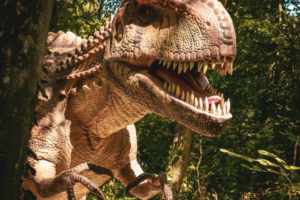
Most youngsters are enthusiastic about dinosaurs such as Stegosaurus, Triceratops and the gigantic four-footed sauropods like Camarasaurus. However, of course, it is T. rex that everybody loves! But grown up scientists (palaeontologists) love T. rex too. Many have published studies on this dinosaur. These works include ideas about species diversity, ecological networks, biogeography and other issues such as what caused the extinction of dinosaurs.
Read the rest of this entry »There is a fascination with living organisms that closely resemble fossils dated at millions of years old. The classic definition of a living fossil is an extant organism that closely resembles fossil specimens.
In 1938 Miss Marjorie Courtenay-Latimer of South Africa recognized that among recently caught fish, one specimen was unfamiliar. It turned out to be “the only living member of an ancient group of lobe-finned fishes that was known previously only from fossils and believed to have been extinct since the Late Cretaceous period approximately 70 million years ago (Myr ago)”1 Much later, in 1997, a second species of this fish was discovered in the seas around Indonesia. The two species were named Latimeria chalumnae and L. menadoensis respectively. Read the rest of this entry »
I remember that when I was a child, we tried to grow date palms from the pits or seeds in the fruit. None ever germinated. But that was then and time has passed. When we had fresh dates (with seeds inside) at Christmas a few years ago, I decided to try again. Accordingly, I took a deep margarine tub, punctured several holes in the bottom to drain out water, and filled it with good potting soil. Then each day, as the dates were consumed, I tucked their seeds into the soil. Maybe twenty or more seeds went into the pot. And nothing happened. But I kept watering. Then after eight weeks or more, a pure white shoot about 2 mm in diameter finally appeared. It looked like a growing shoot from a corn seed, only thicker. Next day another shoot appeared. It took several days for these to turn green. Eventually we had five young seedings, each of which developed a bright green leaf. More leaves followed, one at a time. These plants are monocots, like corn and grasses and bamboo. That is why they send up only a single leaf at first. Read the rest of this entry »
One family, with one child in high school, one in junior high and one in elementary school, were going to start with just one video clip from Michael Behe. The idea was, like the thin edge of the wedge, to first catch their attention. But everyone was so intrigued, that they watched all five episodes in one sitting! Read the rest of this entry »

As Christians, we understand that people from earliest times have made their living from farming. Cain and Abel, for example, had crops and herds. The patriarchs Abraham, Isaac and Jacob had huge flocks of sheep, goats, cattle, donkeys and camels. Such flocks needed large areas of pasture for grazing. Also in Isaiah 28: 24-25 we read about farmers sowing crops of dill, cumin, barley and wheat. These farmers ploughed and sowed seeds. Nobody suggested that they should leave nature undisturbed. Farmers in New Testament times also ploughed the land and sowed seed. Agriculture has always been regarded as a good thing. At the present time however, agriculture has become somewhat controversial.
Read the rest of this entry »Paperback / $18.00 / 350 Pages / black and white illustrations
Experts, like Drs. David Menton, Nathaniel Jeanson and Georgia Purdom, expose flaws in popular evolutionary arguments including the horse sequence, human chromosome 2, whale fossils, dinosaur-t0-bird arguments and more. Cutting edge layman level discussion recommended for teens to adults.
Book Review of Glass House as well as another foundational book called Creation Basics and Beyond
Order Online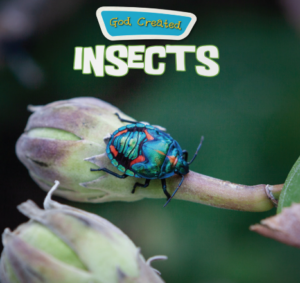
Paperback / $6.00 / 32 Pages / full colour
Insects capture everyone’s attention. Not everybody is thrilled by their diversity in size, colour and what they do. But we can’t fail to be interested – even young children who find insects fascinating and they may appreciate them even more after learning who made them all!
Order Online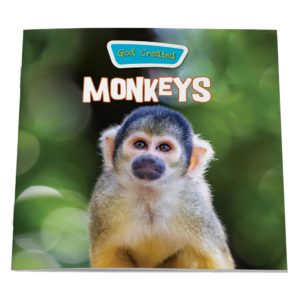
Paperback / $6.00 / 32 Pages / Full colour
We all respond positively to animals with cute faces! Monkeys are definitely in this cute
category. But there is also a lot of learn about these captivating animals! This booklet combines
an appeal to young children with interesting details about monkey biology. The discussion
makes clear that these creatures were definitely created!
Paperback / $6.00 / 32 Pages / full colour
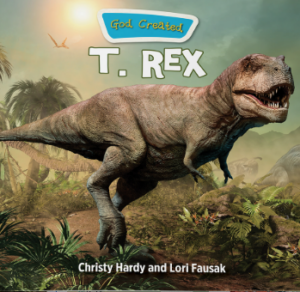
With imposing illustrations and clear information that young children will dive right into, this book places T. Rex clearly in the pre-flood world, and what a world it was!
FEATURED BOOKS AND DVDS
Paperback / $6.00 / 55 Pages
With imposing illustrations and clear information that young children will dive right into, this book places T. Rex clearly in the pre-flood world, and what a world it was!
Paperback / $10.00 / 111 Pages / full colour
With imposing illustrations and clear information that young children will dive right into, this book places T. Rex clearly in the pre-flood world, and what a world it was!
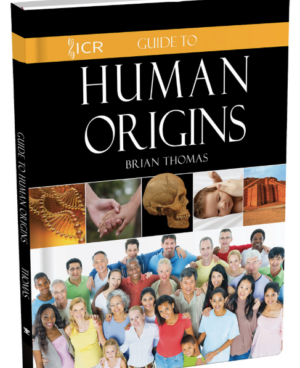
Hardcover / $18.00 / 117 Pages / Full colour
With imposing illustrations and clear information that young children will dive right into, this book places T. Rex clearly in the pre-flood world, and what a world it was!
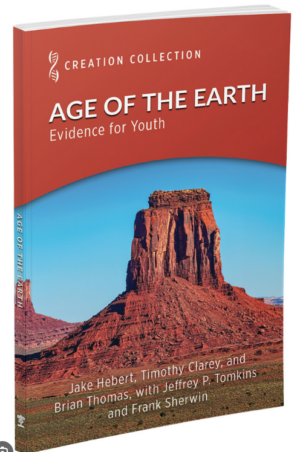
Paperback / $10.00 / 192 Pages / Full colour
With imposing illustrations and clear information that young children will dive right into, this book places T. Rex clearly in the pre-flood world, and what a world it was!