

Intermediate



Creation Weekend 2026
God: the Ultimate Engineer
Featured Speaker:
Dr. Mark Horstemeyer
Distinguished Professor of Engineering, Liberty University, Lynchburg, Virginia
Friday, October 23 & Saturday, October 24, 2026
at Providence Canadian Reformed Church
(12905 – 122 Ave. NW, Edmonton, Alberta)
Schedule:
Friday at 7:00 PM
Noah’s Ark, Testament to Excellent Engineering
Saturday at 10 AM
Engineers who Believed in God
Saturday at 11:30 AM
CSAA AGM
Saturday at 1:15. PM
Creationeering the Geosphere
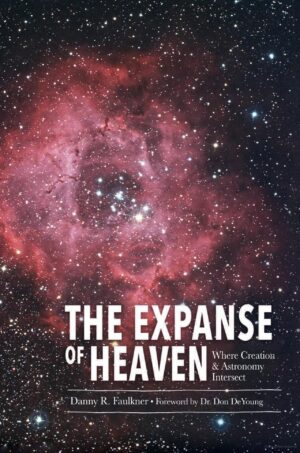
Hardcover / $26.00 / 350 Pages / full colour
The term “expanse” in the title comes from the Hebrew word raqia in Genesis. Dr. Faulkner establishes that this term represents earth’s atmosphere and everything beyond to the farthest reaches of outer space. Cosmology involves a lot of difficult concepts like distances to objects in space, but the author carefully traces the history and meaning of such terms. Readers interested in a Biblical interpretation of modern cosmology, will enjoy this book. Interestingly, he devotes a significant portion of the book to a critique of flat earth theories. Also, the analysis of the Big Bang model may be the most valuable aspect of this work.
Order Online
Part of the fun of attending the CRS Conference in St. Louis, Missouri, at the end of July 2025 was participating in the pre-conference geology workshop, which included a morning field trip before the temperature became too hot (highs of 35°C every day of the conference). As a Canadian, I joked that I could finally thaw out completely.
Read the rest of this entry »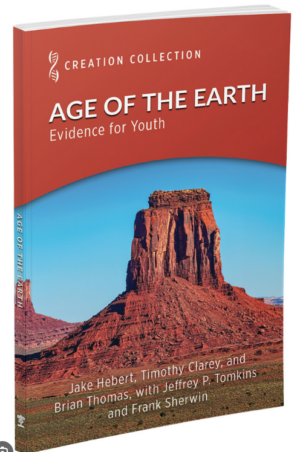
Paperback / $10.00 / 192 Pages / Full colour
Creation Collection Series
The Bible clearly describes our history and the earth as young. Christians therefore wonder if our society is wrong when they declare that the earth is billions of years old. Are these claims indeed wrong? This new and interesting booklet provides some fascinating insights into the age of the earth.
Some topics however seem so ‘same old, same old’. When we look for an in interesting origins-related topic to consider, a discussion on the age of the earth scarcely seems like an exciting read. We have all heard, ad infinitum perhaps, about the short comings of radiometric dating and the age of the rocks. What more is there to discuss on this topic? Well, guess what! This new title spends little time discussing radiometric dating. There are plenty of other fascinating issues connected to this topic of age. For example, there are interesting and amusing insights to be gained from looking at Greenland’s ice cover (chapters 11-13). Moreover, the remains of ocean crust, which originated in the flood, is another exciting topic (chapters 15 and 17). There is, in addition, a fascinating new theory concerning earth’s motion, which does not work very well (chapter 19) and erosion of the Hawaiian-Emperor seamount chain (chapter 25) definitely expands our understanding of this arc of volcanic islands.
These chapters aren’t just interesting anecdotes. This discussion provides serious information on the age of the earth. So, take the plunge! This book will expand your interests and your appreciation for the Biblical account of Creation.
Order Online
(It helps to be informed)
Book Review by Mark Sandercock
In this collaborative effort, scientists from the Institute for Creation Research (Dallas, Texas) “examine evidence from four aspects of our world that refute evolutionary suppositions and match the Bible’s timeline.” Each chapter is intentionally very short, averaging only five or six pages in length, and is accompanied by a detailed list of references that give the interested reader the opportunity to dive deeper into a particular topic. It is important to note here that the sub-title of this book, “Evidence for Youth”, is not an indication that this book is aimed at adolescent readers. This book provides evidence for a Young Earth and some of the discussions, although brief, can get fairly technical.
Read the rest of this entry » Order Online
The Creation Science Association of Alberta (CSAA) is pleased to announce that Dr. Mark Horstemeyer, Distinguished Professor of Engineering at Liberty University (USA), will be our speaker at Creation Weekend 2026. The sessions will begin on Friday evening, October 23, and continue on Saturday, October 24. Over the years, many of the speakers featured at the CSAA’s Creation Weekend have been well-qualified scientists with a wide range of expertise in different fields such as geology, biology, and paleontology. This year we are grateful to have Dr. Horstemeyer speak to us about God’s amazing creation through the lens of an engineer.
Read the rest of this entry »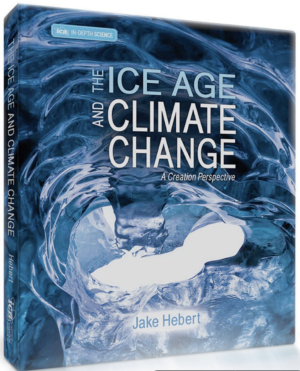
Hardcover / $35.00 / 295 Pages / Full colour
In recent years, Christians have become more alarmed over climate change. Both secular and Christian voices have urged them to heed the “all-but-unanimous scientific consensus” on the issue. But is that consensus based on solid science?
Order Online
The Ice Age and Climate Change
Reviewed by Andrea Reitan
Climate change alarmism seems to be a cultural obsession these days, among both Christians and non-Christians alike. Much of the hoopla around climate change stems from the claim that there is a scientific consensus and that we need to change our ways, but is this true? Should Christians jump aboard the climate change crusade? In The Ice Age and Climate Change, Jake Hebert aims to examine the evidence commonly used in climate discussions, arguing that a Young-Earth Creation (YEC) framework leads to different conclusions than the mainstream narrative.
Read the rest of this entry » Order Online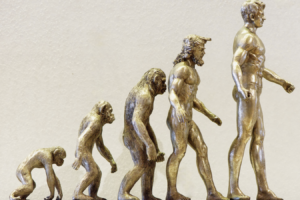
I collaborated with Carol Adams, a member of the Creation Research Society (CRS), to write a technical paleoanthropology paper, and we presented our research at the CRS Conference in July 2025. Our specific topic was Australopithecus afarensis (Lucy).
Read the rest of this entry »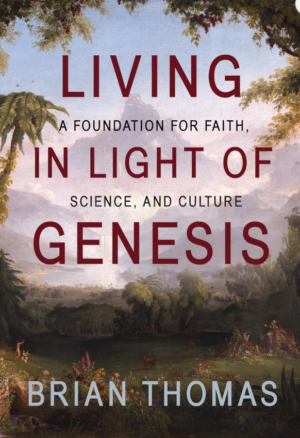
Paperback / $16.00 / 185 Pages / Black and white
This is a personal account of Dr. Brian Thomas’ spiritual and intellectual journey from non-believing science student to Christian conversion, to his intellectual struggle with Genesis, to his later career as a research scientist and communicator of the gospel and wonders of God’s creation. This account takes us to discussions of a wide variety of scientific fields, some less familiar to us than others. It totally broadens our horizons in a non-confrontational way.
Order Online
Paperback / $22.00 / 256 Pages
Darwin’s Sandcastle: Evolution’s Failure in the Light of Scripture and the Scientific Evidence
This overview of young earth science shows us that there are many more issues involved in origins than just the fossil record and DNA. Were there always predatory and disease-causing organisms? Do their features demonstrate design too? What does plate tectonics mean? Why do we care about fossils and DNA anyway? This book provides answers on many issues important to Christians.
Order Online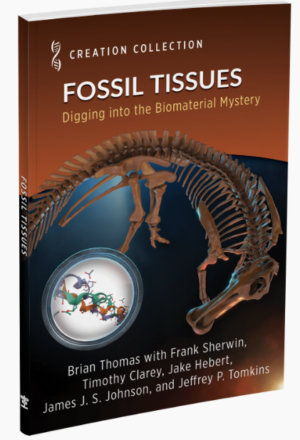
Paperback / $10.00 / 170 Pages / Full colour
Fossil Tissues: Digging into the Biomaterial Mystery
In the Creation Collection Series
During the past two decades, many people who follow scientific news, have been fascinated by accounts of fossils which contain non-fossilized organic material. These remains consist of original biochemical compounds or parts thereof from fossilized specimens of extinct creatures. The first report involved the accidental discovery of soft tissues inside a T. rex bone. Although the scientist who made the discovery was herself a mainstream scientist, there were many critiques of this work since the idea that organic molecules like proteins could resist decay for millions of years, did not seem possible. It still doesn’t.
Brian Thomas of Institute for Creation Research, whose Ph.D. research involved similar research, in this booklet documents the subsequent cascade of discoveries of many fossilized animals and even some plants that still contain undecomposed material.
Dr. Thomas describes explanations used by mainstream scientists to try to explain these highly unexpected results. Over several chapters Dr. Thomas demonstrates that only a short time interval can explain the persistence of these proteins, collagen and other compounds. The remains of DNA is especially surprising since it is such a fragile compound.
If ever there was a stimulating and fun account of the results of research on an origins topic, this is it! (Dr. Thomas discussed this topic at Creation Weekend 2025 but this book was not out yet.)
Order Online
Some years ago, I had occasion to collect a water sample from a small pond south of Lake Manitoba. The fun part was going back to the lab and looking at a drop of the sample under the microscope. I was sampling lakes and ponds every day, but on this occasion I screamed at what I saw. There before my wondering eyes were relatively large, brownish algal cells with fierce looking spines. They were spinning slowly as I watched.
Read the rest of this entry »
I joined the Creation Research Society in 2023 because God put a desire in my heart to do research and publish technical papers. My undergraduate science degree has no major, and I’ve received some criticism for that, but the program I enrolled in allowed me to try a bit of everything and get a well-rounded base of scientific knowledge. Then God gave me a job where I have the freedom to do the things I love. I needed some intellectual stimulation, though, so I told God, “I need some science I can sink my teeth into.” In September 2024, He answered by handing me a paleoanthropology assignment and connecting me to a co-author, Carol Adams. We decided to attend the 2025 CRS Conference at the end of July, and Carol suggested that we submit an abstract and present our work.
Read the rest of this entry »
Understanding genetics was so straightforward back in the good old days. I am not sure when those days were, but our picture of control systems in our bodies was easier when obvious stretches of DNA, called genes, were believed to control specific traits like eye colour and blood type. It used to be that we talked about genes and ‘junk DNA’. Now there are genes and there are control systems. It was the use of supercomputers which changed our understanding of how the human genome works.
Read the rest of this entry »FEATURED BOOKS AND DVDS
Paperback / $6.00 / 55 Pages
Understanding genetics was so straightforward back in the good old days. I am not sure when those days were, but our picture of control systems in our bodies was easier when obvious stretches of DNA, called genes, were believed to control specific traits like eye colour and blood type. It used to be that we talked about genes and ‘junk DNA’. Now there are genes and there are control systems. It was the use of supercomputers which changed our understanding of how the human genome works.
Read the rest of this entry » Order Online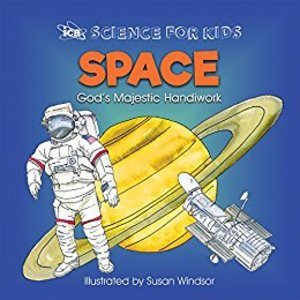

Paperback / $10.00 / 111 Pages / full colour
Understanding genetics was so straightforward back in the good old days. I am not sure when those days were, but our picture of control systems in our bodies was easier when obvious stretches of DNA, called genes, were believed to control specific traits like eye colour and blood type. It used to be that we talked about genes and ‘junk DNA’. Now there are genes and there are control systems. It was the use of supercomputers which changed our understanding of how the human genome works.
Read the rest of this entry » Order Online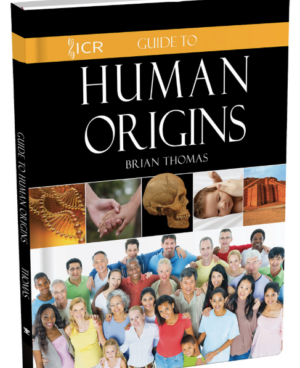
Hardcover / $18.00 / 117 Pages / Full colour
Understanding genetics was so straightforward back in the good old days. I am not sure when those days were, but our picture of control systems in our bodies was easier when obvious stretches of DNA, called genes, were believed to control specific traits like eye colour and blood type. It used to be that we talked about genes and ‘junk DNA’. Now there are genes and there are control systems. It was the use of supercomputers which changed our understanding of how the human genome works.
Read the rest of this entry » Order OnlinePaperback / $10.00 / 192 Pages / Full colour
Understanding genetics was so straightforward back in the good old days. I am not sure when those days were, but our picture of control systems in our bodies was easier when obvious stretches of DNA, called genes, were believed to control specific traits like eye colour and blood type. It used to be that we talked about genes and ‘junk DNA’. Now there are genes and there are control systems. It was the use of supercomputers which changed our understanding of how the human genome works.
Read the rest of this entry » Order Online