

Introductory


Hardcover / $32.00 / 195 Pages / full colour
Fossils amaze and delight. But do we really understand their origin? Most early scientists suggested a different origin for fossils than we currently teach. Is it possible, that in the 21st century, we could have made a mistake? A close look at the fossils and the layers in which they are contained, demonstrates one thing for sure. Fossils formed quickly, not slowly.Fast Fossils provides photographic examples of fossils from around the world. New evidence may force fossil experts to resort back to one of the earliest ideas of how fossils may have formed. If you have any interest whatsoever in natural history, this book is a must-read.
DVD / $12.00 / 65 Minutes
Dr. Randy Guliuzza explores the complexities of human reproduction to demonstrate that life couldn’t possibly have evolved. He shows that biological systems are fully integrated. They have key parts that fit together for an intended purpose and break down when those parts are altered or removed.
Imagine that you love solving practical problems like how to build something with straws which will support some weight. No doubt your design will be better than those of your friends and/or siblings!
Well here is a challenge that is fun to think about but difficult to solve. Imagine that you are presented with 600 feet (19000 cm) of shoelace. You are also presented with some small sheets of plastic, each cut into an appropriate shape so that they form a hollow icosahedral container when assembled together. Your assignment is to get the shoe lace into the container! Read the rest of this entry »
Animals display many remarkable behaviours. To better appreciate their talents, how often have we wished that these creatures could communicate with us? We would love to know where they go during migrations, for example. In recent years however, animal ecologists have developed techniques to allow us to track some of these creatures. As a result, these animals communicate with us simply by doing what comes naturally, during the course of which our little espionage devices report where the animals have gone. Read the rest of this entry »
Manatees (family Trichechidae, genus Trichechus), often called sea cows, are large, fully aquatic, mostly herbivorous marine mammals. Three living species exist, the Amazonian, West Indian, and the West African manatee. These are huge animals weighing from 400 to 550 kilograms (880 to 1,210 lb), and 2.8 to 3.0 metres (9.2 to 9.8 ft) long. The females tend to be both larger and heavier.
In many ways manatees are unique compared to all other life forms, a fact that poses major problems for evolutionists. It is almost like a designer selected their traits from a wide variety of existing life forms, from reptiles to fish to mammals. For example, manatees feed almost entirely on aquatic plants and that is “unique among living marine mammals” (Berta, 2012. Return to the Sea: The Life and Evolutionary Times of Marine Mammals. University of California Press. Berkeley p. 127). Read the rest of this entry »

People came from hundreds of kilometres away to hear Dr. Steven Ausin speak at CSAA’s Creation Weekend in Edmonton in October. His first lecture on Friday evening, October 24 was on the global flood model, also known as catastrophic plate tectonics. This model provides an explanation for how the earth came to its present state (as a result of a worldwide flood). The model was first proposed in a paper in 1994. There were six authors, Drs. Steven Austin, John Baumgardner, Hubert Humphreys, Andrew Snelling, Larry Vardiman and Kurt Wise (each representing different relevant technical areas of expertise). Read the rest of this entry »
Launched in 1977, the two Voyager probes have seen some strange and unexpected sights as they cruised through our solar system. After passing the planets, the probes have continued outward towards the farthest reaches of the solar system. In the summer of 2012, Voyager I was now 18.2 billion km away from us, more than three times the distance between the sun and Pluto. The solar system however by definition consists not only of the planets, but of the volume in space to which the sun’s particles extend, or in other words the volume in space which is impacted by the sun. The question everybody was asking, was how long would it take Voyager I to leave the solar system and enter interstellar space? And what would Voyager find when it got to interstellar space? Read the rest of this entry »
The ball arcs into the air, and then downward. A player rushes forward. Whew!! Another save made. The player’s strategy was to move to intercept the ball as it follows a predictable trajectory downward. We are happy the ball was caught, but the situation was not complicated. This is called a “constant bearing strategy” in pursuit of a target moving in a predictable arc. The strategy becomes more serious however when we learn that many animals similarly catch their prey by converging on the straightforward escape route of the hapless victim. Read the rest of this entry »
Paperback / $6.00 / 31 Pages / full colour
After a brief introduction to the scientific flaws in evolutionary theory, the author shows the importance of creation to Biblical doctrine and how all this affects morality and evangelism.
Paperback / $15.00 / 233 Pages / black and white
Ideal for upper elementary and junior high readers (as well as any adults interested in fascinating insights), this book briefly describes features of living things which could potentially be copied by inventors today. A 2-page spread describes how specific organisms with interesting characteristics, can inspire our inventions. Three interesting questions are provided with each topic. These discussion starters go beyond the material provided. The answers are provided at the end of the book. A delightful way to expand one’s appreciation of creation!
Hardcover / $18.00 / 117 Pages / full colour
This new “Guide to …” Book continues the tradition of presenting beautifully illustrated introductions to topics of interest to young readers. Like the other titles in this series, this one presents richly illustrated 2-page spreads which answer many questions about dinosaurs. The answers highlight the relationship of these creatures to the creation and the flood. The discussion is organized into three categories: dinosaur beginnings and history; dinosaur fossils and discoveries; and dinosaur kinds. This book is very appealing to upper elementary age students and everyone else, of course.
DVD / $15.00 / 33 Minutes
This program provides a delightful overview of some features in nature which are essential for human life to exist and flourish. The discussion focuses on the special properties of carbon, water and oxygen without which there would be no life. Lastly we learn about ways in which the human body is wonderfully designed. Junior high viewers and older will love this visually attractive program.
Creation Weekend 2015
October 23 & 24, 2015
It is not very often that an Edmonton audience has the opportunity to hear a world class expert tie together medical research, technology and Christian faith. Read the rest of this entry »
The common earthworm, part of the Annelid phylum, (Annelida is Latin for little rings) plays a critical part in producing and maintaining fertile soil. Its role includes forming channels in the soil to allow for effective aeration, a critical process necessary for most soil dwelling life forms. The channels that earthworms produce also allow the soil to hold the large amounts of water that provide for plant survival (Johnson, 2002). Read the rest of this entry »
This is one part nature documentary and one part evolutionary takedown. Illustra Media understand that a great way to expose evolution is to take a close in-depth look at some of the creatures that God has made. In Darwin’s day scientists didn’t have the ability to look inside the cell, and only had a glimmering of how incredibly complex even the simplest living creatures are. Now we know so much more – it turns out that even the simplest cell in our body has astonishingly complex and coordinated inner workings. Some have compared the complexity of a cell to the complexity of an entire city!
FEATURED BOOKS AND DVDS
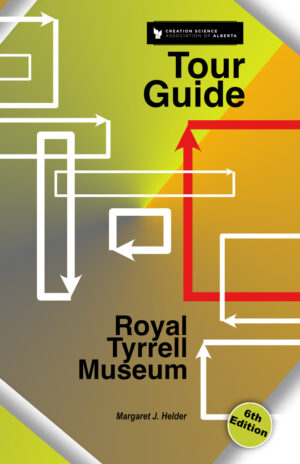
Paperback / $6.00 / 55 Pages
This is one part nature documentary and one part evolutionary takedown. Illustra Media understand that a great way to expose evolution is to take a close in-depth look at some of the creatures that God has made. In Darwin’s day scientists didn’t have the ability to look inside the cell, and only had a glimmering of how incredibly complex even the simplest living creatures are. Now we know so much more – it turns out that even the simplest cell in our body has astonishingly complex and coordinated inner workings. Some have compared the complexity of a cell to the complexity of an entire city!
Order Online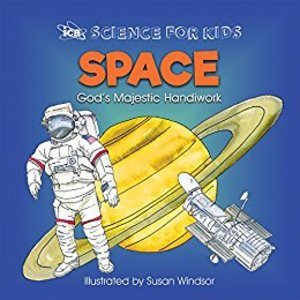

Paperback / $10.00 / 111 Pages / full colour
This is one part nature documentary and one part evolutionary takedown. Illustra Media understand that a great way to expose evolution is to take a close in-depth look at some of the creatures that God has made. In Darwin’s day scientists didn’t have the ability to look inside the cell, and only had a glimmering of how incredibly complex even the simplest living creatures are. Now we know so much more – it turns out that even the simplest cell in our body has astonishingly complex and coordinated inner workings. Some have compared the complexity of a cell to the complexity of an entire city!
Order Online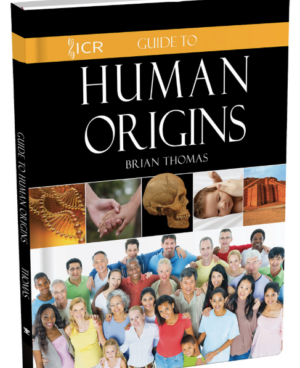
Hardcover / $18.00 / 117 Pages / Full colour
This is one part nature documentary and one part evolutionary takedown. Illustra Media understand that a great way to expose evolution is to take a close in-depth look at some of the creatures that God has made. In Darwin’s day scientists didn’t have the ability to look inside the cell, and only had a glimmering of how incredibly complex even the simplest living creatures are. Now we know so much more – it turns out that even the simplest cell in our body has astonishingly complex and coordinated inner workings. Some have compared the complexity of a cell to the complexity of an entire city!
Order Online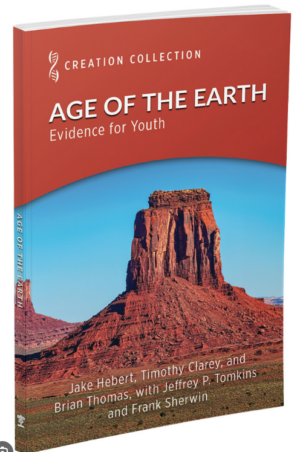
Paperback / $10.00 / 192 Pages / Full colour
This is one part nature documentary and one part evolutionary takedown. Illustra Media understand that a great way to expose evolution is to take a close in-depth look at some of the creatures that God has made. In Darwin’s day scientists didn’t have the ability to look inside the cell, and only had a glimmering of how incredibly complex even the simplest living creatures are. Now we know so much more – it turns out that even the simplest cell in our body has astonishingly complex and coordinated inner workings. Some have compared the complexity of a cell to the complexity of an entire city!
Order Online