

Level



Creation Science Association of Alberta is delighted to announce that biologist and philosopher Dr. Paul Nelson has agreed to be our featured speaker for Creation Weekend, Friday evening and all day Saturday October 18 and 19, 2013. Dr. Nelson is a friendly and non-confrontational individual who makes the latest information in biology come alive in his lectures. He not only describes the issues, but he tells us what the significance of the material is.
One might suppose, judging by this title, that the beaches in Canada’s maritime provinces are not happy places to visit. Actually they are beautiful. Nevertheless, the story of these landscapes provides remarkable food for thought. Read the rest of this entry »
In Nova Scotia, as elsewhere in the Maritimes, we discover that fossils are an exciting part of the landscape. Not the least of our discoveries are the dinosaurs of Parrsboro. Dinosaurs?? We thought western Canada had exclusive claim to such Canadian artifacts. Not quite. West of Truro, along the north shore of the Minas Basin, we find the touristy town of Parrsboro. The scenery is beautiful, with blueberry crops growing on local hummocky hills. Furthermore the beaches along this stretch of coast are famous for fossils, dinosaur fossils to be specific. Read the rest of this entry »
Dr. Paul Nelson has long been involved in the creation/evolution controversy, in fact he grew up in that milieu. His grandfather, Byron C. Nelson (1893-1972) for example, was a theologian and author, influential as a mid-century critic of Darwinian evolution. His grandson Paul, already as a university student, began to write articles for the Bible-Science Newsletter (an early, well-known creationist publication). Read the rest of this entry »
There is nothing like problem solving to keep one mentally alert. Some people might say that the study of nature is a form of problem solving and so it is. Collecting information is only half the battle. The real challenge is to try to explain the data. Read the rest of this entry »
Michael Faraday (1791-1867) was an English scientist (in the terminology of the time he was called a natural philosopher) who made critical contributions to the electromagnetism and electrochemistry fields. Judged as one of the leading experimentalists in science ever, he was one of the most influential scientists in history. Called the father of the electronics revolution, he also did critical work in chemistry (Ludwig, C. 1978. Michael Faraday: Father of Electronics. Herald Press). Read the rest of this entry »
Every September, hundreds of thousands of Ontario butterflies converge on Point Pelee, a long peninsula which projects south into one of the Great Lakes. Then away they flutter, across the water and far beyond. Thus begins the amazing mass migration of an insect which unerringly navigates 4000 kilometers to a site where these individuals have never been. The Monarch butterfly, it turns out, is an astounding phenomenon. Read the rest of this entry »
Four times a year, a group of scientists who recently participated in more than one million dollars worth of research into radiometric techniques for estimating the age of rocks, now conduct meetings to communicate the results of their research to the public. These scientists sought a fundamental correction to the usual assumptions that the earth is extremely old. Read the rest of this entry »
As far as our solar system is concerned, astronomers have grown accustomed to expecting the unexpected. Certainly nobody expected liquid water spewing from a small moon of Saturn. Read the rest of this entry »
The mayor of New York City was at the news conference on May 19, 2009. The event was accompanied too by the showing of a special documentary film on TV, publication of a book on the topic and the unveiling of an interactive website. What could the occasion be? One of the individuals involved, Jorn Hurun of Norway, declared: “Any pop band is doing the same thing. Any athlete is doing the same thing. We have to start thinking the same way in science.” Read the rest of this entry »

New Uses for Old Patents
Our uses for good bonding agents are almost endless. We glue craft items, chipped china, broken toys, furniture which has come apart, and so on. The list seems endless. There are industrial uses and medical uses for glue too. During the Vietnam war, for example, the American army developed a medical superglue for treating wounds. This product was less than ideal however because it required dry surfaces in order to set. But, as everyone knows, wounds tend to be wet and yucky. Certainly there would be no dry surfaces inside the body. Now English scientists are getting into the act. Actually they are working with a glue which was invented long ago. They are just learning how to make use of this special product. Read the rest of this entry »
Truly there are few things as thrilling as beautiful music. Was it not Shakespeare who wrote “If music be the food of love, play on!” Indeed music not only fosters romance, but it can also make us laugh, or cry, or move with the rhythm, or all of the above at once. There are few things which play on our emotions the way music does. Music however is not a gift unique to people. There are other created creatures with wonderful musical talents. Consider the songbirds for example. Read the rest of this entry »
The gecko, famous in some circles in car insurance commercials, is a very unique but average sized lizard. It is well known among biologists for its chirping vocalizations and its sophisticated adhesive toe pads that allow it to climb with ease up smooth vertical surfaces. Actually, the gecko’s ability to run vertically up and down at will has astonished almost everyone who has ever seen them, from Aristotle in the 4th century BC to today. Read the rest of this entry »
Sometimes it seems so challenging to keep up to date with new titles which present the creation in an interesting fashion. This was not always the case. Thirty years ago, there were few such books. Read the rest of this entry »
Of the five senses which keep us in touch with the world, most of us are particularly aware of eyesight and hearing. Of course we are very thankful for these gifts. One sense that we tend to take for granted however, is the sense of smell. This sense does not seem very complicated or amazing. Nevertheless a little research reveals that our sense of smell is not only exquisitely designed, but it is also poorly understood by biologists. Of all our senses, that of smell seems to be the most complicated. Read the rest of this entry »
FEATURED BOOKS AND DVDS

Paperback / $6.00 / 55 Pages
Of the five senses which keep us in touch with the world, most of us are particularly aware of eyesight and hearing. Of course we are very thankful for these gifts. One sense that we tend to take for granted however, is the sense of smell. This sense does not seem very complicated or amazing. Nevertheless a little research reveals that our sense of smell is not only exquisitely designed, but it is also poorly understood by biologists. Of all our senses, that of smell seems to be the most complicated. Read the rest of this entry »
Order Online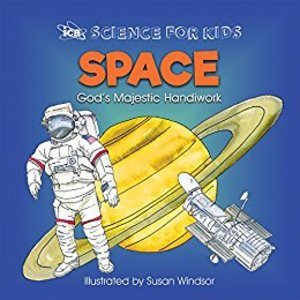
Paperback / $10.00 / 111 Pages / full colour
Of the five senses which keep us in touch with the world, most of us are particularly aware of eyesight and hearing. Of course we are very thankful for these gifts. One sense that we tend to take for granted however, is the sense of smell. This sense does not seem very complicated or amazing. Nevertheless a little research reveals that our sense of smell is not only exquisitely designed, but it is also poorly understood by biologists. Of all our senses, that of smell seems to be the most complicated. Read the rest of this entry »
Order Online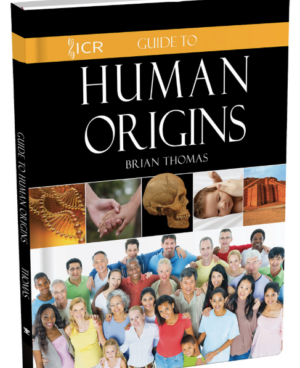
Hardcover / $18.00 / 117 Pages / Full colour
Of the five senses which keep us in touch with the world, most of us are particularly aware of eyesight and hearing. Of course we are very thankful for these gifts. One sense that we tend to take for granted however, is the sense of smell. This sense does not seem very complicated or amazing. Nevertheless a little research reveals that our sense of smell is not only exquisitely designed, but it is also poorly understood by biologists. Of all our senses, that of smell seems to be the most complicated. Read the rest of this entry »
Order Online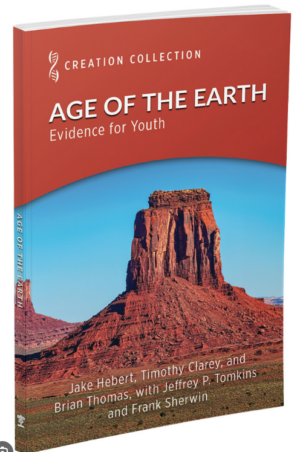
Paperback / $10.00 / 192 Pages / Full colour
Of the five senses which keep us in touch with the world, most of us are particularly aware of eyesight and hearing. Of course we are very thankful for these gifts. One sense that we tend to take for granted however, is the sense of smell. This sense does not seem very complicated or amazing. Nevertheless a little research reveals that our sense of smell is not only exquisitely designed, but it is also poorly understood by biologists. Of all our senses, that of smell seems to be the most complicated. Read the rest of this entry »
Order Online