

Level


A myth, one might imagine, is a story or explanation that is widely believed, but has no basis in fact. While there were numerous myths in the past, modern man believes that he has no need for such fabrications. Science, after all, undertakes to explain everything, and it is empirical and objective, so the saying goes. But even in science, some myths do creep into the public consciousness. It is interesting to notice how popular misunderstandings of scientific information appear and are propagated. An example springs to mind. Consider the recent studies on the “age” of the human race, for example. The conclusions and some headlines were actually misleading. One wonders how many readers obtained an inaccurate understanding of the issue. Let us investigate that case. Read the rest of this entry »
On Tuesday, June 27, 2000 the National Post published a two page spread. At first glance, it did not look that exciting. The text on these pages consisted only of four letters, C, G, A and T, arranged in seemingly random order. The final line, for example, begins
- CATGGTGTCATACTGCTCTTTATTTTATT… Read the rest of this entry »
Even the date was significant. On Monday, February 12 (the one hundred ninety-second anniversary of Charles Darwin’s birth), two groups of scientists released the results of their continuing studies into the human genome. This date was chosen since it is the understanding of most modern scientists, that details in the genetic code should give us spectacular insights into the process of evolution. But there were many surprises in the data. What did the results mean? Read the rest of this entry »

Have you ever discovered that something you thought quite ordinary (or even ugly), was actually a priceless antique? I remember harbouring such sentiments when I was a teenager. Since then, of course, I have learned better how to identify valuable items. Read the rest of this entry »
Intelligent design, and indirectly the creation model, have been in the news a lot lately. Not surprisingly, most of the articles have been sympathetic, not to intelligent design, but to Darwinian evolution, the mechanistic explanation for life so favoured by the majority of scientists. Read the rest of this entry »
It is normal to want to be unique isn’t it? Some people however don’t want to be special. Many astronomers do not like the idea that we live at a special time in the history of the universe or in an especially nice region of space. The reason many scientists do not like any suggestion of special conditions is because such conditions lead to questions about why we live at a special time or in a special place. Special conditions suggest that events are not determined by chance, but by something else such as the supernatural power of God. Many astronomers are most anxious to avoid such suggestions. Read the rest of this entry »
Among biologists, there have always been mavericks who dared to take a stand for the creation model. Point by point, these scientists have contested evolutionary speculation. But all too often such individuals have seemed like voices crying in the wilderness. The public often perceived creation based arguments as offering little but negativity. It is indeed the case that rearguard skirmishes won’t win a war. What is clearly needed, is a frontal assault on biological thinking. It is time to re-examine the foundations of biology. Thus it was in August 2001 that the Center for Origins Research and Education of Bryan College in Dayton, Tennessee; the Institute for Creation Research in El Cajon, California; and Cedarville University of Cedarville, Ohio — jointly sponsored a conference entitled “Discontinuity: Understanding Biology in the Light of Creation.” Read the rest of this entry »
Man of Vision:
Man of Action
Ivan was a true gentleman, a fine educator, a good friend and an active Christian. He knew “everybody” in education in Alberta and many in politics. Moreover, he and his wife Irene, took great pleasure in supporting many worthwhile endeavours. In their later years at their acreage, they grew flowers and food which they generously shared. If anybody needed help, they were there for them. Read the rest of this entry »
One of the most popular mammals is the lovable and cuddly koala. Its appearance has given rise to calling them bears, often teddy bears and, although they are not bears but rather marsupials, the name has stuck. Their fluffy ears, large spoon-shaped nose, round body and bright button eyes make them appealing to everyone. Read the rest of this entry »
The Creation Science Association of Alberta is delighted to announce that palaeontologist Kurt Wise has agreed to speak in Edmonton on the weekend of October 18, 2008. Few scientists anywhere can boast the depth of experience of Dr. Wise. Read the rest of this entry »
One does not have to be a scientist with an advanced degree in physics or geology to appreciate the relevance of recent studies on the radiometric dating of rocks and biological materials. The book Thousands… not Billions and the DVD of the same name, are designed to communicate to the general public the results of recent research which fit a young age for the earth. Read the rest of this entry »
Have you ever skipped to the back of a story because you simply could not wait another minute to find out how it all ends? Planetary astronomers, in contrast, must be very patient people. Some of them have worked on a project for years, even decades before they ever begin to collect any information. The good news for curious and impatient people is that this is a particularly good time to learn new details about the planets. Read the rest of this entry »
We might suppose our technology is first class. With computers, satellites and precision devices, our society happily adapts to ever more sophisticated machines. Each achievement provides the platform for new uses of technology and further inventions. Rather than giving thanks for these insights, all too often we pride ourselves for our knowledge. Read the rest of this entry »
In his famous 1959 article, Dr. Bernard Kettlewell described his research on the peppered moth as the “consummation and confirmation” (p. 53) of Darwin’s theories. (B. Kettlewell. 1959. Darwin’s Missing Evidence. Scientific American. March pp. 4 8-53) Since then, the peppered moth has become standard fare in biology and genetics texts. Educators really like this example because it is “extremely visual” and thus easily understood and remembered. While all scientists, whether creation model support ers or evolution model supporters, agree that shifts in the proportions of various characteristics do take place in nature, only the evolutionists draw more extensive conclusions from the data. For example, Nelson Canada’s 1993 high school text Biolog y (authored by teachers from Alberta and Newfoundland), suggests that students explain the statement “Evolution and adaptation usually occur by means of small changes” in connection with the case of the peppered moth. (p. 110) Read the rest of this entry »
It goes without saying that all living creatures are interesting. Some, however, possess an extra mystique. These are organisms which have closely similar counterparts preserved in stone. Obviously a long history has been enjoyed by living examples of such fossil specimens. The living populations are called living fossils. But what about the rest of living creatures, whose preserved remains we do not find in low lying rock? Is their past any different? Let’s delve into the story of the living fossils in order to find out if they are really special and what is their real claim to fame. Read the rest of this entry »
FEATURED BOOKS AND DVDS

Paperback / $6.00 / 55 Pages
It goes without saying that all living creatures are interesting. Some, however, possess an extra mystique. These are organisms which have closely similar counterparts preserved in stone. Obviously a long history has been enjoyed by living examples of such fossil specimens. The living populations are called living fossils. But what about the rest of living creatures, whose preserved remains we do not find in low lying rock? Is their past any different? Let’s delve into the story of the living fossils in order to find out if they are really special and what is their real claim to fame. Read the rest of this entry »
Order Online

Paperback / $10.00 / 111 Pages / full colour
It goes without saying that all living creatures are interesting. Some, however, possess an extra mystique. These are organisms which have closely similar counterparts preserved in stone. Obviously a long history has been enjoyed by living examples of such fossil specimens. The living populations are called living fossils. But what about the rest of living creatures, whose preserved remains we do not find in low lying rock? Is their past any different? Let’s delve into the story of the living fossils in order to find out if they are really special and what is their real claim to fame. Read the rest of this entry »
Order Online
Hardcover / $18.00 / 117 Pages / Full colour
It goes without saying that all living creatures are interesting. Some, however, possess an extra mystique. These are organisms which have closely similar counterparts preserved in stone. Obviously a long history has been enjoyed by living examples of such fossil specimens. The living populations are called living fossils. But what about the rest of living creatures, whose preserved remains we do not find in low lying rock? Is their past any different? Let’s delve into the story of the living fossils in order to find out if they are really special and what is their real claim to fame. Read the rest of this entry »
Order Online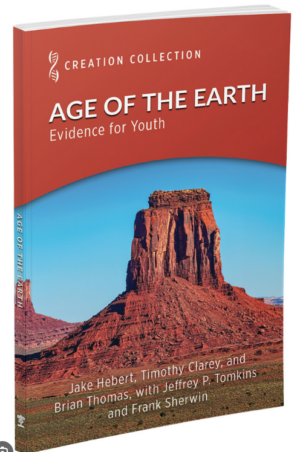
Paperback / $10.00 / 192 Pages / Full colour
It goes without saying that all living creatures are interesting. Some, however, possess an extra mystique. These are organisms which have closely similar counterparts preserved in stone. Obviously a long history has been enjoyed by living examples of such fossil specimens. The living populations are called living fossils. But what about the rest of living creatures, whose preserved remains we do not find in low lying rock? Is their past any different? Let’s delve into the story of the living fossils in order to find out if they are really special and what is their real claim to fame. Read the rest of this entry »
Order Online