

Author Archive

The importance of the mineral calcium phosphate to living organisms can hardly be overstated. It is used by many organisms, including humans, to build their bones and skeletons. This is especially true for fish, crustaceans, and some brachiopods. Besides that, and even more importantly, phosphate ions are required for major building blocks of life, such as DNA and RNA. It is also required for the production of adenosine triphosphate (ATP)—the molecular fuel of living cells (Brady, Tostevin and Tosca 2022).
Evolutionists struggle to explain how life could have arisen from non-life—a concept known as “abiogenesis” or “spontaneous generation.” One of the problems is the importance of phosphate ions for biological molecules and the prohibitively low concentrations of phosphates in nature for those molecules to form spontaneously. There just isn’t enough phosphate. Phosphate minerals tend to be insoluble under most conditions, so only trace amounts exist as dissolved minerals in seawater. In fact, on average, seawater contains only about 0.071 parts per million of phosphorous (Simandl, Paradis and Fajber 2012).
Read the rest of this entry »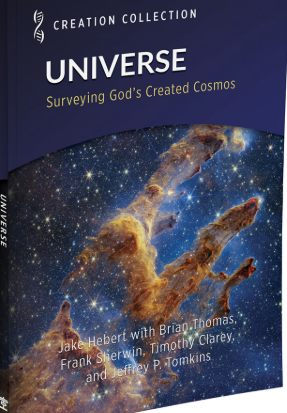

Paperback / $10.00 / 169 Pages / full colour
Creation Collection Series
Scientists use fancy technology to glean information from the night sky. A lot of information has been obtained, and all of it is interpreted in terms of very long ages, but Jake Hebert demonstrates that challenges to the Biblical record are based on questionable interpretations. Dr. Hebert works with impressive data and demonstrates that we should celebrate the wonders of the created universe.
Order Online
Paperback / $10.00 / 160 Pages / full colour
The solar system is not the simple picturesque grouping of planets around the sun that we like to imagine. There are many complicated details concerning the planets and their moons. At first glance, the solar system appears young. However, many scientists try to explain all this in terms of long ages. Hebert and colleagues however demonstrate how compelling are our conclusions of recent creation. Why not arm yourself with interesting discussions, details and testimony of the Biblical record?
Order Online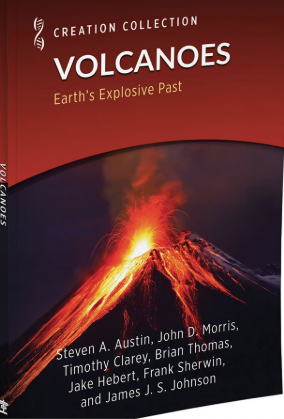
Paperback / $10.00 / 159 Pages / Full colour
In the Creation Collection Series
Stories like the eruptions of Mount Vesuvius in Italy and Mount St. Helens in Washington State and Krakatoa in Indonesia have caused us to regard volcanoes with some trepidation. Certainly the appearance of such mountains is hard to ignore. Are these structures important in earth history, especially if the earth is young? This booklet is a handy introduction to the causes and impacts of such eruptions.
Order Online
Paperback / $10.00 / 138 Pages
This title is in a new series of small books from ICR entitled Creation Collection. Written at the introductory level, this book not only discusses supposed fossil evidence concerning human ancestors, but also that our DNA differs significantly from apes, is not “junk”, and that human chromosome #2 never came from apes.
Order Online
Paperback / $10.00 / 176 Pages
Discovering God’s Underwater Wonders
When you visit an aquarium, what might you see? Where did this variety of life come from? Evolution says a single-cell organism developed into marine invertebrates, then vertebrates, then life that crawled out on land, and eventually—us! But the evidence tells a different story. The fossil record shows no transitions from water to land. Join ICR scientists as they explore the wonders of God’s underwater world.
Order Online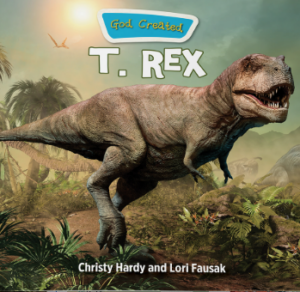

Paperback / $6.00 / 32 Pages / full colour
With imposing illustrations and clear information that young children will dive right into, this book places T. Rex clearly in the pre-flood world, and what a world it was!
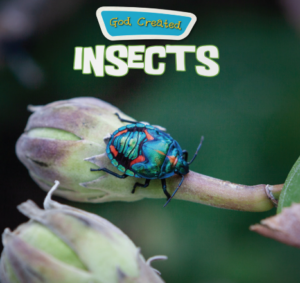
Paperback / $6.00 / 32 Pages / full colour
Insects capture everyone’s attention. Not everybody is thrilled by their diversity in size, colour and what they do. But we can’t fail to be interested – even young children who find insects fascinating and they may appreciate them even more after learning who made them all!
Order Online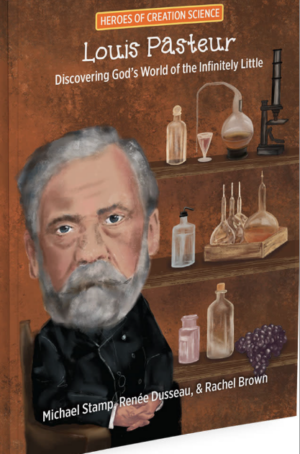
Paperback / $6.00 / 62 Pages / full colour
Heroes of Creation Science Series
Louis Pasteur lived his whole life in 19th century France. His story shows the impact of a person who desired to study God’s glory as it is revealed in the small organisms He created. With these skills and interests Pasteur made major discoveries on pasteurization which makes many foods, like honey, wine, and milk, safe to eat. He solved the problem of diseased silkworms and developed life saving techniques for treating cholera, anthrax, and rabies.
Order Online
Small boys love stories about large earth moving equipment. They love to look at the pictures, identify the types of machine and hear the stories again and again. Other children love to identify dinosaur pictures or birds. Even long after the children have grown up, they value these books as important mementos.
Read the rest of this entry »
Some scientific words come from what was originally everyday language, but the concept has long been almost forgotten. Take the word ‘chaperone’ for example. Until recent times, a chaperone was a respectable mature lady who needed to be present on any social occasion to ensure that courting couples conducted themselves in a sedate and appropriate fashion. That certainly sounds old fashioned, doesn’t it? There was even a play written, called Charley’s Aunt, by Brandon Thomas (about 1890), that lampooned the efforts of two young Englishmen to entertain some young ladies to tea. In order to do this, they needed a chaperone to be present. They therefore persuaded another male friend to masquerade as a rich aunt from Brazil so that the tea party could take place. Hilarious escapades and disasters followed (including the real aunt showing up).
Read the rest of this entry »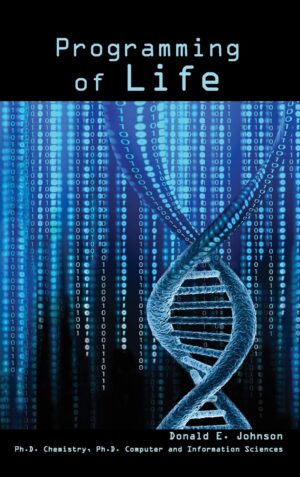
DVD / $16.00 / 44 Minutes
This beautifully illustrated video examines mathematical issues concerning the living cell. We soon discover that information is a critical feature of systems of life. Instructions on how to build and run the living cell, all require information. It really makes us think of computers. High school students, pastors, teachers and others will love these fascinating insights!
Order Online
Challenges, Motivation and Hope
Featuring
Dr. Brian Thomas
Research Scientist at the Institute for Creation Research, Dallas, Texas
Location:
Providence Canadian Reformed Church
12905 122 Avenue NW Edmonton, AB
SCHEDULE
Friday, Oct 24 @ 7:00 p.m.
Fresh Fossils from Four Continents
(especially family friendly) Have you heard about the blood vessels from dinosaur bones? It turns out that’s just the beginning of fresh features from all kinds of fossils. In this presentation, Dr. Thomas explains how we can know that these proteins are relatively young and how these exciting new finds fit with the Bible’s history of the world.
Saturday, Oct 25 @ 10:00 a.m.
The Beginning of Life
(design features extraordinaire) Using information you won’t find in secular biology textbooks, Dr. Thomas demonstrates the complete failure of natural processes to explain how life began. He critiques evolutionary speculations about the beginning of life and illustrates engineered precision in cellular machines that credit the Creator, not nature, with creating life.
Saturday, Oct 25 @ 11:30 a.m. – 12:15 p.m.
Annual General Meeting
Saturday, Oct 25 @ 12:15 p.m. – 1:15 p.m.
Noon Break
Saturday, Oct 25 @ 1:15 p.m.
How Creatures Adapt
(why Darwin’s explanatons don’t work) New studies into the nuts and bolts of creature adaptation keep refuting Charles Darwin’s old ideas about how creatures change. From finches to fishes, stunning animal adaptations revel new hallmarks of handiwork.
Free Admission
www.create.ab.ca
In the early years of the existence of Creation Science Association of Alberta, CSAA brought in many excellent speakers from the Institute for Creation Research. All these speakers were scientists with excellent experience and credentials. These included biochemist Dr. Duane Gish, geologist Dr. Steve Austin and biologist Dr. Gary Parker. In more recent years, ICR moved from California to Texas and set about becoming established in a new region. Now once again, CSAA is delighted that one of ICR’s research scientists, Dr. Brian Thomas, has agreed to be our featured speaker for Creation Weekend on October 24 and 25, 2025. The sessions are scheduled to take place at Providence Canadian Reformed Church which hosted the event in spectacular fashion in October 2024 (12905 122 Avenue NW in Edmonton).
Read the rest of this entry »
From time to time, CSAA adds relevant new discussions to HeadStart, our amazing information resource (headstart.create.ab.ca). While many online discussions provide definitions and current views on an issue, HeadStart typically provides the history of how this science-related discipline came to be developed and what that means for us today. For example, within the past year we have added new topics related to dinosaurs and fossils, all written at the introductory level. All these items are posted under the Investigate Further banner. These topics include dinosaurs; extinct Alberta creatures (marine reptiles); record in sedimentary rock; geological column; and fossils.
Read the rest of this entry »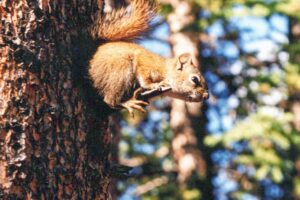
Sugar gliders look like chipmunks, glide like flying squirrels, and their young (called joeys like kangaroos), can live for several weeks after birth in their mother’s pouch like opossums, and amazingly they belong in the same family as kangaroos. No wonder their origin has stymied evolutionists. The three types of gliders are so different that evolutionists propose that they “evolved at least three times independently in closely related glider species, including sugar gliders. But the question lingers as to how it evolved.” [i]
Read the rest of this entry »FEATURED BOOKS AND DVDS
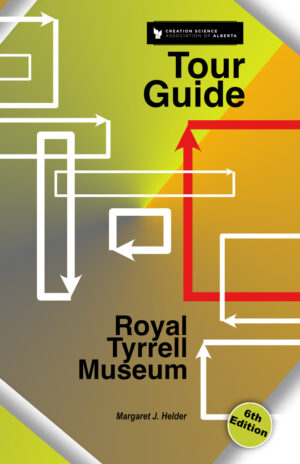
Paperback / $6.00 / 55 Pages
Sugar gliders look like chipmunks, glide like flying squirrels, and their young (called joeys like kangaroos), can live for several weeks after birth in their mother’s pouch like opossums, and amazingly they belong in the same family as kangaroos. No wonder their origin has stymied evolutionists. The three types of gliders are so different that evolutionists propose that they “evolved at least three times independently in closely related glider species, including sugar gliders. But the question lingers as to how it evolved.” [i]
Read the rest of this entry » Order Online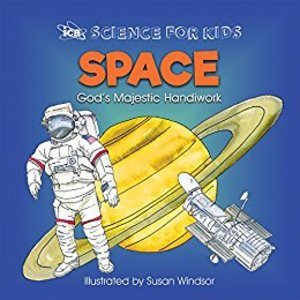
Paperback / $10.00 / 111 Pages / full colour
Sugar gliders look like chipmunks, glide like flying squirrels, and their young (called joeys like kangaroos), can live for several weeks after birth in their mother’s pouch like opossums, and amazingly they belong in the same family as kangaroos. No wonder their origin has stymied evolutionists. The three types of gliders are so different that evolutionists propose that they “evolved at least three times independently in closely related glider species, including sugar gliders. But the question lingers as to how it evolved.” [i]
Read the rest of this entry » Order Online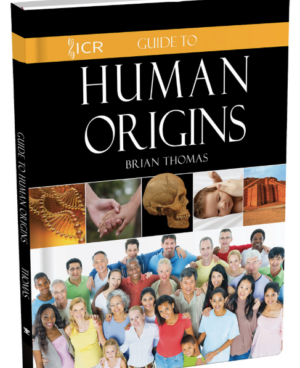
Hardcover / $18.00 / 117 Pages / Full colour
Sugar gliders look like chipmunks, glide like flying squirrels, and their young (called joeys like kangaroos), can live for several weeks after birth in their mother’s pouch like opossums, and amazingly they belong in the same family as kangaroos. No wonder their origin has stymied evolutionists. The three types of gliders are so different that evolutionists propose that they “evolved at least three times independently in closely related glider species, including sugar gliders. But the question lingers as to how it evolved.” [i]
Read the rest of this entry » Order Online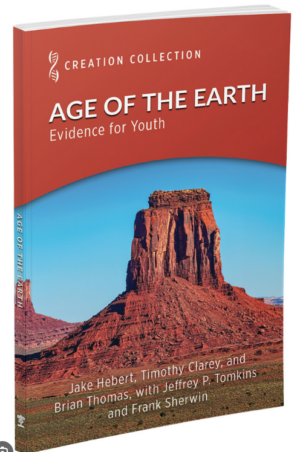
Paperback / $10.00 / 192 Pages / Full colour
Sugar gliders look like chipmunks, glide like flying squirrels, and their young (called joeys like kangaroos), can live for several weeks after birth in their mother’s pouch like opossums, and amazingly they belong in the same family as kangaroos. No wonder their origin has stymied evolutionists. The three types of gliders are so different that evolutionists propose that they “evolved at least three times independently in closely related glider species, including sugar gliders. But the question lingers as to how it evolved.” [i]
Read the rest of this entry » Order Online