

Author Archive
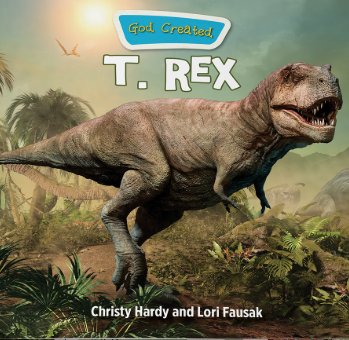

Paperback / $6.00 / 32 Pages / full colour
With imposing illustrations and clear information that young children will dive right into, this book places T. Rex clearly in the pre-flood world, and what a world it was!
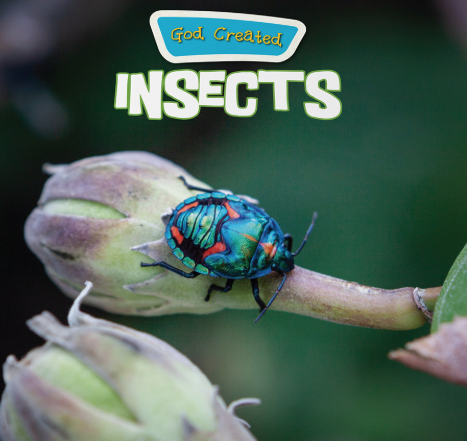
Paperback / $6.00 / 32 Pages / full colour
Insects capture everyone’s attention. Not everybody is thrilled by their diversity in size, colour and what they do. But we can’t fail to be interested – even young children who find insects fascinating and they may appreciate them even more after learning who made them all!
Order Online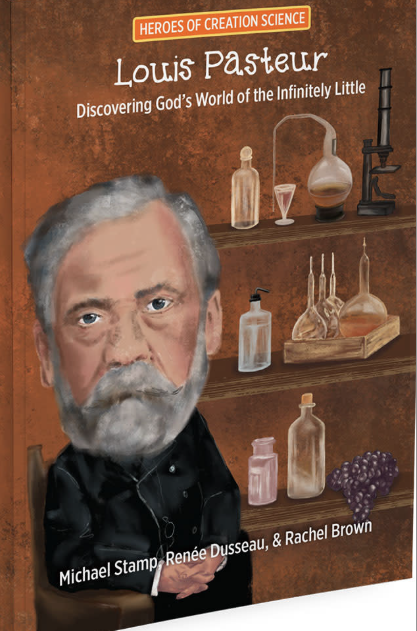
Paperback / $6.00 / 62 Pages / full colour
Heroes of Creation Science Series
Louis Pasteur lived his whole life in 19th century France. His story shows the impact of a person who desired to study God’s glory as it is revealed in the small organisms He created. With these skills and interests Pasteur made major discoveries on pasteurization which makes many foods, like honey, wine, and milk, safe to eat. He solved the problem of diseased silkworms and developed life saving techniques for treating cholera, anthrax, and rabies.
Order Online

Small boys love stories about large earth moving equipment. They love to look at the pictures, identify the types of machine and hear the stories again and again. Other children love to identify dinosaur pictures or birds. Even long after the children have grown up, they value these books as important mementos.
Read the rest of this entry »
Some scientific words come from what was originally everyday language, but the concept has long been almost forgotten. Take the word ‘chaperone’ for example. Until recent times, a chaperone was a respectable mature lady who needed to be present on any social occasion to ensure that courting couples conducted themselves in a sedate and appropriate fashion. That certainly sounds old fashioned, doesn’t it? There was even a play written, called Charley’s Aunt, by Brandon Thomas (about 1890), that lampooned the efforts of two young Englishmen to entertain some young ladies to tea. In order to do this, they needed a chaperone to be present. They therefore persuaded another male friend to masquerade as a rich aunt from Brazil so that the tea party could take place. Hilarious escapades and disasters followed (including the real aunt showing up).
Read the rest of this entry »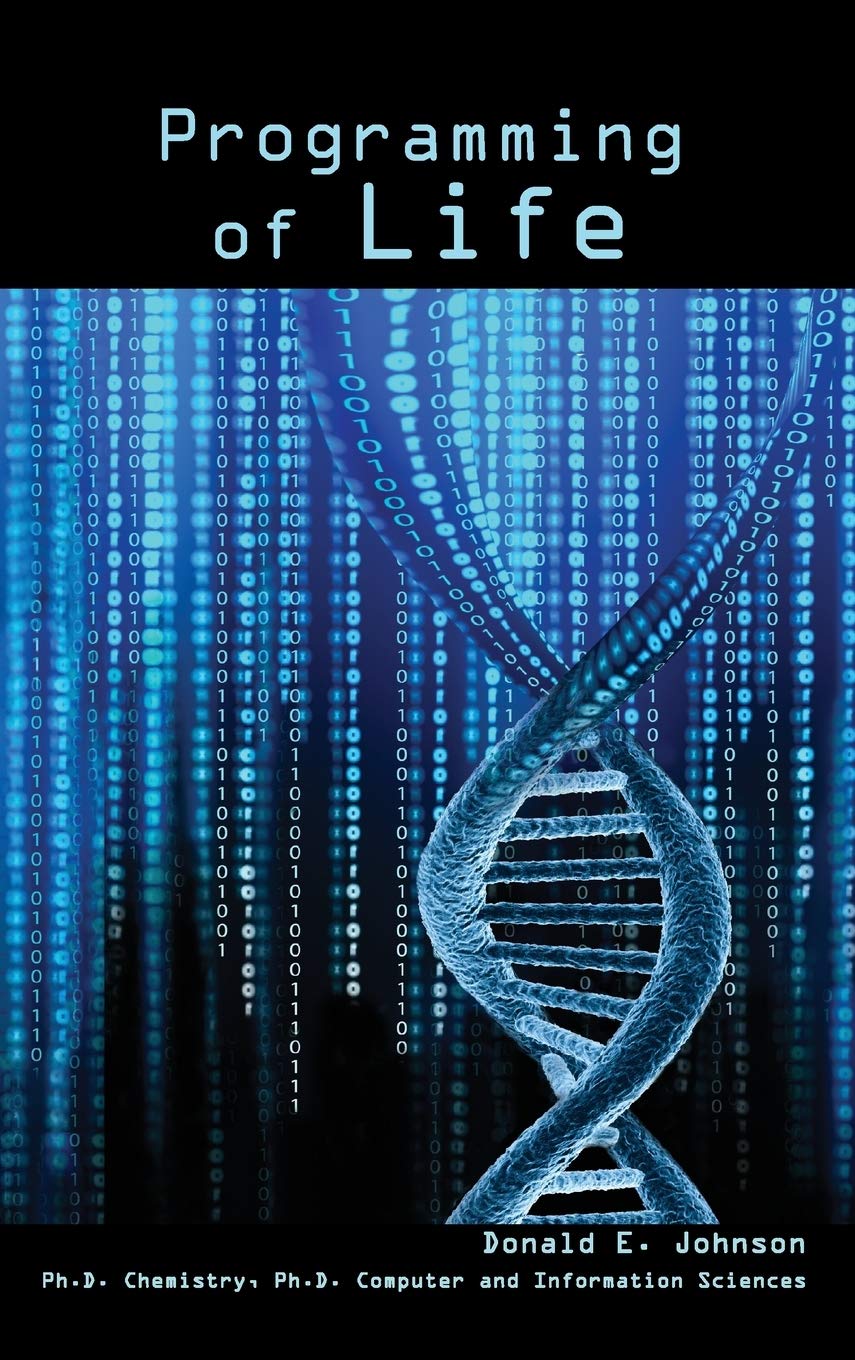

DVD / $16.00 / 44 Minutes
This beautifully illustrated video examines mathematical issues concerning the living cell. We soon discover that information is a critical feature of systems of life. Instructions on how to build and run the living cell, all require information. It really makes us think of computers. High school students, pastors, teachers and others will love these fascinating insights!
Order Online
Challenges, Motivation and Hope
Featuring
Dr. Brian Thomas
Research Scientist at the Institute for Creation Research, Dallas, Texas
Location:
Providence Canadian Reformed Church
12905 122 Avenue NW Edmonton, AB
SCHEDULE
Friday, Oct 24 @ 7:00 p.m.
Fresh Fossils from Four Continents
(especially family friendly) Have you heard about the blood vessels from dinosaur bones? It turns out that’s just the beginning of fresh features from all kinds of fossils. In this presentation, Dr. Thomas explains how we can know that these proteins are relatively young and how these exciting new finds fit with the Bible’s history of the world.
Saturday, Oct 25 @ 10:00 a.m.
The Beginning of Life
(design features extraordinaire) Using information you won’t find in secular biology textbooks, Dr. Thomas demonstrates the complete failure of natural processes to explain how life began. He critiques evolutionary speculations about the beginning of life and illustrates engineered precision in cellular machines that credit the Creator, not nature, with creating life.
Saturday, Oct 25 @ 11:30 a.m. – 12:15 p.m.
Annual General Meeting
Saturday, Oct 25 @ 12:15 p.m. – 1:15 p.m.
Noon Break
Saturday, Oct 25 @ 1:15 p.m.
How Creatures Adapt
(why Darwin’s explanatons don’t work) New studies into the nuts and bolts of creature adaptation keep refuting Charles Darwin’s old ideas about how creatures change. From finches to fishes, stunning animal adaptations revel new hallmarks of handiwork.
Free Admission
www.create.ab.ca
In the early years of the existence of Creation Science Association of Alberta, CSAA brought in many excellent speakers from the Institute for Creation Research. All these speakers were scientists with excellent experience and credentials. These included biochemist Dr. Duane Gish, geologist Dr. Steve Austin and biologist Dr. Gary Parker. In more recent years, ICR moved from California to Texas and set about becoming established in a new region. Now once again, CSAA is delighted that one of ICR’s research scientists, Dr. Brian Thomas, has agreed to be our featured speaker for Creation Weekend on October 24 and 25, 2025. The sessions are scheduled to take place at Providence Canadian Reformed Church which hosted the event in spectacular fashion in October 2024 (12905 122 Avenue NW in Edmonton).
Read the rest of this entry »
From time to time, CSAA adds relevant new discussions to HeadStart, our amazing information resource (headstart.create.ab.ca). While many online discussions provide definitions and current views on an issue, HeadStart typically provides the history of how this science-related discipline came to be developed and what that means for us today. For example, within the past year we have added new topics related to dinosaurs and fossils, all written at the introductory level. All these items are posted under the Investigate Further banner. These topics include dinosaurs; extinct Alberta creatures (marine reptiles); record in sedimentary rock; geological column; and fossils.
Read the rest of this entry »
Sugar gliders look like chipmunks, glide like flying squirrels, and their young (called joeys like kangaroos), can live for several weeks after birth in their mother’s pouch like opossums, and amazingly they belong in the same family as kangaroos. No wonder their origin has stymied evolutionists. The three types of gliders are so different that evolutionists propose that they “evolved at least three times independently in closely related glider species, including sugar gliders. But the question lingers as to how it evolved.” [i]
Read the rest of this entry »
When I started university, I worked as an administrative assistant for an oil and gas laboratory company. Originally, I thought I would focus on chemistry. The university didn’t have a chemistry major in their science programs, so I enrolled in the general science degree program. Later, as a full-time student, I decided to explore other fields of science and became fascinated with astronomy, but God had other plans. It took a while for me to admit that math and physics are not my strongest subjects. Geology, on the other hand, was easy for me. Halfway through my degree, I decided I like rocks!
Read the rest of this entry »

FEATURED BOOKS AND DVDS
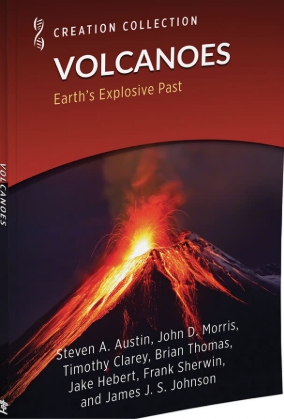
Paperback / $10.00 / 159 Pages / Full colour
Level: Introductory
Sally woke up and lay in bed smiling. It seemed like such a nice day. The chorus “Count your blessings” ran through her mind. “Count your blessings, name them one by one, and it will surprise you what the Lord has done.” Idly she began to count: “Let’s see. The sun is shining, I am healthy and my Mum has a lovely breakfast waiting for me.” Thinking back to yesterday’s science lesson, Sally realized that the sun’s shining is a most amazing blessing. Without that energy coming from the Sun to Earth, no life would be possible here. Of course, her health and the good breakfast waiting for her, also all depend on the fact that energy comes from the Sun. Indeed, all these blessings demonstrate the wonderful works of God. Let’s investigate this issue a little more.
Energy (What is it?)
Energy is the ability to do work. Without energy, nothing happens. It is like a car that won’t start. That car is not going anywhere unless the engine starts to burn fuel and release energy to turn the wheels. In like fashion, without the Sun’s energy continuously arriving on Earth, our globe would be cold and dark with nothing happening at all. But the sunlight does arrive here. It penetrates our atmosphere striking the surface of the globe. Much of the energy is reflected back to warm our atmosphere. Eventually any leftover energy is radiated away from Earth and lost. The point is that energy flows. None remains for another day. We need the continuous arrival of more sunlight to keep our planet livable.
The mere arrival of sunlight to our planet is good, but it does not by itself make life possible. Incoming energy on its own is very destructive/damaging. Leave anything you like out in the sun: books, clothes, food, furniture, whatever. Soon the object fades, cracks and disintegrates. The sun may impact weather patterns and earth’s surface. They will heat up, but the result is always destructive rather than building something new (constructive). What we need is an energy acceptor, something that can store energy (temporarily) and use it to produce useful products.
Earth’s energy acceptor is green plants. An energy acceptor captures energy and uses it to carry out a new task. The mechanism for turning solar (from the sun) energy into a useful form is called photosynthesis. By means of a complicated molecule called chlorophyll (assisted by many even more complicated molecules arranged in fancy structures inside leaf cells), plants are able to capture some solar energy. It strikes plant leaves and turns this energy into chemical energy which makes metabolism (processes of life) possible.
While every surface and material heats up when the sun shines, only plant cells with chlorophyll react to sunshine by changing it into chemical energy which can be used to build new structures.
Metabolism
An amazing number of chemical reactions take place in living cells. We call this phenomenon metabolism. Large organisms are made up of many cells, but what applies to one cell, also applies to large creatures. In order to provide for these fancy reactions in the cell, there are a huge number of miniature complicated structures (molecular machines) inside each cell. In order to develop and maintain these structures, each cell needs lots of chemical energy or food. Animals can obtain food (the necessary energy to maintain life), only from plants or from animals which have eaten plants or other animals. All food and all life depends upon the sun’s rays continuously arriving on Earth to provide the energy needed for photosynthesis to occur.
Metabolism therefore is the total number of chemical reactions that are required to maintain a living cell. There may be hundreds of thousands of such reactions in the cell. All the energy required for metabolism, comes originally from photosynthesis. Some reactions need the input of a lot of energy [endergonic] to force smaller chemical compounds together to make even larger ones. For example, commercial syrup often consists of the simple sugar glucose. Some plant cells take glucose and force the sugar molecules to link in long chains called starch. In this way plants are able to store chemical energy. Organisms that eat these plants, are able to benefit from the energy stored in this starch. When an organism later digests starch into smaller molecules, energy is released [exergonic reaction] which can be used to drive other reactions.
Many reactions in the cell take place only when special molecules called enzymes are involved. Enzymes affect the speed of a reaction but are not themselves changed. Many reactions would not occur at all without the involvement of a specific enzyme. It is evident that the living condition requires huge inputs of energy and fancy systems and structures to enable the cell to use that energy effectively.
The point is that energy arrives on Earth, is used, and is gone. More energy is needed all the time. Thus, we need the Sun to keep shining.
Food pyramid /ecological pyramid
We can picture the energy available for life as consisting of a pyramid structure. The plants contain lots of chemical energy, trapped from the Sun by photosynthesis. We call the plants primary (first) producers. The energy in plants represents the large base of our imaginary pyramid. However not all energy captured by plants in photosynthesis is available for food to animals who want to dine on plants. The plants must use energy to keep themselves alive, and some parts of the plant are definitely not worth consuming. Thus, each time we go up a level in the food pyramid, much of the energy obtained by those initial organisms at first, is not available to sustain the next higher level. The plant grazers like deer are called primary (first) consumers. For the predators (next level up, called secondary consumers) even less energy is available. There may even be tertiary (means third level) consumers (top predators). Obviously, there will be only a few of them since the energy available to them is much less than if they ate plant grazers (primary consumers).
At every level, dead bodies or parts thereof are broken down (decayed) by the decomposers. Formerly living material of plants and animals then ends up back as carbon dioxide, water and other minerals. The decomposers use what energy was left to provide energy for their own life processes.
So, our pyramid displays plants with lots of energy at the bottom level. Grazers with less energy are the second level. Animals that eat the grazers are the next level. They benefit from a lot less of the original amount of energy captured by plants. Lastly top predators contain only a very small amount of the energy originally available in plants. No wonder there are only a few hawks or owls or cougars or whatever. Specifically then, each level of the energy or food pyramid is substantially smaller than the previous or lower level. This makes our pyramid shape.
There are some other words that can be used to describe the levels of the food pyramid. The grazers or plant consumers can also be called herbivores (herb means plant and vor means eater, just as voracious means “very hungry” in English). The organisms that eat other animals can also be called carnivores (meat eaters). Believe it or not, biologists have other words too to describe these levels of the pyramid! The word autotrophic describes organisms that manufacture their own food. Auto means by oneself (like the word automobile which means something that moves on its own without horses) and trophic means growing, so autotrophic means growing without the need for other organisms. The autotrophs are the plants. Alternatively heterotrophic means organisms that are dependent on other organisms for their food. This latter group includes all animals, molds and mushrooms, and decomposing microbes. Molds and mushrooms are also decomposers along with some scavenging animals like vultures and the decomposing microbes.
We obviously need the sun to keep shining, providing us with energy, if we are to continue eating and living.
Energy flow
The sun provides energy by burning tremendous amounts of fuel (hydrogen gas). That energy cannot be stored (except by plants temporarily), but just keeps on coming. So where did that energy in the sun come from in the first place? That is a very good question that a lot of scientists have thought about for a long time. One well known scientist, Paul Davies, declared many years ago: “The universe is like a clock slowly winding down. How did it get wound up in the first place?” [New Scientist November 16, 1978 p. 506] Did the energy just happen to appear by chance or was it created? Dr. Davies says he does not know. But we know that God created energy on the first day when He said “Let there be light.”
Energy Summary
- Energy is the capacity to do work.
- Energy cannot be stored except temporarily by plants. Energy flows, impacting objects and then it is gone.
- The Sun is the source of a lot of energy coming to Earth.
- Paul Davies suggests that the energy we see in the whole universe including the Sun, appeared either by chance or by someone’s supernatural choice. In other words, either energy just appeared, or God made it.
- Photosynthesis provides a mechanism whereby energy can be stored in the short term. If there is no photosynthesis then the only effect of energy arriving is to cause decay and disintegration.
- The energy originally stored in plants is gradually lost as organisms eat each other.
- Among organisms, plants contain the most energy.
- In all living cells, the chemical reactions necessary for life, use up quite a lot of energy.
- Without a fully functioning photosynthesis in plants already present, life on Earth is not possible even if lots of sunshine continuously arrives.
- The Sun’s continuous supply of energy, and plants which sustain our lives, are very important blessings!
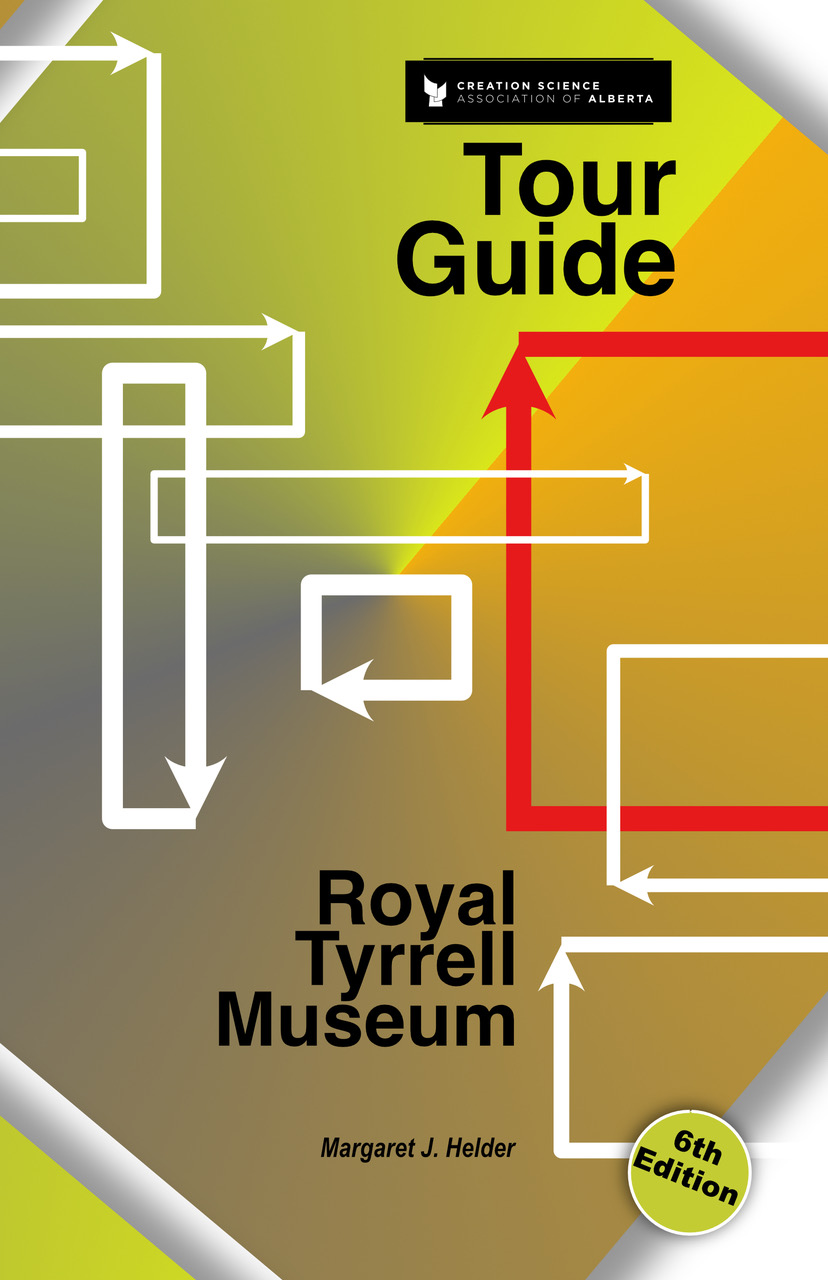
Paperback / $6.00 / 55 Pages
Level: Introductory
Sally woke up and lay in bed smiling. It seemed like such a nice day. The chorus “Count your blessings” ran through her mind. “Count your blessings, name them one by one, and it will surprise you what the Lord has done.” Idly she began to count: “Let’s see. The sun is shining, I am healthy and my Mum has a lovely breakfast waiting for me.” Thinking back to yesterday’s science lesson, Sally realized that the sun’s shining is a most amazing blessing. Without that energy coming from the Sun to Earth, no life would be possible here. Of course, her health and the good breakfast waiting for her, also all depend on the fact that energy comes from the Sun. Indeed, all these blessings demonstrate the wonderful works of God. Let’s investigate this issue a little more.
Energy (What is it?)
Energy is the ability to do work. Without energy, nothing happens. It is like a car that won’t start. That car is not going anywhere unless the engine starts to burn fuel and release energy to turn the wheels. In like fashion, without the Sun’s energy continuously arriving on Earth, our globe would be cold and dark with nothing happening at all. But the sunlight does arrive here. It penetrates our atmosphere striking the surface of the globe. Much of the energy is reflected back to warm our atmosphere. Eventually any leftover energy is radiated away from Earth and lost. The point is that energy flows. None remains for another day. We need the continuous arrival of more sunlight to keep our planet livable.
The mere arrival of sunlight to our planet is good, but it does not by itself make life possible. Incoming energy on its own is very destructive/damaging. Leave anything you like out in the sun: books, clothes, food, furniture, whatever. Soon the object fades, cracks and disintegrates. The sun may impact weather patterns and earth’s surface. They will heat up, but the result is always destructive rather than building something new (constructive). What we need is an energy acceptor, something that can store energy (temporarily) and use it to produce useful products.
Earth’s energy acceptor is green plants. An energy acceptor captures energy and uses it to carry out a new task. The mechanism for turning solar (from the sun) energy into a useful form is called photosynthesis. By means of a complicated molecule called chlorophyll (assisted by many even more complicated molecules arranged in fancy structures inside leaf cells), plants are able to capture some solar energy. It strikes plant leaves and turns this energy into chemical energy which makes metabolism (processes of life) possible.
While every surface and material heats up when the sun shines, only plant cells with chlorophyll react to sunshine by changing it into chemical energy which can be used to build new structures.
Metabolism
An amazing number of chemical reactions take place in living cells. We call this phenomenon metabolism. Large organisms are made up of many cells, but what applies to one cell, also applies to large creatures. In order to provide for these fancy reactions in the cell, there are a huge number of miniature complicated structures (molecular machines) inside each cell. In order to develop and maintain these structures, each cell needs lots of chemical energy or food. Animals can obtain food (the necessary energy to maintain life), only from plants or from animals which have eaten plants or other animals. All food and all life depends upon the sun’s rays continuously arriving on Earth to provide the energy needed for photosynthesis to occur.
Metabolism therefore is the total number of chemical reactions that are required to maintain a living cell. There may be hundreds of thousands of such reactions in the cell. All the energy required for metabolism, comes originally from photosynthesis. Some reactions need the input of a lot of energy [endergonic] to force smaller chemical compounds together to make even larger ones. For example, commercial syrup often consists of the simple sugar glucose. Some plant cells take glucose and force the sugar molecules to link in long chains called starch. In this way plants are able to store chemical energy. Organisms that eat these plants, are able to benefit from the energy stored in this starch. When an organism later digests starch into smaller molecules, energy is released [exergonic reaction] which can be used to drive other reactions.
Many reactions in the cell take place only when special molecules called enzymes are involved. Enzymes affect the speed of a reaction but are not themselves changed. Many reactions would not occur at all without the involvement of a specific enzyme. It is evident that the living condition requires huge inputs of energy and fancy systems and structures to enable the cell to use that energy effectively.
The point is that energy arrives on Earth, is used, and is gone. More energy is needed all the time. Thus, we need the Sun to keep shining.
Food pyramid /ecological pyramid
We can picture the energy available for life as consisting of a pyramid structure. The plants contain lots of chemical energy, trapped from the Sun by photosynthesis. We call the plants primary (first) producers. The energy in plants represents the large base of our imaginary pyramid. However not all energy captured by plants in photosynthesis is available for food to animals who want to dine on plants. The plants must use energy to keep themselves alive, and some parts of the plant are definitely not worth consuming. Thus, each time we go up a level in the food pyramid, much of the energy obtained by those initial organisms at first, is not available to sustain the next higher level. The plant grazers like deer are called primary (first) consumers. For the predators (next level up, called secondary consumers) even less energy is available. There may even be tertiary (means third level) consumers (top predators). Obviously, there will be only a few of them since the energy available to them is much less than if they ate plant grazers (primary consumers).
At every level, dead bodies or parts thereof are broken down (decayed) by the decomposers. Formerly living material of plants and animals then ends up back as carbon dioxide, water and other minerals. The decomposers use what energy was left to provide energy for their own life processes.
So, our pyramid displays plants with lots of energy at the bottom level. Grazers with less energy are the second level. Animals that eat the grazers are the next level. They benefit from a lot less of the original amount of energy captured by plants. Lastly top predators contain only a very small amount of the energy originally available in plants. No wonder there are only a few hawks or owls or cougars or whatever. Specifically then, each level of the energy or food pyramid is substantially smaller than the previous or lower level. This makes our pyramid shape.
There are some other words that can be used to describe the levels of the food pyramid. The grazers or plant consumers can also be called herbivores (herb means plant and vor means eater, just as voracious means “very hungry” in English). The organisms that eat other animals can also be called carnivores (meat eaters). Believe it or not, biologists have other words too to describe these levels of the pyramid! The word autotrophic describes organisms that manufacture their own food. Auto means by oneself (like the word automobile which means something that moves on its own without horses) and trophic means growing, so autotrophic means growing without the need for other organisms. The autotrophs are the plants. Alternatively heterotrophic means organisms that are dependent on other organisms for their food. This latter group includes all animals, molds and mushrooms, and decomposing microbes. Molds and mushrooms are also decomposers along with some scavenging animals like vultures and the decomposing microbes.
We obviously need the sun to keep shining, providing us with energy, if we are to continue eating and living.
Energy flow
The sun provides energy by burning tremendous amounts of fuel (hydrogen gas). That energy cannot be stored (except by plants temporarily), but just keeps on coming. So where did that energy in the sun come from in the first place? That is a very good question that a lot of scientists have thought about for a long time. One well known scientist, Paul Davies, declared many years ago: “The universe is like a clock slowly winding down. How did it get wound up in the first place?” [New Scientist November 16, 1978 p. 506] Did the energy just happen to appear by chance or was it created? Dr. Davies says he does not know. But we know that God created energy on the first day when He said “Let there be light.”
Energy Summary
- Energy is the capacity to do work.
- Energy cannot be stored except temporarily by plants. Energy flows, impacting objects and then it is gone.
- The Sun is the source of a lot of energy coming to Earth.
- Paul Davies suggests that the energy we see in the whole universe including the Sun, appeared either by chance or by someone’s supernatural choice. In other words, either energy just appeared, or God made it.
- Photosynthesis provides a mechanism whereby energy can be stored in the short term. If there is no photosynthesis then the only effect of energy arriving is to cause decay and disintegration.
- The energy originally stored in plants is gradually lost as organisms eat each other.
- Among organisms, plants contain the most energy.
- In all living cells, the chemical reactions necessary for life, use up quite a lot of energy.
- Without a fully functioning photosynthesis in plants already present, life on Earth is not possible even if lots of sunshine continuously arrives.
- The Sun’s continuous supply of energy, and plants which sustain our lives, are very important blessings!
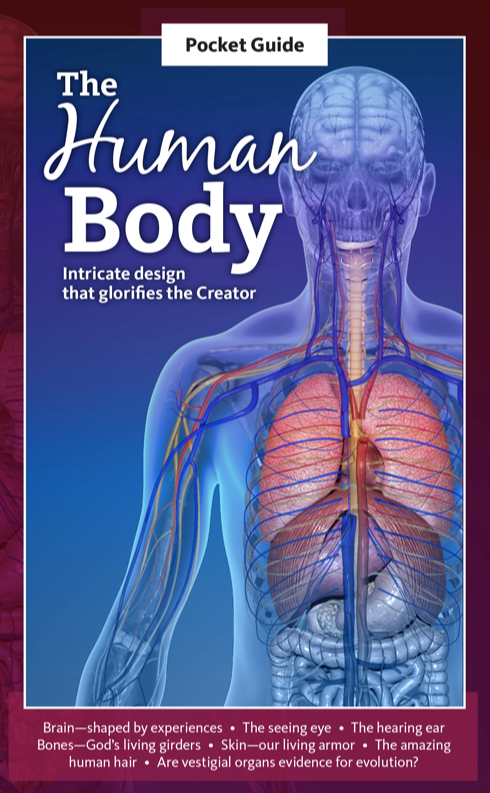
Paperback / $6.00 / 96 Pages / full colour
Level: Introductory
Sally woke up and lay in bed smiling. It seemed like such a nice day. The chorus “Count your blessings” ran through her mind. “Count your blessings, name them one by one, and it will surprise you what the Lord has done.” Idly she began to count: “Let’s see. The sun is shining, I am healthy and my Mum has a lovely breakfast waiting for me.” Thinking back to yesterday’s science lesson, Sally realized that the sun’s shining is a most amazing blessing. Without that energy coming from the Sun to Earth, no life would be possible here. Of course, her health and the good breakfast waiting for her, also all depend on the fact that energy comes from the Sun. Indeed, all these blessings demonstrate the wonderful works of God. Let’s investigate this issue a little more.
Energy (What is it?)
Energy is the ability to do work. Without energy, nothing happens. It is like a car that won’t start. That car is not going anywhere unless the engine starts to burn fuel and release energy to turn the wheels. In like fashion, without the Sun’s energy continuously arriving on Earth, our globe would be cold and dark with nothing happening at all. But the sunlight does arrive here. It penetrates our atmosphere striking the surface of the globe. Much of the energy is reflected back to warm our atmosphere. Eventually any leftover energy is radiated away from Earth and lost. The point is that energy flows. None remains for another day. We need the continuous arrival of more sunlight to keep our planet livable.
The mere arrival of sunlight to our planet is good, but it does not by itself make life possible. Incoming energy on its own is very destructive/damaging. Leave anything you like out in the sun: books, clothes, food, furniture, whatever. Soon the object fades, cracks and disintegrates. The sun may impact weather patterns and earth’s surface. They will heat up, but the result is always destructive rather than building something new (constructive). What we need is an energy acceptor, something that can store energy (temporarily) and use it to produce useful products.
Earth’s energy acceptor is green plants. An energy acceptor captures energy and uses it to carry out a new task. The mechanism for turning solar (from the sun) energy into a useful form is called photosynthesis. By means of a complicated molecule called chlorophyll (assisted by many even more complicated molecules arranged in fancy structures inside leaf cells), plants are able to capture some solar energy. It strikes plant leaves and turns this energy into chemical energy which makes metabolism (processes of life) possible.
While every surface and material heats up when the sun shines, only plant cells with chlorophyll react to sunshine by changing it into chemical energy which can be used to build new structures.
Metabolism
An amazing number of chemical reactions take place in living cells. We call this phenomenon metabolism. Large organisms are made up of many cells, but what applies to one cell, also applies to large creatures. In order to provide for these fancy reactions in the cell, there are a huge number of miniature complicated structures (molecular machines) inside each cell. In order to develop and maintain these structures, each cell needs lots of chemical energy or food. Animals can obtain food (the necessary energy to maintain life), only from plants or from animals which have eaten plants or other animals. All food and all life depends upon the sun’s rays continuously arriving on Earth to provide the energy needed for photosynthesis to occur.
Metabolism therefore is the total number of chemical reactions that are required to maintain a living cell. There may be hundreds of thousands of such reactions in the cell. All the energy required for metabolism, comes originally from photosynthesis. Some reactions need the input of a lot of energy [endergonic] to force smaller chemical compounds together to make even larger ones. For example, commercial syrup often consists of the simple sugar glucose. Some plant cells take glucose and force the sugar molecules to link in long chains called starch. In this way plants are able to store chemical energy. Organisms that eat these plants, are able to benefit from the energy stored in this starch. When an organism later digests starch into smaller molecules, energy is released [exergonic reaction] which can be used to drive other reactions.
Many reactions in the cell take place only when special molecules called enzymes are involved. Enzymes affect the speed of a reaction but are not themselves changed. Many reactions would not occur at all without the involvement of a specific enzyme. It is evident that the living condition requires huge inputs of energy and fancy systems and structures to enable the cell to use that energy effectively.
The point is that energy arrives on Earth, is used, and is gone. More energy is needed all the time. Thus, we need the Sun to keep shining.
Food pyramid /ecological pyramid
We can picture the energy available for life as consisting of a pyramid structure. The plants contain lots of chemical energy, trapped from the Sun by photosynthesis. We call the plants primary (first) producers. The energy in plants represents the large base of our imaginary pyramid. However not all energy captured by plants in photosynthesis is available for food to animals who want to dine on plants. The plants must use energy to keep themselves alive, and some parts of the plant are definitely not worth consuming. Thus, each time we go up a level in the food pyramid, much of the energy obtained by those initial organisms at first, is not available to sustain the next higher level. The plant grazers like deer are called primary (first) consumers. For the predators (next level up, called secondary consumers) even less energy is available. There may even be tertiary (means third level) consumers (top predators). Obviously, there will be only a few of them since the energy available to them is much less than if they ate plant grazers (primary consumers).
At every level, dead bodies or parts thereof are broken down (decayed) by the decomposers. Formerly living material of plants and animals then ends up back as carbon dioxide, water and other minerals. The decomposers use what energy was left to provide energy for their own life processes.
So, our pyramid displays plants with lots of energy at the bottom level. Grazers with less energy are the second level. Animals that eat the grazers are the next level. They benefit from a lot less of the original amount of energy captured by plants. Lastly top predators contain only a very small amount of the energy originally available in plants. No wonder there are only a few hawks or owls or cougars or whatever. Specifically then, each level of the energy or food pyramid is substantially smaller than the previous or lower level. This makes our pyramid shape.
There are some other words that can be used to describe the levels of the food pyramid. The grazers or plant consumers can also be called herbivores (herb means plant and vor means eater, just as voracious means “very hungry” in English). The organisms that eat other animals can also be called carnivores (meat eaters). Believe it or not, biologists have other words too to describe these levels of the pyramid! The word autotrophic describes organisms that manufacture their own food. Auto means by oneself (like the word automobile which means something that moves on its own without horses) and trophic means growing, so autotrophic means growing without the need for other organisms. The autotrophs are the plants. Alternatively heterotrophic means organisms that are dependent on other organisms for their food. This latter group includes all animals, molds and mushrooms, and decomposing microbes. Molds and mushrooms are also decomposers along with some scavenging animals like vultures and the decomposing microbes.
We obviously need the sun to keep shining, providing us with energy, if we are to continue eating and living.
Energy flow
The sun provides energy by burning tremendous amounts of fuel (hydrogen gas). That energy cannot be stored (except by plants temporarily), but just keeps on coming. So where did that energy in the sun come from in the first place? That is a very good question that a lot of scientists have thought about for a long time. One well known scientist, Paul Davies, declared many years ago: “The universe is like a clock slowly winding down. How did it get wound up in the first place?” [New Scientist November 16, 1978 p. 506] Did the energy just happen to appear by chance or was it created? Dr. Davies says he does not know. But we know that God created energy on the first day when He said “Let there be light.”
Energy Summary
- Energy is the capacity to do work.
- Energy cannot be stored except temporarily by plants. Energy flows, impacting objects and then it is gone.
- The Sun is the source of a lot of energy coming to Earth.
- Paul Davies suggests that the energy we see in the whole universe including the Sun, appeared either by chance or by someone’s supernatural choice. In other words, either energy just appeared, or God made it.
- Photosynthesis provides a mechanism whereby energy can be stored in the short term. If there is no photosynthesis then the only effect of energy arriving is to cause decay and disintegration.
- The energy originally stored in plants is gradually lost as organisms eat each other.
- Among organisms, plants contain the most energy.
- In all living cells, the chemical reactions necessary for life, use up quite a lot of energy.
- Without a fully functioning photosynthesis in plants already present, life on Earth is not possible even if lots of sunshine continuously arrives.
- The Sun’s continuous supply of energy, and plants which sustain our lives, are very important blessings!
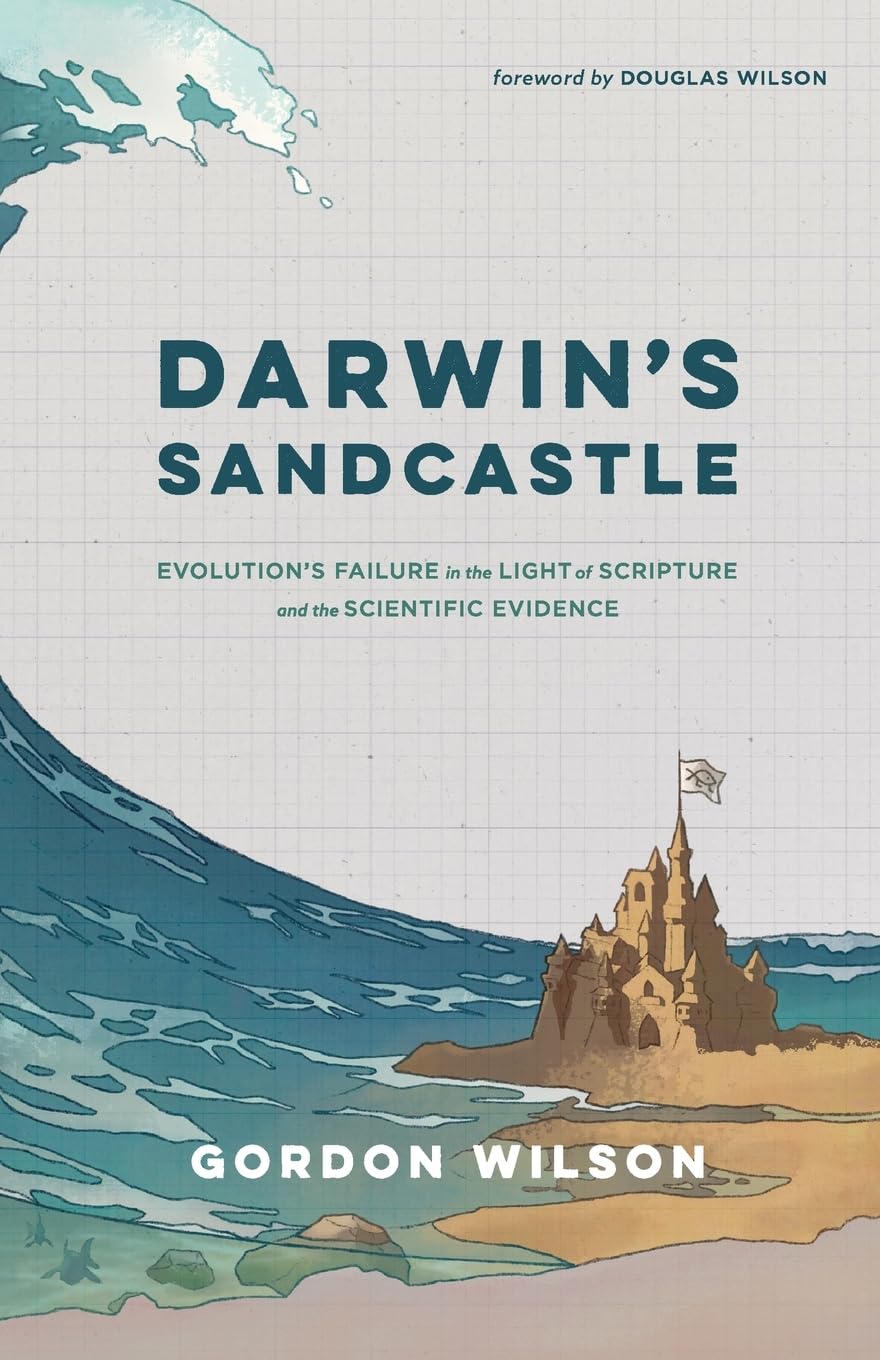
Paperback / $22.00 / 256 Pages
Level: Introductory
Sally woke up and lay in bed smiling. It seemed like such a nice day. The chorus “Count your blessings” ran through her mind. “Count your blessings, name them one by one, and it will surprise you what the Lord has done.” Idly she began to count: “Let’s see. The sun is shining, I am healthy and my Mum has a lovely breakfast waiting for me.” Thinking back to yesterday’s science lesson, Sally realized that the sun’s shining is a most amazing blessing. Without that energy coming from the Sun to Earth, no life would be possible here. Of course, her health and the good breakfast waiting for her, also all depend on the fact that energy comes from the Sun. Indeed, all these blessings demonstrate the wonderful works of God. Let’s investigate this issue a little more.
Energy (What is it?)
Energy is the ability to do work. Without energy, nothing happens. It is like a car that won’t start. That car is not going anywhere unless the engine starts to burn fuel and release energy to turn the wheels. In like fashion, without the Sun’s energy continuously arriving on Earth, our globe would be cold and dark with nothing happening at all. But the sunlight does arrive here. It penetrates our atmosphere striking the surface of the globe. Much of the energy is reflected back to warm our atmosphere. Eventually any leftover energy is radiated away from Earth and lost. The point is that energy flows. None remains for another day. We need the continuous arrival of more sunlight to keep our planet livable.
The mere arrival of sunlight to our planet is good, but it does not by itself make life possible. Incoming energy on its own is very destructive/damaging. Leave anything you like out in the sun: books, clothes, food, furniture, whatever. Soon the object fades, cracks and disintegrates. The sun may impact weather patterns and earth’s surface. They will heat up, but the result is always destructive rather than building something new (constructive). What we need is an energy acceptor, something that can store energy (temporarily) and use it to produce useful products.
Earth’s energy acceptor is green plants. An energy acceptor captures energy and uses it to carry out a new task. The mechanism for turning solar (from the sun) energy into a useful form is called photosynthesis. By means of a complicated molecule called chlorophyll (assisted by many even more complicated molecules arranged in fancy structures inside leaf cells), plants are able to capture some solar energy. It strikes plant leaves and turns this energy into chemical energy which makes metabolism (processes of life) possible.
While every surface and material heats up when the sun shines, only plant cells with chlorophyll react to sunshine by changing it into chemical energy which can be used to build new structures.
Metabolism
An amazing number of chemical reactions take place in living cells. We call this phenomenon metabolism. Large organisms are made up of many cells, but what applies to one cell, also applies to large creatures. In order to provide for these fancy reactions in the cell, there are a huge number of miniature complicated structures (molecular machines) inside each cell. In order to develop and maintain these structures, each cell needs lots of chemical energy or food. Animals can obtain food (the necessary energy to maintain life), only from plants or from animals which have eaten plants or other animals. All food and all life depends upon the sun’s rays continuously arriving on Earth to provide the energy needed for photosynthesis to occur.
Metabolism therefore is the total number of chemical reactions that are required to maintain a living cell. There may be hundreds of thousands of such reactions in the cell. All the energy required for metabolism, comes originally from photosynthesis. Some reactions need the input of a lot of energy [endergonic] to force smaller chemical compounds together to make even larger ones. For example, commercial syrup often consists of the simple sugar glucose. Some plant cells take glucose and force the sugar molecules to link in long chains called starch. In this way plants are able to store chemical energy. Organisms that eat these plants, are able to benefit from the energy stored in this starch. When an organism later digests starch into smaller molecules, energy is released [exergonic reaction] which can be used to drive other reactions.
Many reactions in the cell take place only when special molecules called enzymes are involved. Enzymes affect the speed of a reaction but are not themselves changed. Many reactions would not occur at all without the involvement of a specific enzyme. It is evident that the living condition requires huge inputs of energy and fancy systems and structures to enable the cell to use that energy effectively.
The point is that energy arrives on Earth, is used, and is gone. More energy is needed all the time. Thus, we need the Sun to keep shining.
Food pyramid /ecological pyramid
We can picture the energy available for life as consisting of a pyramid structure. The plants contain lots of chemical energy, trapped from the Sun by photosynthesis. We call the plants primary (first) producers. The energy in plants represents the large base of our imaginary pyramid. However not all energy captured by plants in photosynthesis is available for food to animals who want to dine on plants. The plants must use energy to keep themselves alive, and some parts of the plant are definitely not worth consuming. Thus, each time we go up a level in the food pyramid, much of the energy obtained by those initial organisms at first, is not available to sustain the next higher level. The plant grazers like deer are called primary (first) consumers. For the predators (next level up, called secondary consumers) even less energy is available. There may even be tertiary (means third level) consumers (top predators). Obviously, there will be only a few of them since the energy available to them is much less than if they ate plant grazers (primary consumers).
At every level, dead bodies or parts thereof are broken down (decayed) by the decomposers. Formerly living material of plants and animals then ends up back as carbon dioxide, water and other minerals. The decomposers use what energy was left to provide energy for their own life processes.
So, our pyramid displays plants with lots of energy at the bottom level. Grazers with less energy are the second level. Animals that eat the grazers are the next level. They benefit from a lot less of the original amount of energy captured by plants. Lastly top predators contain only a very small amount of the energy originally available in plants. No wonder there are only a few hawks or owls or cougars or whatever. Specifically then, each level of the energy or food pyramid is substantially smaller than the previous or lower level. This makes our pyramid shape.
There are some other words that can be used to describe the levels of the food pyramid. The grazers or plant consumers can also be called herbivores (herb means plant and vor means eater, just as voracious means “very hungry” in English). The organisms that eat other animals can also be called carnivores (meat eaters). Believe it or not, biologists have other words too to describe these levels of the pyramid! The word autotrophic describes organisms that manufacture their own food. Auto means by oneself (like the word automobile which means something that moves on its own without horses) and trophic means growing, so autotrophic means growing without the need for other organisms. The autotrophs are the plants. Alternatively heterotrophic means organisms that are dependent on other organisms for their food. This latter group includes all animals, molds and mushrooms, and decomposing microbes. Molds and mushrooms are also decomposers along with some scavenging animals like vultures and the decomposing microbes.
We obviously need the sun to keep shining, providing us with energy, if we are to continue eating and living.
Energy flow
The sun provides energy by burning tremendous amounts of fuel (hydrogen gas). That energy cannot be stored (except by plants temporarily), but just keeps on coming. So where did that energy in the sun come from in the first place? That is a very good question that a lot of scientists have thought about for a long time. One well known scientist, Paul Davies, declared many years ago: “The universe is like a clock slowly winding down. How did it get wound up in the first place?” [New Scientist November 16, 1978 p. 506] Did the energy just happen to appear by chance or was it created? Dr. Davies says he does not know. But we know that God created energy on the first day when He said “Let there be light.”
Energy Summary
- Energy is the capacity to do work.
- Energy cannot be stored except temporarily by plants. Energy flows, impacting objects and then it is gone.
- The Sun is the source of a lot of energy coming to Earth.
- Paul Davies suggests that the energy we see in the whole universe including the Sun, appeared either by chance or by someone’s supernatural choice. In other words, either energy just appeared, or God made it.
- Photosynthesis provides a mechanism whereby energy can be stored in the short term. If there is no photosynthesis then the only effect of energy arriving is to cause decay and disintegration.
- The energy originally stored in plants is gradually lost as organisms eat each other.
- Among organisms, plants contain the most energy.
- In all living cells, the chemical reactions necessary for life, use up quite a lot of energy.
- Without a fully functioning photosynthesis in plants already present, life on Earth is not possible even if lots of sunshine continuously arrives.
- The Sun’s continuous supply of energy, and plants which sustain our lives, are very important blessings!