

Introductory



The 2017 award of the Nobel Prize in physiology and medicine to three Americans, Michael Rosbash, Jeffrey Hall and Michael Young, has served to stimulate our interest in a phenomenon that is actually well-known. We all know why people get hungry about the same time of day, or wake up about the same time, or suffer from jet-lag. It is because of biological clocks. So what was so special about the work of these three scientists? The story actually goes back to 1729! Read the rest of this entry »
Have you ever discovered something new, like a new recipe, a new and better way to carry out a task, or a new object in the sky? Whether you have invented a device which will make you rich, or whether you have identified a new phenomenon in nature, the joy of discovery is a reward in itself. When it comes to identifying new organisms, many people have turned their attention to the rain forest. New plants and new animals, often insects, are routinely described from that part of the world. Deep sea divers have also encountered some very strange creatures from the ocean depths. The sea between Denmark and Sweden, however has been fished for many centuries. We would not expect to find any new creatures in those cold waters, would we? Read the rest of this entry »
As a rule, scientists seek answers. They want to answer the “why” questions. Why, for example, are plants green? Why is blood red? These are very simple queries compared to the biggies like why does quantum physics work. Nevertheless, believe it or not , we are as far from answering why chlorophyll is green, and blood cells are red, as we are from explaining quantum mechanics. Two commentators in fact recently termed the reason blood is red a “visual pun of molecular wit.” (Morrison and Morrison. 1998. Scientific American. March p. 106) The explanation for colour in chlorophyll is similarly obscure. The situation becomes even more interesting when we discover that chlorophyll and the heme component of hemoglobin are chemically extremely similar . Read the rest of this entry »

Some things in nature are so unexpected that our reaction can only be one of wonder or amazement. Did you know that some plants, innocent in appearance, but vicious in character, lurk in ponds throughout the world? These plants attract, catch and eat aquatic insects, water fleas and young tadpoles, fish fry, tiny worms and very young insect larvae including mosquito wrigglers. Read the rest of this entry »
Paperback / $8.00 / 63 Pages / full colour
Constructing Solid Arguments for Design
The author demonstrates why the idea of design is so important to a Christian worldview. Evolutionists of course deny that anything was designed, because otherwise a designer would be required. The author uses engineering concepts and other arguments to show that the key features of organisms did not just appear, but they were carefully chosen to fill a need. Recommended for high school and adult readers.
Have you ever read The Enormous Crocodile by Roald Dahl? It is such a fun story! Even grown ups laugh about this nasty scheming reptile who keeps devising new and ingenious ways to catch children for his supper. He describes his schemes as “secret plans and clever tricks.” Various jungle animals however foil each sneaky plan and the nasty croc eventually gets launched by an elephant into outer space. Read the rest of this entry »
Imagine a June evening in south central Canada or the nearby United States. As dusk deepens, tiny dots of light appear on bushes, grass or in the air. The tiny lights seem to flash in code. These remarkable lights are fireflies. The more we learn about these insects, the more amazing they appear. This is certainly not a case of familiarity breeding contempt. Adult fireflies are beetles, but unusual beetles. They possess the ability to produce light within their bodies. The adult phase, which many of us have seen, is short and spectacular. Most adult fireflies last only a few days and their principal purpose is to reproduce. Read the rest of this entry »

Dr. Gordon Wilson featured speaker at Creation Weekend October 2023
October 27 and 28, 2023
Edmonton, Alberta
Meadowlands Baptist Church
Many people love The Riot and the Dance cinematic celebrations of the creation. Dr. Gordon Wilson is the biologist and narrator of these films. Naturally these wonderful programs call our attention to only a small number of interesting stories from nature. But Dr. Wilson has a great store of interesting discussions on the significance of what nature displays! In his presentations he provides insights on the life cycles, diversity, and relationships of living creatures while at the same time acknowledging the impact of natural evil, a result of God’s curse after the fall of man, which results in predators, parasites and disease impacting all creatures.
Read the rest of this entry »When I say I’m young, people laugh! Well, I am young, compared to lots of things: the pyramids of Egypt, for example. Whether an object or person is young or old, you see, depends upon what you are comparing. Even thousands of years can be young in the right context. For example, I read recently in Scientific American that the rings of the planet Saturn are “young”. In that case, astronomers were not comparing these rings to the ages of any of us living today, but rather to evolutionary ideas about the solar system. Most astronomers imagine that the solar system is billions of years old. However the ring systems around several planets in our solar system may be only “several thousand years” (Joseph Burns et al. 2002. Scientific American 286 #2 p. 73). That’s a huge difference. But why do we care? What do several zeros (or not) at the end of a number matter anyway? The problem for secular scientists is to explain how young rings came to be around “old” planets. The alternative, of course, is to conclude that both the planets and the rings are young. Read the rest of this entry »
Every year, it seems, we hear about anniversaries, some obscure and some more significant. But 2019 is big!! It is the 150th anniversary of a major step forward in our understanding of the chemical elements. In March 1869, Dimitri Mendeleev, an obscure Russian scientist, managed to explain chemistry in a way that made sense. Thus, UNESCO has designated the year 2019 as the Year of the Periodic Table of the elements. Some people consider that this single document is one of the most powerful icons in science. Read the rest of this entry »
A friend, a while ago, articulated some possible critical arguments concerning advocacy for young earth creation which are based on observations from nature. Here are some reflections on that conversation. Read the rest of this entry »
Paperback / $6.00 / 31 Pages / full colour
After a brief introduction to the scientific flaws in evolutionary theory, the author shows the importance of creation to Biblical doctrine and how all this affects morality and evangelism.
November 13, 2004, a beautiful fall morning, found me driving south to Red Deer to hear John McKay of Australia. He has been described as a veteran creation geology expert and a walking encyclopedia of creation knowledge. With accolades like that, I was excited about this opportunity to learn. This man’s father was a Scottish lawyer, so he joked that he learned how to argue while very young. Read the rest of this entry »
What a glorious occasion it was. On Tuesday, November 9th, I had the opportunity to hear Dr. Vij Sodera, a surgeon from the United Kingdom, speak on “Human Fossils: the myth of evolution from apes.”
As a medical doctor, Vij Sodera compared various skeletons that have been found, and concluded there is no evidence for evolution. The artifacts represent either apes or humans, but there are no missing links or transitional forms. Of special interest to me were two aspects of the discussion: one on skulls and the other on feet. Read the rest of this entry »
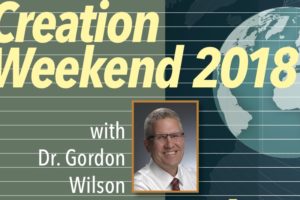
Creation Weekend 2018 October 26 & 27
The Creation Science Association of Alberta is excited that our featured speaker for Creation Weekend 2018 is Dr. Gordon Wilson of New St. Andrews College in Moscow, Idaho. Dr. Wilson’s enthusiasm for biology is infectious and the topics which he will present are ones that are very relevant to our lives as Christians today.
FEATURED BOOKS AND DVDS
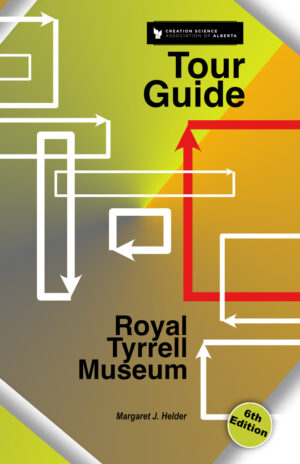
Paperback / $6.00 / 55 Pages
Creation Weekend 2018 October 26 & 27
The Creation Science Association of Alberta is excited that our featured speaker for Creation Weekend 2018 is Dr. Gordon Wilson of New St. Andrews College in Moscow, Idaho. Dr. Wilson’s enthusiasm for biology is infectious and the topics which he will present are ones that are very relevant to our lives as Christians today.
Order Online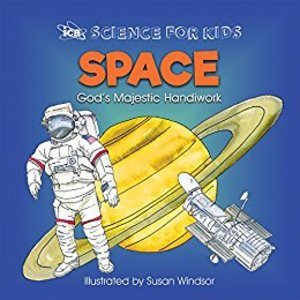
Paperback / $10.00 / 111 Pages / full colour
Creation Weekend 2018 October 26 & 27
The Creation Science Association of Alberta is excited that our featured speaker for Creation Weekend 2018 is Dr. Gordon Wilson of New St. Andrews College in Moscow, Idaho. Dr. Wilson’s enthusiasm for biology is infectious and the topics which he will present are ones that are very relevant to our lives as Christians today.
Order Online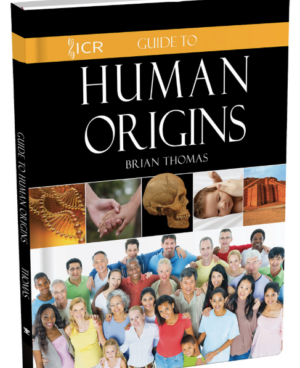
Hardcover / $18.00 / 117 Pages / Full colour
Creation Weekend 2018 October 26 & 27
The Creation Science Association of Alberta is excited that our featured speaker for Creation Weekend 2018 is Dr. Gordon Wilson of New St. Andrews College in Moscow, Idaho. Dr. Wilson’s enthusiasm for biology is infectious and the topics which he will present are ones that are very relevant to our lives as Christians today.
Order Online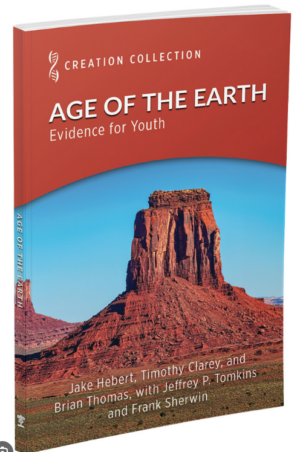
Paperback / $10.00 / 192 Pages / Full colour
Creation Weekend 2018 October 26 & 27
The Creation Science Association of Alberta is excited that our featured speaker for Creation Weekend 2018 is Dr. Gordon Wilson of New St. Andrews College in Moscow, Idaho. Dr. Wilson’s enthusiasm for biology is infectious and the topics which he will present are ones that are very relevant to our lives as Christians today.
Order Online