

Intermediate
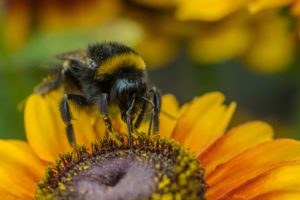

An interesting article appeared recently in the journal Science that suggested that bumble bees have solved a problem that plant physiologists have been working on for one hundred years! It was in 1920 that plant physiologists Wightman W. Garner (1875-1956) and Harry A. Allard (1880-1963), while working with tobacco and flowering cosmos, discovered that the correct length of day is essential for the onset of flowering in these plants. They named the phenomenon “photoperiodism,” and it is an extremely important control on the beginning of the flowering process in many plants. Read the rest of this entry »

The media are full of accounts of how people have used their unexpected “down time” at home during the COVID pandemic. What we chose, be it bread baking or house-cleaning or crafts or whatever, obviously reflected personal preference. As far as I was concerned, this time was a golden opportunity to do some extra scientific reading. It all began with an article in Nature that promoted an ancestral relationship for red seaweeds with an organism that was the exact opposite of all the features in red seaweeds. Perhaps I lack imagination but I could not believe that this prestigious journal had indeed published such an argument. It seemed hilarious to me. Read the rest of this entry »

I remember suggesting to one of my professors, when I was at university, that a certain course would be a waste of my time since I had already studied that topic. He suggested that there might be more to learn and he was right, of course. In fact, there is always more to learn on any topic. That is why we hear so much about life-long learning. We don’t want to atrophy (dry up) mentally or physically. It is important to keep developing our skills.
Naturally in everything we learn, we have to be cautious. We don’t want to plant desert-loving plants in a wet area of the garden, or do stretches the wrong way, nor do we want to acquiesce to wrong interpretations in science, or history or philosophy or whatever. This does not mean we stop reading! What it means is that we apply critical thinking skills to our various pursuits. Read the rest of this entry »
I remember hearing a biologist from Bristol in England. He was talking about his studies on diatoms (algae with glass walls). He described how he set out to study the activities of these cells on the nearby seashore. To collect the diatoms, he said, he used English toilet paper which was scratchy and impervious to water. The English students laughed uproariously at this. The Canadians, sitting straight-faced, did not realize this was a joke! At any rate what he found was that the algae emerged from below the sand surface during low tide in the day, but they then moved back under the sand before the tides returned at a different time every day. This is the kind of timekeeping ability in organisms that biologists were beginning to study. There were studies on people living alone in dark caves, studies on algae that glow in the dark, and fruit flies that emerge from the pupa at a certain time of day. How do they keep track of time? Read the rest of this entry »

For many years, evolutionists have claimed that the bulk of the human genome is junk, debris left over from long periods of evolution. These people should rather have asked what was the function of these long stretches of non-coding DNA (about 97%). Recent research such as the Human Genome Project (HGP) has vindicated those who rejected the junk DNA idea and the insights keep on coming! Read the rest of this entry »
There is no doubt that we are all tired of hearing about viruses! However, they actually do demonstrate some interesting features when we look at them more closely. These submicroscopic particles can reproduce themselves only inside a living cell. All life forms are susceptible to attack by at least one kind of virus. Basically, a virus consists of a protective protein coat with genetic information (RNA or DNA) enclosed inside. In that viruses commandeer the life processes of a cell which they have invaded, they tend not to need a lot of genetic information. Mainly their information deals with how to synthesize the protein coat and any associated molecular machines for packaging the genetic material into the protein capsid (coat). Read the rest of this entry »
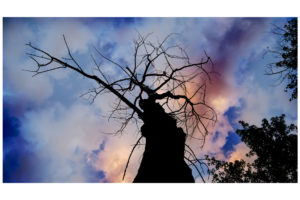
There is no doubt that we are drawn to organization that involves hierarchy. Carl Linnaeus (1707-1778) famously devised a scheme for plant classification according to their reproductive characteristics. He established the idea of grouping organisms into a hierarchy of progressively shared traits. In his Systema naturae (1735) Linnaeus decreed that this logical organization of living things should involve increasingly larger categories. Thus, all similar individuals would be members of a species, similar species could be lumped into a genus. Similar genera were clumped into a family, similar families into an order, similar orders into a class, similar classes into a phylum or division. These groups were supposed to be exclusive. An organism was supposed to be a member of only one group. In Linnaeus’ view, this logical arrangement of organisms reflected God’s character and wisdom.
But all that changed with Darwin. Read the rest of this entry »

HeadStart is a completely new tool available for high school students and their teachers (and postsecondary students). Written and developed by the Creation Science Association of Alberta, this tool is free and easily accessed. Check it out at www.create.ab.ca/headstart
Many people recognize that it is a privilege to learn about God, the Creator and his Creation. That is why, besides observing the natural environment in which we find ourselves, it is a pleasure to go beyond mere observations to discover how things work and why. Most young people undertake to study some science, at least at the high school level. But there is a problem, most programs of study include a lot of evolutionary concepts that point away from God and his work. Even seemingly innocent terms like microevolution, convergence, nucleus, fossil record and plant biology are loaded with evolutionary concepts. However, these phenomena themselves actually point overwhelmingly to the work of God, the Creator as described in Genesis and throughout the Bible. It was to communicate this message, that HeadStart was developed.
Read the rest of this entry »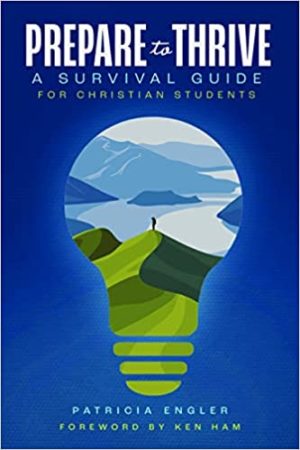
Paperback / $12.00 / 295 Pages / line drawings
There are young adults all over the continent who are anxious to survive their studies in postsecondary institutions with faith intact. Patricia Engler is someone who succeeded in this endeavour. She shares her experiences and advice with us all. Her upbeat tone and practical advice cannot fail to encourage everyone.
Order Online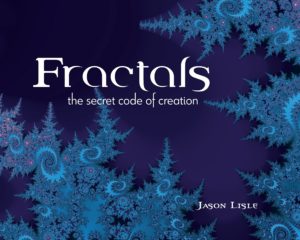
Paperback / $35.00 / 216 Pages / Full colour
This us an exceptionally interesting and beautiful book. Anyone who enjoys interesting new ideas, beautiful patterns and mathematics, will certainly want a copy of this book. You will be surprised how commonly fractals can be found in nature. Another testimony to the wonders of Creation!

DVD / $12.00 / 48 Minutes
Fractals are amazingly beautiful images built up by patterns which repeat themselves at larger and larger scales. Plotted from some obscure mathematical equations, these patterns reflect the infinitely complex and inexpressibly powerful mind of the Creator. If you like mathematics or just plain beauty, you will love this DVD!
Order Online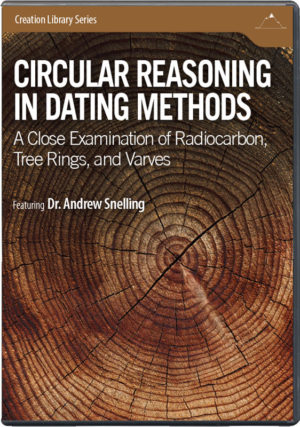
DVD / $15.00 / 74 Minutes
A Close Examination of Radiocarbon, Tree Rings and Varves – Most people think about C14 (carbon fourteen) dating when they wonder about radiometric dating methods. Since the issues with carbon fourteen dating are different from issues in dating rocks, this DVD presents a timely discussion of carbon dating which can involve how long-ago certain creatures lived.
Order OnlineIn high school biology courses, it soon became apparent to Angie that among her fellow Christians, there was a diversity of opinions about origins. So, she consulted the HeadStart program about the impact of world views on the relationship between faith and science. She read information on the gap theory, the day age theory, the framework hypothesis, theistic evolution, neo-Darwinism, methodological naturalism, intelligent design and creation. Now she better appreciates why this whole website is devoted to creation.
Read the rest of this entry »
Patricia Engler has written a most helpful and inspiring book to help post-secondary students, and in fact everybody, deal with a constant barrage of secular messages, especially in science. Her objective, and hopefully the objective of all of us, is to “know, defend and live out the truth of God’s Word.” Her book is aimed specifically at the post-secondary student, but it is suitable for every Christian. She also discovered, as a result of a six-month trip around the world to consult Christian students in many diverse countries, that while Christians in these cultures face a variety of challenges, the solutions are largely the same. So, what are these solutions? Patricia has penned this book to share those solutions with us.
Read the rest of this entry »

You are invited to
Creation Weekend 2022
Featuring Patricia Engler
Youth Outreach Coordinator for Answers in Genesis and author of a new book Prepare to Thrive
Saturday, October 15, 2022
Hybrid Event with In Person or Online Options
In Person Option
– View presentations on a large screen and meet others.
– Browse books and DVDs provided for sale.
– No need to register for this option.
– Location: Meadowlands Baptist Church (2215 17 St NW, Edmonton)
– Attendance is free.
At Home Option
– Watch presentations using Zoom.
– Register for free at www.create.ab.ca/register
10:00 a.m. – Session 1
Understanding Genesis,
the Foundation of our Christian Faith
Why are Western nations growing less Christian every year – and what can we do about it? Find out why Genesis provides the foundation for the Biblical worldview, what happens when we compromise that foundation, and how everyday Christians can respond.
2:00 p.m. – Session 2
Stories from Backpacking Around the World
in Search of Christian Students
How do Christian students around the world keep their faith? To find out, Patricia backpacked around the world interviewing students. With a country-by-country retelling of her experiences, key takeaways from interviews, and stories of God’s provision along the way, this presentation combines topics of apologetics, higher education, and the adventure of the Christian life.
FEATURED BOOKS AND DVDS
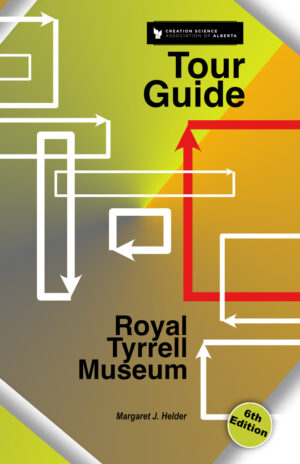
Paperback / $6.00 / 55 Pages
You are invited to
Creation Weekend 2022
Featuring Patricia Engler
Youth Outreach Coordinator for Answers in Genesis and author of a new book Prepare to Thrive
Saturday, October 15, 2022
Hybrid Event with In Person or Online Options
In Person Option
– View presentations on a large screen and meet others.
– Browse books and DVDs provided for sale.
– No need to register for this option.
– Location: Meadowlands Baptist Church (2215 17 St NW, Edmonton)
– Attendance is free.
At Home Option
– Watch presentations using Zoom.
– Register for free at www.create.ab.ca/register
10:00 a.m. – Session 1
Understanding Genesis,
the Foundation of our Christian Faith
Why are Western nations growing less Christian every year – and what can we do about it? Find out why Genesis provides the foundation for the Biblical worldview, what happens when we compromise that foundation, and how everyday Christians can respond.
2:00 p.m. – Session 2
Stories from Backpacking Around the World
in Search of Christian Students
How do Christian students around the world keep their faith? To find out, Patricia backpacked around the world interviewing students. With a country-by-country retelling of her experiences, key takeaways from interviews, and stories of God’s provision along the way, this presentation combines topics of apologetics, higher education, and the adventure of the Christian life.
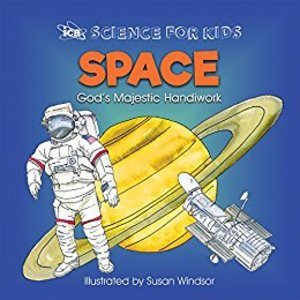

Paperback / $10.00 / 111 Pages / full colour
You are invited to
Creation Weekend 2022
Featuring Patricia Engler
Youth Outreach Coordinator for Answers in Genesis and author of a new book Prepare to Thrive
Saturday, October 15, 2022
Hybrid Event with In Person or Online Options
In Person Option
– View presentations on a large screen and meet others.
– Browse books and DVDs provided for sale.
– No need to register for this option.
– Location: Meadowlands Baptist Church (2215 17 St NW, Edmonton)
– Attendance is free.
At Home Option
– Watch presentations using Zoom.
– Register for free at www.create.ab.ca/register
10:00 a.m. – Session 1
Understanding Genesis,
the Foundation of our Christian Faith
Why are Western nations growing less Christian every year – and what can we do about it? Find out why Genesis provides the foundation for the Biblical worldview, what happens when we compromise that foundation, and how everyday Christians can respond.
2:00 p.m. – Session 2
Stories from Backpacking Around the World
in Search of Christian Students
How do Christian students around the world keep their faith? To find out, Patricia backpacked around the world interviewing students. With a country-by-country retelling of her experiences, key takeaways from interviews, and stories of God’s provision along the way, this presentation combines topics of apologetics, higher education, and the adventure of the Christian life.
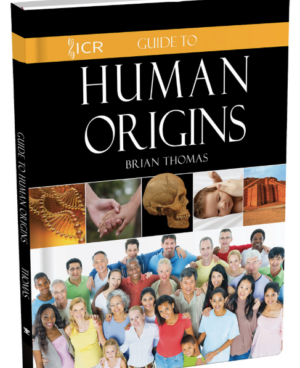
Hardcover / $18.00 / 117 Pages / Full colour
You are invited to
Creation Weekend 2022
Featuring Patricia Engler
Youth Outreach Coordinator for Answers in Genesis and author of a new book Prepare to Thrive
Saturday, October 15, 2022
Hybrid Event with In Person or Online Options
In Person Option
– View presentations on a large screen and meet others.
– Browse books and DVDs provided for sale.
– No need to register for this option.
– Location: Meadowlands Baptist Church (2215 17 St NW, Edmonton)
– Attendance is free.
At Home Option
– Watch presentations using Zoom.
– Register for free at www.create.ab.ca/register
10:00 a.m. – Session 1
Understanding Genesis,
the Foundation of our Christian Faith
Why are Western nations growing less Christian every year – and what can we do about it? Find out why Genesis provides the foundation for the Biblical worldview, what happens when we compromise that foundation, and how everyday Christians can respond.
2:00 p.m. – Session 2
Stories from Backpacking Around the World
in Search of Christian Students
How do Christian students around the world keep their faith? To find out, Patricia backpacked around the world interviewing students. With a country-by-country retelling of her experiences, key takeaways from interviews, and stories of God’s provision along the way, this presentation combines topics of apologetics, higher education, and the adventure of the Christian life.
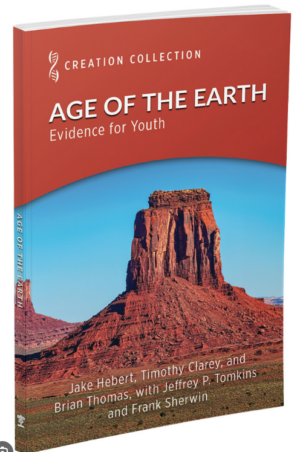
Paperback / $10.00 / 192 Pages / Full colour
You are invited to
Creation Weekend 2022
Featuring Patricia Engler
Youth Outreach Coordinator for Answers in Genesis and author of a new book Prepare to Thrive
Saturday, October 15, 2022
Hybrid Event with In Person or Online Options
In Person Option
– View presentations on a large screen and meet others.
– Browse books and DVDs provided for sale.
– No need to register for this option.
– Location: Meadowlands Baptist Church (2215 17 St NW, Edmonton)
– Attendance is free.
At Home Option
– Watch presentations using Zoom.
– Register for free at www.create.ab.ca/register
10:00 a.m. – Session 1
Understanding Genesis,
the Foundation of our Christian Faith
Why are Western nations growing less Christian every year – and what can we do about it? Find out why Genesis provides the foundation for the Biblical worldview, what happens when we compromise that foundation, and how everyday Christians can respond.
2:00 p.m. – Session 2
Stories from Backpacking Around the World
in Search of Christian Students
How do Christian students around the world keep their faith? To find out, Patricia backpacked around the world interviewing students. With a country-by-country retelling of her experiences, key takeaways from interviews, and stories of God’s provision along the way, this presentation combines topics of apologetics, higher education, and the adventure of the Christian life.