

Intermediate


Paperback / $15.00 / 486 Pages
This is a scholarly volume which provides a welcome defence of a straightforward reading of the early chapters of Genesis. This volume is particularly interesting as it demonstrates how the concept of long ages affects our understanding of the whole Bible. Written for academics and seminary students, but of interest to people like you and me.
Hardcover / $18.00 / 188 Pages / full colour
This guide, filled with beautiful full colour photographs, is perfect for anyone who wants to enjoy the parks in person or even in the comfort of their homes. Christian commentary highlights discussion on the significance of these natural wonders. This guide provides travel tips, maps, and descriptions of the natural features of the area.
Hardcover / $25.00 / 176 Pages / full colour
The author guides the reader from Ur to the land of the Pharaohs and to the New Testament. Rich illustrations accompany discussions of the archaeological significance of related discoveries. A fascinating resource for anyone interested in Biblical archaeology and its place in history.
Hardcover / $14.00 / 189 Pages / full colour
Unearthing Nature’s History of Life
In this new title, aimed at high school readers, we find a nicely illustrated, but not overwhelmingly technical discussion of fossils. Don’t let yourself be overwhelmed by evolutionary arguments! This introduction is fun to read with interesting insights on issues like the supposed evolution of whales, origin of animals with backbones, and animals which walk on four feet.
Hardcover / $18.00 / 79 Pages / full colour
Man’s Indiscriminate Stealing of God’s Amazing Design
This book demonstrates that many of the technological advances to make our lives better, are based on nature. The authors discuss how even in the most advanced laboratories, scientists often begin their search for innovation by studying God’s creations in the natural world. The discussion can be read at several levels from junior hight to more technical adult. Richly illustrated.
Paperback / $15.00 / 252 Pages
This book refutes the framework interpretation and other figurative views of the days of creation and shows the majestic progression of God’s work of creation in six literal days. The author enters into debate with renowned contemporary theologians and seeks to give exegetical and theological guidance to modern students, pastors and church leaders amidst the present attraction of non literal interpretations of Genesis 1 and 2.
Hardcover / $20.00 / 175 Pages / full colour
Unlocking Earth’s Geologic History
The Global Flood presents the evidence in a way that clearly demonstrates why the biblical account of the Flood matters to all who want to understand and communicate the truth with confidence.
DVD / $14.00 / 47 Minutes
Join geologist Dr. Andrew Snelling as he discusses six main evidences for the flood. His interesting examples take us all over the world. The discussion is enhanced by graphs and photographs.
Over the last decade, everything has become digital. We don’t capture images on film anymore, but in digital files. We don’t send letters, we send email messages. We don’t buy books, we download documents to an e-reader. Every organization has a website. Information is at our fingertips, but the whole system is extremely fragile.
The problems with our digital storage technologies are twofold. The data don’t last once they have been laid down and must be transferred to keep them fresh, while the technology for storage and reading keeps changing. An amusing example of this is NASA, which in the early 2000s, found that it was unable to access data from the space program of the 1960s and 1970s. So there they were, scouring internet auction sites to find second hand eight-inch floppy drives which could read their priceless data. Similar events of loss or near loss happen all the time. In 2009 when Yahoo! closed their GeoCities server, a huge amount of data was lost, perhaps “the most amount of history in the shortest amount of time, certainly on purpose, in living memory.” Nobody seemed to notice, but if these had been paper documents which were lost from a library, the outcry would have been anguished indeed. The take home lesson is that as a digital society, we need better systems to store and read data. In view of this, some scientists have turned their attention not to a new system, but to a tried and true system, much better than modern devices. Enter DNA to the discussion. Read the rest of this entry »
Dr. Paul Nelson is a prominent spokesperson for the creation and intelligent design communities. It was in that capacity that he introduced enthusiastic participants at the 2013 Creation Weekend in Edmonton, to new arguments and exciting information. Read the rest of this entry »
Astronomer Halton Arp (1924-2013) represents an excellent example of how mainstream scientists protect their favoured explanations against anyone, no matter how qualified or prestigious, who dares to question the majority position. We see how actual observations made by Arp and colleagues, were/are not allowed to call the Big Bang origins theory into question. Read the rest of this entry »
In many parts of North American, the most common wild mammals one sees are rodents in the order Rodentia. The largest known modern rodent is the South American semiaquatic capybara, which can grow to be 107 to 134 cm (3.51 to 4.40 ft) long, 50 to 64 cm (20 to 25 in) tall and typically weighs 35 to 66 kg (77 to 150 lb). Rodents are classified in one of the most successful mammalian groups today (Churakov et al. p. 1315). Read the rest of this entry »


October 24 & 25, 2014 in Edmonton
Ever since Dr. Steve Austin earned his Ph.D. in coal geology from Pennsylvania State University, he has shared his expertise with Christians eager to understand how nature expresses what the Bible tells us happened in the past. Indeed, when it comes to geological research, Dr. Austin’s resume goes on and on, all of it exciting! Read the rest of this entry »
DVD / $12.00 / 62 Minutes
Many people use astronomy to challenge Scripture, but what do the heavens actually reveal? Dr. Jason Lisle explores five “secrets of the cosmos” to find out. Through his presentation, we see how the universe declares the glory of God and how the Bible is right when it talks about the basics of astronomy. It is also right when it speaks to the age of the universe, the uniqueness of Earth, and the issue of distant starlight. Dr. Lisle confirms that when we really understand the Bible and the universe, we find that the scientific evidence lines up with Scripture.
Among the wonders of the natural world are plants that eat animals, and the best known example is the Venus flytrap Dionaea muscipula. In Charles Darwin’s book on insectivorous plants, he described the plant and its ingenious design in great detail, but did not offer even a clue about its possible evolution (Darwin, 1896, pp. 286-320). He even called the plant “one of the most wonderful plants in the world” (p. 286).
This carnivorous plant is found growing in peaty sandy soil mainly in one small place, the extreme far east coast of North Carolina (Schnell, 2003, p. 85). It catches its prey, mostly ants, beetles, spiders and other crawling arachnids, with a complex, well designed, mitt-shaped trapping mechanism located at the terminal portion of the plant’s leaf (Ellison, 2006; Ellison and Gotelli, 2009). Read the rest of this entry »
FEATURED BOOKS AND DVDS
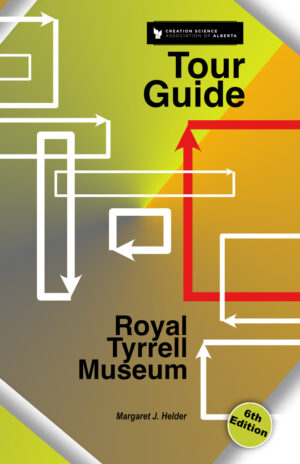
Paperback / $6.00 / 55 Pages
Among the wonders of the natural world are plants that eat animals, and the best known example is the Venus flytrap Dionaea muscipula. In Charles Darwin’s book on insectivorous plants, he described the plant and its ingenious design in great detail, but did not offer even a clue about its possible evolution (Darwin, 1896, pp. 286-320). He even called the plant “one of the most wonderful plants in the world” (p. 286).
This carnivorous plant is found growing in peaty sandy soil mainly in one small place, the extreme far east coast of North Carolina (Schnell, 2003, p. 85). It catches its prey, mostly ants, beetles, spiders and other crawling arachnids, with a complex, well designed, mitt-shaped trapping mechanism located at the terminal portion of the plant’s leaf (Ellison, 2006; Ellison and Gotelli, 2009). Read the rest of this entry »
Order Online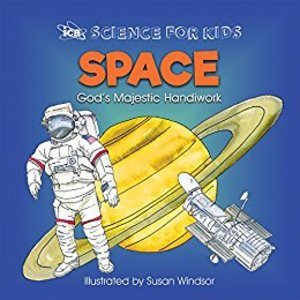
Paperback / $10.00 / 111 Pages / full colour
Among the wonders of the natural world are plants that eat animals, and the best known example is the Venus flytrap Dionaea muscipula. In Charles Darwin’s book on insectivorous plants, he described the plant and its ingenious design in great detail, but did not offer even a clue about its possible evolution (Darwin, 1896, pp. 286-320). He even called the plant “one of the most wonderful plants in the world” (p. 286).
This carnivorous plant is found growing in peaty sandy soil mainly in one small place, the extreme far east coast of North Carolina (Schnell, 2003, p. 85). It catches its prey, mostly ants, beetles, spiders and other crawling arachnids, with a complex, well designed, mitt-shaped trapping mechanism located at the terminal portion of the plant’s leaf (Ellison, 2006; Ellison and Gotelli, 2009). Read the rest of this entry »
Order Online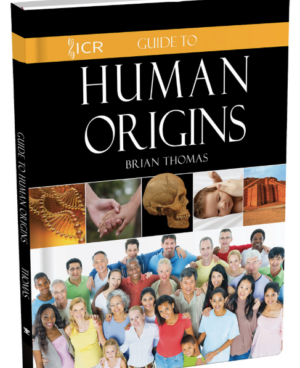
Hardcover / $18.00 / 117 Pages / Full colour
Among the wonders of the natural world are plants that eat animals, and the best known example is the Venus flytrap Dionaea muscipula. In Charles Darwin’s book on insectivorous plants, he described the plant and its ingenious design in great detail, but did not offer even a clue about its possible evolution (Darwin, 1896, pp. 286-320). He even called the plant “one of the most wonderful plants in the world” (p. 286).
This carnivorous plant is found growing in peaty sandy soil mainly in one small place, the extreme far east coast of North Carolina (Schnell, 2003, p. 85). It catches its prey, mostly ants, beetles, spiders and other crawling arachnids, with a complex, well designed, mitt-shaped trapping mechanism located at the terminal portion of the plant’s leaf (Ellison, 2006; Ellison and Gotelli, 2009). Read the rest of this entry »
Order Online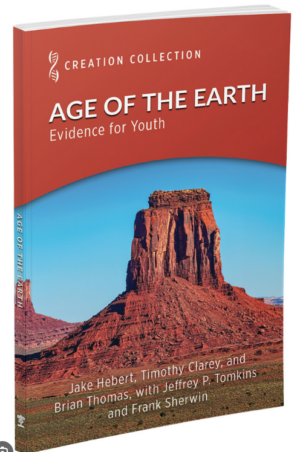
Paperback / $10.00 / 192 Pages / Full colour
Among the wonders of the natural world are plants that eat animals, and the best known example is the Venus flytrap Dionaea muscipula. In Charles Darwin’s book on insectivorous plants, he described the plant and its ingenious design in great detail, but did not offer even a clue about its possible evolution (Darwin, 1896, pp. 286-320). He even called the plant “one of the most wonderful plants in the world” (p. 286).
This carnivorous plant is found growing in peaty sandy soil mainly in one small place, the extreme far east coast of North Carolina (Schnell, 2003, p. 85). It catches its prey, mostly ants, beetles, spiders and other crawling arachnids, with a complex, well designed, mitt-shaped trapping mechanism located at the terminal portion of the plant’s leaf (Ellison, 2006; Ellison and Gotelli, 2009). Read the rest of this entry »
Order Online