

Introductory


Hardcover / $18.00 / 120 Pages / Full colour
This new book in the popular “guide to” series, delves into the complicated construction of the living cell, into a baby’s development in the womb, the mechanics of our hands and the incredible abilities of our brain. Other interesting topics like genetics and medical ethics are included.
Order OnlineHardcover / $18.00 / 94 Pages / full colour
It is fun to collect pretty stones, but much more is involved than just appearance. This book makes the collecting process so much more meaningful. After preliminary information, we learn about minerals mentioned in the Bible, and characteristics of various minerals and gems, and how to build a collection. Junior high and above, this challenge is for you!
Order OnlinePaperback / $17.00 / 43 Pages / full colour
This book documents the actual journey, study and validation of an ancient depiction of what appears to be a sauropod dinosaur surrounded by nine hunters. Come on an exciting adventure to the Amazon in Peru, and see new evidence that suggests dinosaurs have lived recently.
DVD / $14.00 / 47 Minutes
Dr. Georgia Purdom, who is a mother, discusses how parents can answer science related questions from their children. In every case, she says, start with Scripture. The topics she discusses here include how old the earth and universe are, aliens, dinosaurs, death and suffering, and how genetics affects what we are like.
DVD / $40.00 / 88 Minutes
Set of 4 DVDS
Each 22 minute disk has subtitles in English, Spanish, Chinese, Korean and Arabic. The set provides an inspiring look at the wonderful way that God has designed the human body. The topics include development of a baby in the womb; marvel of the eyes; uniquely human hands and beauty in motion. Recommended for all ages.
German astronomer and mathematician Johann Kepler (1571 –1630) was a central figure in the 17th century scientific revolution. He was not only the founder of the physical astronomy discipline, “the first astrophysist,” and an outstanding scientist, he was also a committed Christian (Morris, 1998, p. 33; Gingerich, 1993, p. 305). Kepler is best known for discovering the three laws of planetary motion that provided a foundation for Isaac Newton’s theory of universal gravitation (Dao, 2008, p. 8). The problem that motivated the discovery of his three laws was observational astronomy did not support the circular orbit belief, and Kepler was able to determine why. Read the rest of this entry »
Features World Class Scientist Dr. John Baumgardner
October 28 & 29, 2016
Dr. John Baumgardner is one of the world’s leaders in terms of significant contributions to science. He has used his expertise to develop computer models to study many aspects of our world. For example he developed a model to study how Earth’s rock systems work and have worked in the past (as for example during the Flood), weather and climate systems and how popular scientific ideas about mutation and natural selection (Darwinism) simply cannot work to produce evolution. Read the rest of this entry »
A prominent biology journal has withdrawn a research article which it had published a few weeks previously. The sole reason was three references to the “Creator” in connection with the structure and function (design) of the human hand. Retractions or withdrawing scientific articles from publication used to be almost unheard of. In recent years however such events have become increasingly common. The most common reason is that the information contained therein was falsified or fraudulent (made up). Read the rest of this entry »
Geophysicist Dr. John Baumgardner came to Edmonton after having delivered lectures in the Lower Mainland of B.C., and in Calgary. In Edmonton he delivered four lectures to large appreciative audiences. In all his presentations Dr. Baumgardner set the context by declaring that in our society today, secular science is used as a weapon to draw young people away from their early Christian training. Dr. Baumgardner illustrated this with images of five castles, strongholds deployed in a battle against the knowledge of God. These strongholds are Darwinian evolution, uniformitarian geology, big bang cosmology, materialist philosophy and radioisotope dating methods. During this lecture series in Edmonton, our guest speaker touched on materialist philosophy (Friday evening), Darwinian evolution (Saturday morning and afternoon) and uniformitarian geology (Saturday evening). Read the rest of this entry »
A recent list of the 100 most important “scientific discoveries that changed the world” lists Rick Smalley’s discovery of Buckyballs (English, 2014, p. 13). But who was this man? Richard (Rick) Smalley (June 6, 1943-October 28, 2005) was Professor of Chemistry, Physics, and Astronomy at Rice University. He was awarded the Nobel Prize in Chemistry in 1996 (along with Sir Harry Kroto and Robert Curl) for the discovery and research on a new allotrope (form) of carbon. He called this unique soccerball-shaped molecule buckminsterfullerene, nicknamed buckyballs. Soon a more comprehensive category called fullerenes was proposed to include nanotubes. Read the rest of this entry »
Mudskippers are amphibious fishlike creatures that use their short muscular pectoral and pelvic fins to “walk” on mud in a series of skipping like steps, thus their name. These unique about 30 cm long creatures, typically live in intertidal habitats where the water level changes with each tide change (Hafer, 2016, p. 66). Most other intertidal fish survive tide changes by taking refuge under wet seaweed or in tide pools. Mudskippers are different. They exhibit many unique adaptations to their muddy environment that are rarely, or never, found in other intertidal fishes (Marsh, 2015). Read the rest of this entry »
We seldom reflect on how interesting skunks can be. The nine identified skunk species are notorious for their scent glands that can accurately shoot noxious oily amber spray as a defensive weapon. Two glands, one on each side of their anus, produce the spray, which is a complex mixture of sulfur-containing chemicals. The pungent spray causes irritation to the skin like pepper spray, even temporary blindness—which may be why skunks often try to target the face (Schuster, 1992, p. 34). Read the rest of this entry »
Hardcover / $40.00 / 749 Pages / line drawings
The popular 3 volume set of Book of Beginnings has now been repackaged in one deluxe book. The first section discusses creation, the fall and first age. The second deals with the flood and new world, and the third discusses the patriarchs and God’s plans for His people. The author intersperses frank comments on modern secular views with what the early passages in Genesis communicate to us. Numerous line drawings enhance the discussion.
Hardcover / $18.00 / 122 Pages / full colour
Like the other titles in ICR’s “Guide to” series for upper elementary to junior high readers, this book features 2 page discussions complete with beautiful illustrations. Interesting presentations include planets, stars, galaxies, the moon, our Earth and more. In all this we see demonstrations of the Creator’s power to the remotest ends of the Cosmos.
Order OnlinePaperback / $15.00 / 265 Pages / black and white illustrations
This very readable and well documented book answers over 20 important questions that many people ask concerning Genesis. Who is God, the days of creation, techniques to date events, human relationships, questions concerning the flood, the ice age, fossils, and distant starlight in a young universe. Satisfying and a pleasure to read.
Order OnlineFEATURED BOOKS AND DVDS


Paperback / $6.00 / 55 Pages
This very readable and well documented book answers over 20 important questions that many people ask concerning Genesis. Who is God, the days of creation, techniques to date events, human relationships, questions concerning the flood, the ice age, fossils, and distant starlight in a young universe. Satisfying and a pleasure to read.
Order Online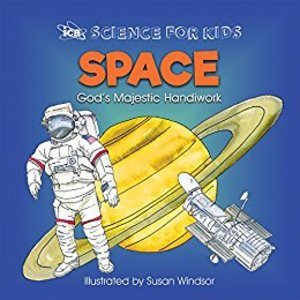

Paperback / $10.00 / 111 Pages / full colour
This very readable and well documented book answers over 20 important questions that many people ask concerning Genesis. Who is God, the days of creation, techniques to date events, human relationships, questions concerning the flood, the ice age, fossils, and distant starlight in a young universe. Satisfying and a pleasure to read.
Order Online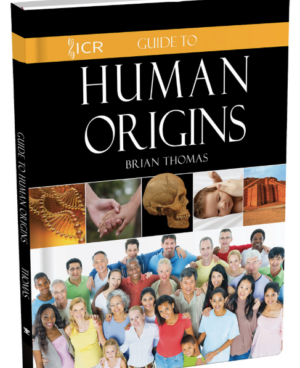
Hardcover / $18.00 / 117 Pages / Full colour
This very readable and well documented book answers over 20 important questions that many people ask concerning Genesis. Who is God, the days of creation, techniques to date events, human relationships, questions concerning the flood, the ice age, fossils, and distant starlight in a young universe. Satisfying and a pleasure to read.
Order Online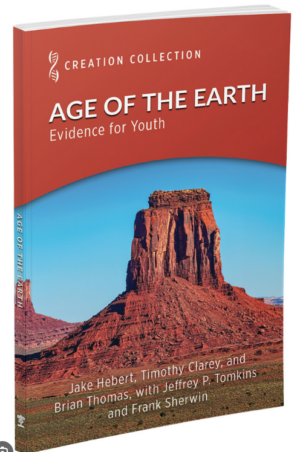
Paperback / $10.00 / 192 Pages / Full colour
This very readable and well documented book answers over 20 important questions that many people ask concerning Genesis. Who is God, the days of creation, techniques to date events, human relationships, questions concerning the flood, the ice age, fossils, and distant starlight in a young universe. Satisfying and a pleasure to read.
Order Online