

Level
The new generation of creation scientists are young, smart and sophisticated. Along with geneticists, taxonomists, and palaeontologists, experts in DNA sequencing analysis and phylogenetic analysis (the search for relationship patterns) are asking new questions and revisiting old issues. No longer do they concentrate on fighting evolutionary theories. They don’t need to. Rather, they are forging new creation-based theories. With this positive approach, they are certain to attract yet further support from Christians in educational and professional circles. It was to learn more about some new initiatives that I attended a conference in Lynchburg, Virginia on August 5-7, 1999. Read the rest of this entry »
American scientists from the Institute for Creation Research and the Creation Research Society set up a committee to study dating techniques which are often used to justify claims that the earth is very old. This was several years ago. Specifically, these scientists wanted to find out how the numbers obtained from most studies on rocks, could be explained in the context of a relatively young earth. Read the rest of this entry »
Have you ever wondered how this transformation takes place? The caterpillar makes his cocoon (or chrysalis) and out pops the butterfly – pretty simple, right? Simple – until you realize that nearly every single organ in the caterpillar body is destroyed and then remade into a beautiful butterfly. Eat leaves? Now change your diet to drinking nectar. Those tiny suction-cupped feet? Forget those – now you can fly with wings that make the whole world envious of your beauty. Read the rest of this entry »
Some years ago during the summer, I was a counselor at a small camp in southeastern Quebec. Nature interpretation was my specialty. It was dark each evening by the time the campers converged on the washroom after campfire. The lights of that building attracted all manner of creepy crawlies. Frequently at this time I would hear a shout “Moxie, Moxie — what is this thing in the washroom?” Read the rest of this entry »
When we study nature, it is probably a good idea to expect the unexpected.
Certainly the richness and variety of living creatures can never fail to amaze us. One fascinating situation involves certain parasites or disease causing organisms. In several cases, a parasite passes through two entirely different kinds of host in order to continue its nasty parasitic existence. Not only are these situations fascinating, but biologists are mystified how these relationships could ever have developed. Read the rest of this entry »
With sparkling eyes, the baby on the cover of TIME magazine’s 1997 Special Issue “The Age of Discovery”, is ready to reach out for some fascinating object. The theme is a “celebration of mankind’s exploration of the unknown.” However the issue seems most noteworthy for its atheistic and evolutionary bias. For example, one British author, in describing his boyhood enthusiasm for collecting insects, at the same time confides to us: “The life of those Wiltshire woods and rivers and ponds became, as the comfort of God’s presence drained away, so very much more complex than their romantic and theological past suggested. But at 14, this secular revelation was wildly exciting, a liberation from faith.” (p. 41) For author Redmond O’Hanlon, the joys of observing nature were closely connected to his new found enthusiasm for Darwin, which he began to read at that time. Read the rest of this entry »
Every young person in school must study science. Most people would agree that a basic understanding of the workings of the human body, or disease organisms, of weather patterns, of plant biology, local ecology, of electricity, etc. are essential to anyone’s functioning successfully in modern society. Despite the relevance of these topics, many people are uninterested or afraid of studying science. As a result, in the United States, for example, we see a relatively low proficiency in this discipline in the general population. An article in the August 15, 1997 issue of the journal Science, considers why this is so. (Gregg Easterbrook. 1997. “Science and God: A Warming Trend?” Science 277 pp. 890-893) According to the article, influential scientists themselves admit two sources of the problem. firstly many students fear that science teachers will attempt to destroy their religious faith. And secondly, science, as taught seems pointless and devoid of meaning, Who would want to pursue such uninspiring material? Not too surprisingly many Christians elect to avoid it as much as possible. The scientists quoted in Easterbrook’s article, for the most part, suggested that students can have their cake and eat it too. They can retain their religious faith while at the same time adopting the views of modern secular science. In this these scientists are wrong. Many of the conclusions of secular science are incompatible with our Christian faith. This does not however mean that Christians should avoid the study of science. Far from it. It merely means that Christians must actively develop critical thinking skills. They must learn to ask probing questions. Read the rest of this entry »
Scientists have found what might have been the perfect ancient vacation hotspot with average sea water temperatures of 24C. Now that’s a warm ocean. Where? Smack in the middle of the Arctic. Several geologists recently pulled a core of sediment from the bottom of the Arctic Ocean and discovered a bygone greenhouse world. No one expected to find evidence of temperatures high enough to make Santa sweat. Read the rest of this entry »
A seahorse (family Syngnathidae, genus Hippocampus meaning “horse sea monster”) is like no other animal on earth. It is the only fish that swims upright. It is not just a fish that travels on its tightly curled tail, but its whole body is designed around how it swims. For example, its elaborate balancing mechanism uses an air bubble inside of a specially designed swim bladder to maintain upright posture. Read the rest of this entry »

Imagine a dinosaur being swept far out to sea. It might seem like a crazy idea, but it appears that such an event happened in many places. The story however becomes even more amazing when we learn that these victims were unusually heavy creatures for their size, the kind that would be expected to sink like a stone once they were in water over their heads. To some, the story may not come as a complete surprise however. Way back in the dark ages, for example in the spring of 1995, an item appeared in Dialogue. In part, it ran as follows…… Read the rest of this entry »

Slaughter of the Dissidents: the shocking truth about killing the careers of Darwin doubters


Jerry Bergman. 2008. Slaughter of the Dissidents: the shocking truth about killing the careers of Darwin doubters. Leafcutter Press. pp. 477.
There are so many stories: school teachers who lost their jobs, students who did not receive their earned degrees, candidates who did not secure academic jobs, university faculty who lost their jobs or who were assigned to less meaningful work – all had one thing in common – their colleagues feared they might criticize Darwinism. Read the rest of this entry »
When I think about gardens, a happy little ditty comes into my mind.
- You can learn a lot of things from the flowers
Especially in the month of June
You can learn a lot of things from the flowers
All on a golden afternoon. Read the rest of this entry »
Most of us appreciate the word “young”, especially when it is used to describe us. However there is one class of individual that does not particularly like this adjective. These are astronomers. They don’t mind looking young themselves. However they do not want to hear about phenomena in space which appear recent or young. Many astronomers believe that our solar system is billions of years old. There should not be too many phenomena (or any) in space that are of very recent origin. Read the rest of this entry »
Can you name an animal that is dainty as silk but devious besides? Probably not. From their pictures, we might imagine that octopuses are solid, scary and, like the majority of marine creatures, not too intelligent. The scary part of the picture is correct, especially if one is a crab or shrimp or abalone. Nevertheless octopuses are typically as insubstantial as a lady’s negligee and smart, smart, smart. Read the rest of this entry »
It was Rene Descartes (1596-1650) who famously said “Cogito ergo sum” or “I think, therefore I am.” Obviously thinking at that time was an activity held in high esteem. And we might suppose that thinking is a skill that we all appreciate today too. That however is not necessarily so. Consider for example the recent case of American philosopher of science Thomas Nagel. You might expect that thinking is what philosophers are paid to do. That is what Dr. Nagel thought too. Read the rest of this entry »
FEATURED BOOKS AND DVDS

Paperback / $6.00 / 55 Pages
It was Rene Descartes (1596-1650) who famously said “Cogito ergo sum” or “I think, therefore I am.” Obviously thinking at that time was an activity held in high esteem. And we might suppose that thinking is a skill that we all appreciate today too. That however is not necessarily so. Consider for example the recent case of American philosopher of science Thomas Nagel. You might expect that thinking is what philosophers are paid to do. That is what Dr. Nagel thought too. Read the rest of this entry »
Order Online
Paperback / $10.00 / 111 Pages / full colour
It was Rene Descartes (1596-1650) who famously said “Cogito ergo sum” or “I think, therefore I am.” Obviously thinking at that time was an activity held in high esteem. And we might suppose that thinking is a skill that we all appreciate today too. That however is not necessarily so. Consider for example the recent case of American philosopher of science Thomas Nagel. You might expect that thinking is what philosophers are paid to do. That is what Dr. Nagel thought too. Read the rest of this entry »
Order Online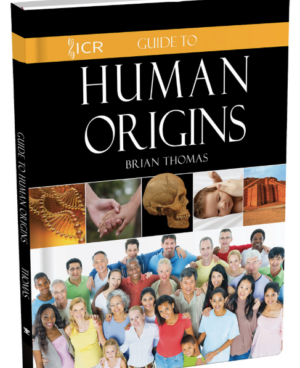
Hardcover / $18.00 / 117 Pages / Full colour
It was Rene Descartes (1596-1650) who famously said “Cogito ergo sum” or “I think, therefore I am.” Obviously thinking at that time was an activity held in high esteem. And we might suppose that thinking is a skill that we all appreciate today too. That however is not necessarily so. Consider for example the recent case of American philosopher of science Thomas Nagel. You might expect that thinking is what philosophers are paid to do. That is what Dr. Nagel thought too. Read the rest of this entry »
Order Online
Paperback / $10.00 / 192 Pages / Full colour
It was Rene Descartes (1596-1650) who famously said “Cogito ergo sum” or “I think, therefore I am.” Obviously thinking at that time was an activity held in high esteem. And we might suppose that thinking is a skill that we all appreciate today too. That however is not necessarily so. Consider for example the recent case of American philosopher of science Thomas Nagel. You might expect that thinking is what philosophers are paid to do. That is what Dr. Nagel thought too. Read the rest of this entry »
Order Online